Wed
08
Feb

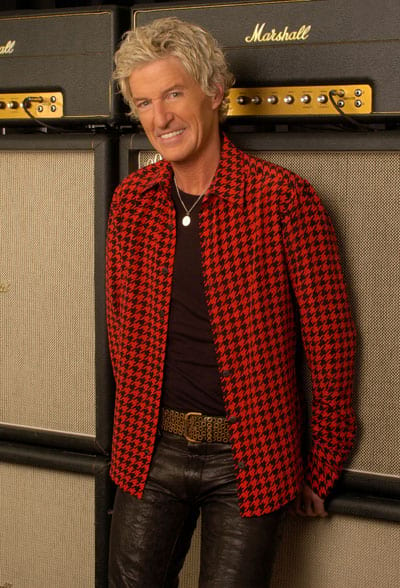
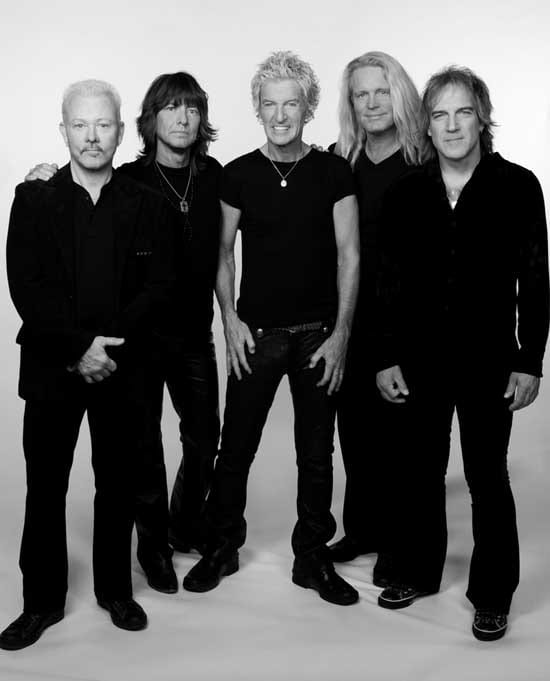
REO Speedwagon - Kevin Cronin (2007)

Categories: 
Interviews


Kevin Cronin: Finding His Own Way.


REO Speedwagon frontman Kevin Cronin talks everything behind and about the band's long awaited new studio album. Kevin is an extremely passionate guy - especially in regards to the new album - and I hope that shines through in this interview.


G'Day Kevin. First I must apologize for taking ten years to get you on the phone for an interview!
Well I apologize for our band being together since 1971 and having yet to play a gig in your entire country. That makes absolutely no sense to me.

Well you're in good company. There are some fine, fine bands that have never made it down here, unfortunately.
Yeah, well that doesn't make any sense. Our guitar player, Dave Amato spends a lot of time in Australia. He played guitar with Jimmy Barnes in it must have been the late '80s he spent a good deal of time in Australia. He's sort of hipped up to what to expect when we make it down there and it sounds like a lot of fun to me.

Well, one day I hope. You're actually doing a media storm over there in the States aren't you?
Yeah, we're kinda doing it the old fashioned was Andrew. We're kinda getting back to our roots. We've got a wretched Chevy station wagon and we're just driving from city to city around the Midwest, showing up in radio stations with our acoustic guitars and singing some songs.
You know, just hanging out on the radio having some fun with the DJs and just trying to spread the word that we've got a new CD out. It's been a while for us, so we're just doing it from the grass roots. I'll tell you what though it's a lot of fun. We're having a great time and we're finding that there's an awful lot of support for us out here in the heartland so it's really a good feeling.

OK, now you're driving from station to station which is good, but we all know how complicated the radio setup is over there. Can you actually break in with them to play new material for you?
Well, that's what we're doing here. It's pretty amazing. I wasn't really sure what kind of reception that we were gonna get with a brand new record. Part of what we're up against is that we have so many records that we've made over the years and so many of the radio stations still play our classics. And that's great. There's nothing wrong with that.
It's a wonderful thing but, to try to get them to play new music, like I said, I wasn't quite sure what to expect.
The good news is that the songs and the performances on this new REO Speedwagon record are just kicking the door in for us. We're just sort of walking in behind it and the music is really speaking for itself. That's been extremely heartening.
We had an experience the other day that pretty much sums it up. We went to a classic rock station in Cleveland, Ohio which is right in the heartland of America here. We did our thing at the classic rock station. Of course they're predisposed to playing our music on their recurrent list so of course we were welcomed there with open arms.
In the studio right next door, in the same building was an alternative station called K-Rock which is aimed at 20 year olds and they're playing really cool music. The kind of music I really like listen to myself but you wouldn't expect to hear an REO Speedwagon record on K-Rock.
So one of the girls who was a producer of the show was a fan of ours and she saw us in the hallway. She came back in and told a couple of the radio personalities that REO Speedwagon was out in the hall. So he was like, 'Who's REO Speedwagon I don't really know much about them? I've kind of heard of them but I don't know much about their music.'
Well, he invited us into the studio, so we came in. There was a little sparring that went on at first but we kinda gained their respect and held our own and we became kinda friends with these guys. I had our single Smiling in the End in my hand and I said, 'I'll tell you what. Put this record on and let it play for a minute. If after a minute Dieter gives it the thumbs down, we'll take off the air and we're outta here, but if Dieter likes it, let it play.
So after a minute Dieter's like, dude this rocks, so he let it the whole song play and when it was over the phones lit up with like 20, 21, 23 year old kids from all these different cities that this station plays to and that to me was the ultimate complement. On the classic rock station, the people who had been with us since the beginning were calling in saying that they loved the track, then 10 minutes later the same song is on an alternative station and young people are calling in and responding to it. You know, that was pretty cool.

That reflects a definite frustration I voice on the site all the time, that people would buy this music if they had the chance to actually hear it!
Yeah, exactly, you know, we've been around a long time, but you know, personally, I've got three young kids at home but I feel pretty vibrant, pretty young at heart and actually I feel like I have more in common with some of the kids who are working at the alternative stations than I do with some of the guys at the classic stations.
Some of the guys at the classic stations act a little too old for me even though they're my age. I kind of relate more to the younger kids and it was really cool to see that the music is being accepted by a lot of people.
A friend of ours who also runs our website, her name is Ruth McCartney, you might recognize the last name, she's Paul's little sister. She grew up with some pretty good music around her, so she was one of the first people to come into the studio to hear the new record and her first comment right of the cuff was 'This new record is fresh and old school at the same time.' That was music to my ears Andrew because that was all we could expect. You know, that's where it's at out here in America.

I've got a few comments to run past you about the album, but first I'll jump to the fact that you're plugging Smiling in the End as a single. This is a really commercial album and my favorite song is that, but I would've almost expected you to go with something safer…the ballad for example.
Well you know, actually we've got two singles out at the same time because we couldn't really choose ourselves. Smiling in the End is a strong song and it rocks, then we have a song called I Needed to Fall which is kind of more along the lines of what people might expect from us. It's got the power ballad thing, but hopefully we've raised the bar a little bit on the power ballad as well.
So we've got both these songs out there and we're just depending on the radio station. Most the stations that we're going to are playing both of them, but there are some stations that can't really play Smiling it the End just because of their format they want something a little softer. We just want people to hear this music. I like all the songs on this record so I don't really care what songs get played so we're walking into these radio stations with both of them and they're both actually going over really well, believe it or not.

Well I believe it completely because I Needed to Fall is a wonderful ballad.
Well great, I'm glad to hear that you've heard the record Andrew. That makes me feel better that I don't have to explain it to you. That's good.

I was actually playing it when the phone rang.
Oh good.

I think it's a great record. Really, really sharp production, I think it's very fresh. Couple of songs I'm not so in to…a little country slant on a couple of tunes there Kevin?
Yeah, I've got a little country in me somewhere. (laughing)

But for the most part it's a wonderful, wonderful record, and very fresh, very fresh. Well I appreciate that Andrew. Thank you very much. We put a lot of work into it, I'll tell you that.

The first four tracks in particular I think are four classic REO Speedwagon songs. Well again man thank you very much. I appreciate the support.

I love Find Your Own Way Home and I Needed to Fall is just, like I said a classic ballad. There hasn't been a really good power ballad for a while and that hits the spot like that song does.
These songs, especially those first four songs you're talking about, and there are other ones on the record. You know the years between 2003, 2004 and 2005, I'll be straight with you. I was going through a dark period.
There were some things going on and really this music was born from that darkness and I think a lot of times that's where some of the strongest songs come from. I guess I kind of hit an icy patch in the road type of thing and the car kind of spun out and ended up in a ditch. I used the metaphor earlier today because it seems to apply. I kinda looked around the ditch and there were Bruce and Dave and Neal laying there next to me.
You know, we all kinda hit the same rough patch at the same time but in different ways. I started writing because it was almost like my kind of therapy.
The other guys were going through some crazy stuff too, I don't know, mid-life or whatever, but there was a camaraderie that came for all of us winding up in a ditch at the same time and trying to claw our way out and find our own way home you might say. We all kind of had this passion in us and so we kind of really bonded, not only as a band and musicians but also as friends as well. I think that's where some of the magic on this record comes from is because we were all kind of in that place and you know misery loves company.
We kind of all had each other to bounce off of. It was a tough time to go through but the fact that we all had each other allowed us to help each other through it and help each other out of it. It's been quite an experience and like I said we didn't really expect to make another record. This record kind of made us. It kinda just happened without us really trying and I guess there's something to be said for that as well. These songs just needed to be written and the just came, I wouldn't say effortlessly but they came almost like an emergency vehicle.


I must say that in all my years of listening I've always had a soft spot for albums with emotional depth.
Well yeah you know that's just about it. Too many people, when it comes to album, they've kind of lost the concept of an album. You know in this day and age of downloading tunes from the internet. The fact is, too many artists have released records where there's one or maybe two songs with any substance and a lot of songs that don't really connect with anyone so you end up with people getting disillusioned with the whole idea of an album.
Part of the reason why we spent so much time on this album is because we didn't want to put any filler songs on there. We sequenced the songs in a way that sort of made sense to us, so the story get told this way. So we're really kind of promoting the idea that an album is a worthwhile art form. That songs are meant to be heard in a certain sequence that the guys who made the record wanted them to be heard. So we're hoping that we can get people back to listening to songs as an album, in sequence and kind of get the vibe from the whole thing. That's kind of one of our underlying missions here.

Amen to that because there's nothing finer than an album that flows start to finish like a story and you've definitely described this album perfectly because it does just that. You really have got a good sequence I think.
Are you ready for this? We actually mixed this album in sequence. I've never done that before. Usually when you get into the mixing you're thinking about songs more sonically and all kinds of things come into play when you're deciding what order to mix the songs in.
In this one, we'd had this sequence for a long time ever since we had the rough mixes. So when it came time to mix it we all just went 'We've got to keep it in sequence, these songs just belong in this order.' It was pretty cool in that way.
I was kind of surprised that it happened that way but in a way kind of not surprised because these songs were really meant to be heard in the order we put them in so that was pretty cool.

The music business changes obviously all the time. The changes between your last studio album and this one couldn't possible be more great could they?
Well yeah that's true. The music business has been turned on its ear certainly in America. I'm not sure what's happening down there in Australia.

It's the same.
And maybe it needed it. That's kinda what I feel like. It's almost like our song I Needed to Fall. It's like sometimes you do. You need to fall sometimes and I think maybe the music industry needed to fall a little bit because it was getting bloated and there were just too many people putting out CDs with one or two good songs on them and eventually that's gonna backfire.
People work hard man, and you're putting out $15 - $16 dollars for something it had better be more than one or two good songs. I think the music industry just kind of got full of itself and record companies got full of themselves.
Record companies were and have been notorious for ripping off artists ever since the days of Little Richard and Chuck Berry in the very beginning. Then I think artists kind of got the feeling that they got back in the game, but really when you look at it, ever since we stopped recording for a major label we kind of paid a little more attention.
We never really paid attention to our recording contracts or anything and it's amazing the things that artists are charged for by record companies. Things that are insane.
You know were good friend with the guys in Cheap Trick and those guys have got a law suit against the record company because they're still getting charged breakage. Breakage is something that was from old days when records were made of plastic and some of the records would end up getting to the store broken and the artist would have to absorb that expense. We're still getting charged for breakage when people download things from itunes. It's like, wait a second, you can't break a download. This is crazy, so the record companies, I feel kind of sorry for them because we were part of that system, but you know, they kinda dug their own grave by being greedy. This was just bound to happen eventually. So now there's an upheaval going on and everybody kind of like the wild, wild west out here and every different artist has a different idea of how to do it. It's pretty refreshing because now the playing field's a little bit more leveled and we've kind of found our way. Everyone gotta find their own way and I kind of dig it. It's kind of fun. Everything's new, everything's exciting. You can't just fall back into old habits. You've got to reinvent yourself in a number of ways. I'm into that, into things changing, growing and not being stale.

You've definitely chosen your own path, so leading into that, what brought you to Walmart as an option?
Well that was just total luck. You know when we started making this record it was really strictly a labor or love. We've been touring every year since we started. We've been doing fine. There're plenty of gigs for us, we've been playing great places and our fans are totally loyal. Like I say, the classic rock radio stations keep our music in people's ears to the point that there was no real need to make a new record.
When I started writing these songs and everyone started getting into playing new songs we went into the studio more or less just to do it with no expectations, no record label, nothing. Then, as the process started going along, people started reacting positively to the music. Every once in a while we do a corporate show. It's a private show where no one sells tickets like a company will have a convention or some kind of get together. They hire you and you come in and play a show.
It's a nice thing because there's no pressure, you just come in and play the gig. So we did a show out in Arkansas for the Walmart people. It was outside on a farm and one of the guys who's in charge of music there, his name is Troy was a bass player in a band when he was in high school and he used to play our music. He was telling us that story and I was talking to him about the new record we were making and he was like, 'oh man I'd love to hear it'. So we took a walk, got on the tour bus, had a couple beers and threw on the rough mixes of what was going to become the Find You Own Way Home album. He really got into them, really liked them and we just through some ideas around and that was it. Nothing really came of it, but about 6 or 8 months later he called back and asked how it was going so we sent him the finished record. He really got off on it and the next think we knew we were working with Walmart and who'd a thunk, they'd be really cool?
They have this reputation for being this awful empire when really the guys there are totally cool. They're just like you and me, they love music and they're doing their best to get music out to the people. I don't know what's happening in Australia, but here a lot of the record stores, like Tower Records, are out of business. Most of the record stores are gone, so the only place you can go is to a big chain store. What are you gonna do? You can fight the powers that be or you can find a way to get your music out to the people. Most REO Speedwagon fans are not the hoity toity LA, New York people.
They're people that live in the heartland and work hard for a living and they go to Walmart to go shopping and our music is there. It was kind of a stroke of luck for us that we met these guys and they're really helping us out. They're gonna get our music out to the people that want it so we're going with it. So far, so good.

Fantastic. I was under the impression that it was a Walmart exclusive but nobody got a one month window. Is that right?
Walmart asked us for a three week exclusive on it which seemed fair enough to me and it's great because they had this idea to put more than just Find Your Own Way Home CD in there. There's actually three disks that are coming out. In fact 5 minutes before you called I just got the deluxe box set. Our tour manager just delivered it.


I love the look of that so we have to talk about that.
Yeah, there's three disks in there. There's a DVD of an unplugged performance that we did. We played at the Superbowl about a month and a half ago, then we went up to Washington DC and did an unplugged performance. So there's a DVD of that with a bunch of interview footage. There's another CD of us playing the entire High Infidelity record with the current band lineup right in sequence and some enhanced footage on there as well, plus the new CD. So it's pretty exciting.
They're really making it into a special event for the release of the record. It's pretty awesome at this point in the game to be doing what people are calling our best record ever. Andrew I think there's a misconception that artists hit their peak in their late twenties and from then on it's down hill. I just feel like I'm just kind of hitting my stride right now and our band is just kind of finding it's potential with this record.
So we're out to shatter those misconceptions and show that you can be a creative person well into your life. There's no reason to think that just because you've hit a certain age that it's time to give up. It's time to stay young, healthy and vital. Keep your energy level positive and live life to the fullest.

Fantastic words because of all the artists I cover a lot of them are getting older but there's no reason to stop working at all.
There's no reason to just start resting on what you've done in the past because you never know what you might come up with. Hey the Rolling Stones are still out there and they're a few years ahead of us and they're still doing great. You see the Stones and Mick Jagger's singing, I think better than he ever has, and he's still all over the stage. They've still got the same attitude, they look great, they're in shape. I mean, come on, let's keep this rock 'n roll train a going in the right direction.

Absolutely. Well speaking of live performances you've obviously received a blow with the unfortunate death of Brad Delp.
I'm just still not right with that man, I gotta tell you. You know, Boston played their first live gig opening for us in St Louis so I've know them from the very beginning. Both bands were on Epic records so we used to cross paths with them all the time over the years. Brad was just, well I related to Brad because kind of had the same attitude about being in a band and about playing music as we do. None of us really have that ego, you know, any of that Rock Star stuff going on. We just like to play music and Brad was the same way. Just a good guy, down to earth and just a likeable person and man I was as shocked as anyone when I heard what happened.
It just doesn't make sense to me and it's definitely kind of made take another look at things because I would have never guessed in my wildest dreams that that would ever have happened with Brad. It just kinda goes to show that you've really got to pay attention to the people around you.
If you see anybody's behavior change, and I'm not saying that Brad did. I hadn't seen him in a couple years but you just never know what's going on inside of a person and it really pays to pay close attention to the people that are closest to you. Like I say, you would have never known from the outside that that would have happened to Brad and sure enough, look what happened.

So, with that in mind, and the package with Boston playing, have you come up with an alternative yet?
Well yeah, it definitely threw us for a loop there obviously. I mean Brad's death was a shock and then once you get over the initial shock of that you go wow we were probably gonna play 80 concerts with them all over the US and who knows where else. Fortunately for us we've got a lot of friends in a lot of band and we've got a couple of things that we're looking at now. It looks like we're probably going to be going out with ZZ Top.
I think that'll be a lot of fun and a big festival kind of thing that's going to being going around the states. We'll probably do that in the summer then with any luck we'll be working with Cheap Trick toward the late summer, early fall. There was actually talk last winter of coming down to Australia with Cheap Trick. Were they down there like last winter? Well I guess it would be summer for you guys.

No it got cancelled. They haven't been down here since 1990. I actually saw that show when the came down. They were going to come down here with sort of a current day line up of theme music, but it got cancelled.
We were offered those shows and that would have been our first time to play in Australia, but we just weren't ready. We were still in the studio mixing but we're hoping to be able to pull something together with Cheap Trick later in the year. I'll tell you it's really the whole bunch of us now. We're all in this together.

It is more of a brotherhood now isn't it?
It sure is.

I mean how many bands from the '90s are still out there verses the real bands from the '80s and look how many of them are kicking.
Yeah, we're still doing it and still going strong. That's why it's a shame that we haven't played in Australia. The people in Australia, perhaps they've heard our records on the radio but if you haven't seen us live, it's such a big part of what we do. We been really fortunate that our records have been very successful, but I don't think they do our live shows justice. I think our new record does.
I think it pretty much captures what we do, and when we play those songs live it's pretty much what we did on the record, what you see is what you get. As far as the classics, I would just love to be able to come down and show the Australian rock fans what we can do.

Well we'd love to have you and I must say that I did see one of your shows. I was in LA in 2002 and saw the Journey/Styx/REO show.
Oh, you did, at the Staples Center?

Yeah, in fact, I was back stage with the band afterward and you came running past and I thought 'oh I've gotta get your attention and say Hi' but you didn't come back.
I think that was the night that the guy who owns the Staples Center, who is actually from St Louis, one of the big REO Speedwagon towns in America, came in and asked me if there was anything he could do for me. I'm like a big basketball fan so I said yeah, I want to see the Lakers' locker room. No one else could get me in there except him, so he walked me over to the Lakers' locker room, brought me right into the players' room. He had like this magic laser machine that could open any door anywhere so he opened up Shaq's locker. He took a pair of shoes out that he'd left there and gave them to me to bring home. So that night I was just running around backstage with this gigantic shoe just on cloud nine. I live in LA now so at this point in the game to play to a sell out crowd in the Staple Center felt awfully good. I was feeling pretty high that night.

That was a huge crowd. It was pretty remarkable. I said to Neal if only every one of them would finally get off their ass and buy a new record.
Well yeah, but we didn't have a new record then, so we're hoping that some of those people that saw us will hear this new record on the radio and who knows? Maybe we'll turn some people on who saw us back in that 2002.

Absolutely, great stuff, anything else that you'd like to add in?
I think you've covered it Andrew. You've pretty much got it down. Like I say, were rearing to get down there to Australia. Like I said, Dave Amato played guitar for Jimmy Barnes down there and he said 'You haven't really experienced it, I can't describe to you what it's like to play rock 'n roll music in Australia, you've gotta just go down there and do it.' That got my appetite whet man and I'm really looking forward to getting down there. I hope we do, and if we do we'll have to hang out back stage and have a beer together.

Well that sounds good and if there's anything I can do to help make that happen then give me a shout.
Alright Andrew, that sounds good buddy.


c. 2007 MelodicRock.com / Interview by Andrew McNeice / Transcribed By Sherrie


Wed
08
Feb

Jim Peterik (2007)

Artist: 
Categories: 
Interviews


Jim Peterik: The Roar Of A Lion.


MelodicRock legend Jim Peterik is one of the true nice guys in the business. It's always great to catch up with him and on this occasion it is to discuss the new Pride Of Lions album as well as Jim's work with Kelly Keagy and Joe Lynn Turner among other things.


Great to talk to you once again Jim. Looking forward to talking about the new Pride Of Lions album. To start though – and this may not be politically correct to ask of you - but what do you think of Robin McAuley now fronting Survivor?
I've never had the courage to listen. I have not yet heard it. I thought it would upset me. I appreciated people sending it to me, but I just never listened. I love Robin……

Me too…
He's great, so I have to plead ignorance. I haven't heard it.

It sounds ok but it does risk not being Survivor anymore.
Right, right I think we were fortunate when we made the transition from Bickler to Jimi because it went so smooth but not every singer can step in and create that sound.

Let's talk about happier things Jim.
(laughing) Sounds good.

Alright mate. I suppose the most important thing is Pride of Lions.
Album number three now, I think the band has very much developed its own little sound…

I think so. We've definitely gelled as a band. There is a Pride of Lions sound. I think there always was but the first album we were just kind of trying out our legs. That first album, still, how did we do that? I don't know. I'm very proud of that record.
The second album I think we strayed a little bit. I love Destiny Stone but it sort of forayed more into the theatrical and epic kind of thing. I think at the time I was very influenced by the stuff my son was listening to which was like Rush, Kansas, Styx. I love all that but it started seeping into my music. This album, like I've said in a few interviews, we're trying to get back to a little more simple hooks and a little more direct melodies. There's still a little bit of theatrics, obviously. I always say I write for the singers I'm producing.
Dave Bickler, he was very street, very rock 'n roll, very raw. When I wrote for Jimi Jamison it was very pop. When I write for Toby, its pop but it's also a little bit of theatricalness because he's got a very dramatic voice that I write for.

In fact, I've raised this with you on a couple of occasions. When is Toby going to Broadway?
(laughing) I know, you said that one time. I think that would be a great move. I love his voice to work with. I think on this record you'd say our sound is solidified. I think part of the reason is Toby's a better singer than ever. I was very, very pleased with his vocals on this record. There are some of his best, most emotional lyrics on these vocals.
Such as, the best vocals on the album, for me are Love's Eternal Flame. It absolutely kills me and I hear a lot of Jamison in his vocals.

Yeah, that's probably the most Survivor-ish song of the whole album.
I agree. That and probably Language of the Heart tap into the Vital Signs sound some as well. It's not like I was consciously trying to clone 1984, but I was listening to Vital Signs around this time trying to tap into what was special about the album and that era.
And of course, Too Hot to Sleep also, I love that record. Love's Eternal Flame was definitely influenced by Desperate Dreams. I feel like there's a kind of a lineage between those two songs. I felt I hit a roll on this album, in terms of writing where I struck a balance between the Vital Signs era, what was good about that, and what's unique about Pride of Lions. You're never going to mistake Pride of Lions for Survivor. There are similarities and differences as well.

Absolutely. You were talking about Toby's vocals there, like the last note on Heaven on Earth. The note itself goes for about a minute!
(
laughing) I know, I mean the guy's got unbelievable chops. He could sing the phone book and he'd sound great. And you know, he doesn't need any coaching really. He hit that last note and he just blew everybody in the studio away because nobody was expecting it. He does that to us all the time. There's another song on the record. Oh, the end of Tall Ships, he does this stuff, (singing “we are the tall ships”) you know, none of this stuff was planned. That's part of the fun of recording Toby is that he'll always be just surprising us with stuff.

Yep, he's a bit theatrical I think on the Roaring of Dreams. I likened that to something that could have come off the Lion King soundtrack.
There you go, there you go, like I said I like the epic music. I have to really watch myself or else I get too theatrical. I don't mean to, (laughing) but I do get carried away.
I think Pride of Lions will find the audience that it needs and it is important for it to be different than Survivor. If all I wanted to do was clone Survivor I might as well have stayed back in 1985. I love that era but I like to add a unique sound to Pride of Lions and part of that is a little more theatrics. Roaring of Dreams is…I love the message of the song.

I love Roaring of Dreams for, like you said, the message that it brings. Astonish You was another little bit of a sidestep wasn't it?
Well, I love that song and I always try to figure out what was my inspiration on that song and obviously it was Karen [Jim's wife]. I'm always trying to impress her. (laughing)
I'm eternally trying to impress her as much as she impresses me.
But musically, to me, Foreigner's Waiting For a Girl Like You is like probably my all time favorite rock ballad.

It's an absolute classic of course.
And amazing vocal by Lou Gramm.

Oh yes
I had that melody for the chorus and it just stuck in my head. Then I was sitting in the back of a limousine waiting for a show and the rest of the song came. I just couldn't wait to record it two days later. It just has such a mood.

It has, absolutely it's a very, very romantic song.
What do you think of Faithful Heart off the record? Do you remember that? It's a ballad (sings a bit of it).

I love that song. That's a really great song….one of the best on the album.
Thank you. I totally love that song and the story behind that song. With the exception of that song, all these songs were written for Roaring of Dreams in a period of about 3 months, or 4 months, whatever. But that song goes all the way back to 1984.
Whenever the hell we were recording When Seconds Count, anyway '85-'86, and I played that song for [producer] Ron Nevison. It wasn't finished. He flipped. He loved it and we cut a demo of it with Jamison singing. I wish I had it and I can't find it.
But it was not as good as it is now. I wasn't finished. The words were weaker, the bridge was terrible, but I never forgot that song.
Anyway, it never made the record. But it's almost better because in the passage of time I was able to finish the song to my satisfaction and of course Toby did an amazing job on it.

Yeah, I was gonna say, the vocal on that is just extraordinary. Very, very powerful and another one of my favorites on the album Jim, Tall Ships is obviously a great track, a lot of fun and a very pomp sort of style for you guys wasn't it?
But I must ask, what was with the horn in the chorus there?

(laughing) Well, I have to say, whether you like it or you don't like it, and obviously I know how you feel, it's a French horn.
I just felt that that said “the sea”, “the stormy sea” and I know it's not rock and roll, but if the Who can put a French horn on so can I...(laughing)

The first time I listened to it I laughed. Well, that kinda sounds disrespectful, but it surprised me. It really caught me off guard, but I've come to really, really like it.
You know, it's got a mood to it. And again, this is a very spiritual album for me.
Karen's brother Andy died on August 5 of liver cancer, and there were so many things that happened that Andy, after he died really, influenced me. He came to me in a dream and really gave me the song Heaven on Earth. He said “Jimmy, you don't have to wait until you're six feet under, you can have Heaven on Earth.” I heard the melody in my head, I saw his face, I ran downstairs and taped the idea of the melody, I still have the tape, and two days later we recorded it in the studio.
That is really Andy's song. He just was such a great guy and yet he wasted a lot of his life with just, you know, bad habits and things like that. But he's trying to tell me and everyone, do not waste a day. Live every day like it's your last and that's really what that song is all about. Same thing with Tall Ships, he gave me the inspiration for that. He really loved the ships and we used to go down to the harbor and watch the ships come in and out on Lake Michigan and so that's his song too.


The little story you said there about jumping out of bed and running down to record reminds me of when we were in the UK and you've got a tape recorder in your pocket constantly. You were always jotting down notes and singing into this recorder.
Someone else mailed me a neat story a little while back….a Chicago resident who knows you…said they were in a car park and there was a car parked awkwardly in the entrance. They were nearly ran into it and they were going to tell the driver off until they realized it was you (laughing) and you were sitting there jotting down notes to a song.

I would not doubt that for a second.

They stopped to say hello and you had a chat. They couldn't wait to get home and tell me the story.
That is great. Well, for me the best songs come at the most unexpected times. Never at convenient times and never when I sitting at the piano. It's always when I'm driving, or you know, doing just about anything but writing.

When you're free of thought, when you're not under pressure.
Right, because that's when your subconscious mind takes over and you can do amazing things.

I really liked that story and I wanted to tell you because I knew you'd get a laugh out of that. Are there some Pride of Lions shows coming up Jim?
Well we're doing a World Stage on May 18 here in Chicago. Pride of Lions is a part of that of course, along with Kelly Keagy, Rik Emmett, Kevin Chalfant, Kip Winger and people from my immediate world like Jeff Boyle, Lisa McClowry, and of course my son's band.
He's seventeen now and he has a band called Lobster Newburg that are just terrific. His band's on the bill. We're gonna do a jam with the Ides of March and Lobster Newburg. So Pride of Lions is part of that, then we're doing a Belgium festival on August 6 with World Stage also and that's gonna be a very similar bill to the one I just mentioned with the addition of Jimi Jamison.
He's gonna be part of the World Stage in Belgium. So that's gonna be very, very fun. Jimi and I were on stage together about three weeks ago at a cystic fibrosis benefit that Fergie Fredrickson organized. It was just wonderful on stage, to see him. Some magic moments; we did I Can't Hold Back, we did The Search is Over with just an acoustic piano and he and I would trade off vocals, and then we did Eye of the Tiger and just brought the place down.
We started talking and I asked if he'd be interested in being a part of World Stage in Belgium and he said “I'm there”. So that's going to be a lot of fun.

Awesome. That will be a great show!
You commented that the Roaring of Dreams was like a crucial album for you. A few people read into that that 'oh my goodness this might be your last album'. Was that the case?

No, that's not what that meant. This was, I thought, the record to separate the men from the boys. A lot of guys can come out and make a great first record. To follow it up with a third album, that's what separates the good from the great.
It's like with Survivor, Eye of the Tiger was our third record. We proved that we could break through, of course the movie didn't hurt anybody at all, and make a, I don't want to say a better album than one and two but at least keep the quality consistently up from one and two.

You certainly have done that.
That's the challenge. I also saw it as a possible breakthrough record. That's the point I was trying to make, that we all have dreams of a record like this breaking out of the melodic rock niche and some single, whether it's Heaven on Earth, or Love's Eternal Flame or Faithful Heart, that breaks out of the pack and starts getting noticed by the overall radio and buying public. Boy, I'd sure like to see that happen.


I think people are screaming out for something but the media are so closed ranks, you know the mainstream. How in hell are people supposed to hear great new music?
I'm looking for avenues and I'm thinking of doing a video for Heaven on Earth and trying to get that exposed. And I'm looking for movie opportunities for some of these Pride of Lion songs. There are alternate marketing schemes that you can break through with.

I think Faithful Heart lends itself to a movie roll.
That would work.

You've also, I mean you're always writing obviously, but you've been writing quite a bit with Joe Lynn Turner haven't you?
Joe is great, and to be truthful with you, most of the songs on the Joe Lynn Turner album are songs I wrote either on my own or with other writing partners.
We're doing some writing now for a future record. The stuff on the Sunstorm album is stuff that I selected from my catalog that was never recorded basically or were recorded obscurely. Like Arms of Love was on a David Carl record, but most the stuff was written in the early to mid '90s, things like Another You, This is my Heart, Strength Over Time. By the way he just, sometimes I think oh boy, how's this gonna be?
I wasn't involved in the production. I got this record and it blew me away it was so good. I love it. It's one of my favorites of last year. Strength Over Time in particular. I love that song. I'm glad you like it. I think Strength Over Time and Making up For Lost Time is very strong I think too. Maybe my favorite is Strength Over Time but my second favorite would have to be Another You. It's just an amazing voice. I don't think he's sung that well in 10 years.

He's very, very smooth.
It made me realize how good he really is.

I've got his new record Second Hand Life in front of me which is out next month. Oh yeah, that song is a collaboration.

Yeah, what interested me out of that is, it's one of my favorite records of Joe Lynn Turner, is the Deep Purple Slaves and Masters record which you were brought in to write for, but none of the songs written ever made it.
Yeah, they changed titles and kind of wrote me out of some of the stuff that I had written. It was a very confusing time.


That's kind of a shame because as great a record as it was I can hear a couple of these songs being very much at home on there as well. I mean there are only nine songs on the album I think. There's plenty of room.
Yeah, there ya go. I suggested a few to Joe but I don't think he took my advice on that.

But he's smart enough to take the advice now.
Yeah…maybe. (laughter)

Jim, I was talking yesterday on the phone to your old friend, and I know this is another one of those complex situations, but Joe Vana. You know the Mecca album is still a classic. I absolutely love it. It's a shame how things sort if panned out there in the end, with you and Joe going in different directions…
Well he did you know, he was young and inexperienced and he has his own style of doing things and treating people. I think he's very talented and he's a very good singer.

I think he's mellowed somewhat. I think he's got a new found respect for the process that went into making the first record.
I wish him all the tremendous luck in the world…I just hope he does great.

You've got another hand in writing with Kelly Keagy. On his new album I'm Alive - I love that album. I really wanted to talk to you about that.
I really love that record.

It's a great record.
Thank you.

Jim Peterik the guitar hero, who knew? Who knew?
(laughter) I did it because I didn't feel like hiring anybody. (laughing)

I say that who knew, but I know you've always been respected for playing guitar and whatever but you really shred on that record.
Well, obviously all the leads are not mine. I do all the rhythm parts and the leads that are more simple and soulful and of course Reb Beach does the shredding.

Yeah, but there's a really solid rhythm behind the album.
Well thank you. I'll take credit or blame for that and I do all the bass guitar work as well.

Did you really?
There might be the rare exception but it's pretty much Kelly and me. We made the record and then we embellished it with Reb Beach and this other guitar player from Minneapolis. I can't think of his name right now. When I write with Kelly we have such a good time. Obviously I know that I write different for different artists and with different writers. When I get with Kelly he has a positive spirit but he also has a vein of darkness that runs through him.

Yeah I love that bit.
I do too and when I write on my own I'm a different writer. When I'm in the room with him it's like I'm channeling my emotions through him. I'll come up with lyrics that I never would have come up with on my own. Of course he'll come up with a lot on his own as well. There are some really, really strong moments on that record. I'm Alive of course I had the seed of that song. In fact it was gonna be a Pride of Lions song, but when I showed it to Kelly he just went crazy.


That's my favorite.
Thank you and me too. I love Stolen, and from a ballad side I love A Life Worth Remembering. It's a wonderful song.

Then there's Nobody's Looking.
That was the first song we wrote for the record. I was very influenced by, believe it or not, I don't know if you can hear it, but the Who's I Can See For Miles. We were kinda coming from that angle and what I like about that song are the melody and the message. It really is what you do when there's nobody looking. It's what you give when the cameras aren't rolling and you're not getting credit for it. To me that's the measure of a man.

World Before and After is great.
Yeah, that's killer.

Great high energy track, I'd like to see that performed at these shows.
Alright, well that would be a good suggestion. That would be really kickin' ass.

Yeah, that and I'm Alive.
I'm Alive we've gotta do that one.

Those are great live tracks there. But that's a different vibe, a different sound than Pride of Lions, a different sound than Mecca.
It's because of Kelly. He's a very strong personality and he won't take no shit you know. (laughter) He's a sweetheart, but musically he's a tough guy.
He'll speak his mind and we make a great team and we really have a lot of fun.

And you obviously have a lot of respect for each other too.
Oh tremendously, I would say he's one of my favorite people in this business in general and as a person too.

Funny you should say that because I would include you and Kelly as two of my favorite people.
Well, that's very nice. (laughter)

I mean it, I'm serious.
(laughter) I believe you. I'm not fakin' it, but as soon as I met him, I didn't meet him early on, Survivor played with Night Ranger in Puerto Rico when The Search is Over was number one, but I don't remember meeting Kelly, or maybe just a little bit. It wasn't until much later with some incarnation of Night Ranger with that other guy, not Jack Blades..

Gary Moon…
I went this little club to see them and I met him and I said, “Dude, man you sing your ass off.” I had just never realized what an amazing singer he is. He just smiled and said “man, thanks”. I introduced myself and we've been just really good friends ever since.

The camaraderie showed through again when you did the show in the UK, The Gods Festival. Gary Moon, you and Brian and that all singing in the van….I'll take that to my grave.
That was quite the fun show.

It was indeed.
Anything else you want to plug Jim?
I'm just gonna really, really promote this record. I'm gonna get a video going for, probably Heaven on Earth. That song, for me, is a mission statement. I don't care if people think it's a single, I don't care what they think at all, I've got to do that song. I've got to do it for Andy. Miracles might happen and we might break through and have a hit record and then we could write our ticket. We could go on tour and do the whole bit. The response to the record's been just tremendous and I don't have sales figures but I think it's doing pretty well. I'm really pleased but onward and upward.

Yep, and another album next year or something like that?
Well, I'll tell ya, I'll do it when I have enough great songs to make another record. One a year for me is a little bit of a push, but one every year and a half is doable. I'm always writing; you know me.

Yeah, be it in a car lot or in the middle of the night.
Yeah, I write everywhere and in the middle of the night. It's just what I do. I've got a really good life with a great wife and a great son. I'm very blessed, I never forget that.

Absolutely, that's right, important, well alright mate.
Alright, well enjoyed talking to you.

Thanks as always Jim!


c. 2007 MelodicRock.com / Interview By Andrew McNeice / Transcribed By Sherrie


Wed
08
Feb

Jack Blades (2007)

Artist: 
Categories: 
Interviews


Night Ranger Part 1: Jack Blades.


Jack Blades talks about Hole In The Sun - the new Night Ranger record, plus the new Shaw Blades record, Damn Yankees as always....anything else that comes to mind!


So Jack, why is there a buzz for the new Shaw Blades record, besides the fact that it's bloody good?
Well, I think that it's just one of those records that everybody likes. Everybody enjoys that music. Everyone's just excited about good songs and good music and hearing them from Tommy and I, and having Tommy and I work together again.

Is it nice to feel missed?
You know, it's very wonderful and very reassuring. We put the shows on tour, on sale and I think one or two of them are already sold out. And VH1 Classic hasn't even started the full court press on the promotion of the album.

Yes, I just got the press release today actually.
Yeah that's right and there's already such a great buzz out there. I think it's just the fact that the songs are the stars and that's what makes this such a fun record to have.

Covers albums are very hit and miss and I'd put more miss in my column. Why does this one work?
I think this one works because Tommy and I really approached each song in a reverent way. We grabbed acoustic guitars and we played it, then if it felt like we should go somewhere else with the song we went somewhere else. If it felt like it needed to be true to the way the song originally was like then we kind of went with that and just sang it with our vocals. Like for instance The Sound of Silence. But then you have I Am A Rock that we took a serious left turn on that sounds so great. Then other songs, we sat down with our acoustic guitars on Summer Breeze and we started playing. I started singing the verses and Tommy sang the chorus and then all of a sudden on the second verse he came in with one of those classic Tommy Shaw harmonies that are so different. So we went where the spirit lead us on the songs and I think people can feel that. I think the audience, the fans and people in general can really feel that and that what makes this a really good covers record. That and the fact that I think the songs we picked are just outstanding.

You did pick some really nice songs. A few classics, as few left of center that just came together very nicely.
Yeah, it just did, I mean that's the thing. When it's not so hard, I mean that's what we're finding right now, with the whole tour, everything that we're doing, setting everything up. It's happening so easy that you know it's the right thing. You know its right when everything just falls in line like ducks in a row.

So why did you wait so long?
That's a good question you know. It's just all in the right timing. It wasn't right when we originally started doing these songs. We were doing it with another label then that didn't turn out. Then this guy fell out, then that person. Originally with Sanctuary and then it was with a new label that Irving Azoff was going to start, then that didn't happen. It was just all these things. So we just waited and waited. It's just the right time now.

Absolutely, and the buzz is huge, the dates are going well.
Oh yeah, and we're just excited about it. We added a young man by the name of Will Evancovich. He's playing guitar with us. He's out of a band called American Drag which is out of San Francisco. They're sort of like a really cool indie rock band. He's a great acoustic player, a great guitar player and singer. So we're taking him out with us as a third guy to sort of like fill up the vocals and play some guitar with us.

And how did he come to light?
I found him through his band. It's very popular in this part of northern California so I sort of like sought him out and went and talked to him and grabbed him. Actually I brought him up here and started just playing songs with him and I started throwing songs at him. He didn't realize he was auditioning. We just had two acoustic guitars in my studio and I just said play Summer Breeze, sing this part, play Your Move, sing this part. Here, play this song, play that, try High Enough and just started doing it. I said OK, cool.

Very nice. The record sounds pretty 'live to air' almost. Were you and Tommy both up at the studio at the same time?
Oh yeah, we did all the record at the same time. We played all of the instruments except for the fact that Michael Lardie played some keyboards and of course engineered the whole thing. I think Michael also mixed four or five of the songs. Then we had the drummer. Brian Tichy played drums. Kelly Keagy played drums on Dirty Work.

I saw that.
So anyway, we were there, we were definitely in the room with each other all the time on this one.


xx


There is a habit these days to record everything in your own individual studios and not even interact isn't there?
Yeah, yeah but I think that leaves a bit of something to be desired.

I couldn't agree more. I think it kills the spirit of the record which probably why this one sounds so electric.
I think so, you know what I mean, you can just tell Tommy and I were having such a great time singing these songs. I think you can hear us smiling on the vocal tracks (laughing).

(laughing) You can. I think it's a really nice mix too.
Dude, how can I not be excited about doing an Emerson, Lake and Palmer tune, Lucky Man. I mean then you put a couple of prog bands on there like Yes and ELP. I mean, that's what I loved about it.

It's not something you can normally put alongside California Dreamin' by the Mamas and the Papas!
Yeah, and The Sound of Silence, no you wouldn't put Keith Emerson right next to Paul Simon. No, you're right.

But again, the record works, it's great.
We're very excited about it.

I love Dirty Work.
Dirty Work is one of my favorites. It's the only song of Steely Dan that Donald Fagan didn't sing. They had another singer in there and I think once they heard that guy sing they fired him. (laughs) Not that he did a bad job, probably that he did too good of a job. (laughs) I just love that song.
That's one of my favorites about forbidden love and all that kinda stuff. It's just a killer song and I think it's overlooked a bit, so on this record now people are hearing it and going 'oh I love that song' so it's pretty fun.

You know, there are three or four tracks in particular that sound as if they could have come off the first Shaw/Blades album.
You know what, you're right about that and on tour we're playing three or four of the Shaw/Blades album, the Hallucination album. That's the fun thing about this tour. We're not only going to be doing songs off the Influence CD, were going to be doing some off the Hallucination record. We'll be doing some Damn Yankees songs, some Styx songs, Night Ranger songs. I mean we're going to be doing all these things and people are going to be hearing song after song after song. It's almost going to be like hearing the soundtrack to their lives when they come see us.

I can imagine it now, which begs the question, are going to be recording any of these shows? It sounds like you should be.
I think that's in the works. Yeah, that baby's in the works.

I hope so because there are going to be a lot of people who can't see the shows. Between the two of you, Tommy and yourself, did you ever set back and say 'man we've had a lot of hit songs between us'?
No, we don't want to jinx it. (laughs) We do feel that way though. When we get up there and start singing. Like today I was up here rehearsing with Will, the guitarist, and it was like song after song after song. He gets excited because he's getting to play songs like Blue Collar Man, High Enough, and Too Much Time on My Hands. Then at the same time he's playing like California Dreamin' and Your Move. He was pretty blown away. I was looking at the list, and I guess I don't even think about it, but it's like we grouped them in groups. Here's three of four songs from Damn Yankees, four or five songs from Styx, four of five songs from Night Ranger, then four or five from Shaw/Blades. Then here are some of our other favorites that aren't even on any of those records that we just like to play. It turns out that there's about a 40 song list that we have to figure out carve down to about 15 or 20 songs for the show. That's gonna be the hard part, figuring out which ones not to play.

I'm looking forward to hearing that. I love to hear it live. I have to ask you this. Why the two different album covers for the US and Europe.
That's a good question. We had the American album cover and Serafino at Frontiers wanted to do the European one I guess. Maybe he wanted to sell more records.

I like the American cover.
The road…

Yeah.
I do too. I've got enough covers with my face on it. (laughs) I don't care it's the music in between that counts.


Of course it is. Absolutely. Well, with that taken care of, let's talk Night Ranger. That's a hell of a record you've got there.
Thank you Andrew, we're very proud of it.

As well you should be. Again, you took a fair while to record it. Are you at liberty to discuss the difficulties behind it?
There was definitely a lot of crap going on when this record was being made. It started and stopped and you know it was very difficult. We're just happy that it's finally seen the light of day.

It's a great product in the end. Regardless of challenges you spent a long time working on this record didn't you? Was the reason that you just wanted to make the best thing possible?
If you listen to it you can tell that we just didn't make a record just because we had an obligation to do so. I mean everything was very though out and we were very excited about the songs. It's just that there were so many interpersonal band problems going on. It just maddening for Kelly and I.
I mean this record was three quarters cut, and all the songs were done back in the end of 2005. That was the frustrating part of it. We just had to put our heads down and just plow through everything and just make it happen. The lion's share of this thing was all etched out in 2005.

I hope fans consider it worth the wait. I think you'll get a good response.
I think we're gonna get a great response.

I think you're gonna turn some heads with the direction of a few songs, and perhaps the overall style. What are your thoughts in regards to that?
My thoughts are that it's one of the hardest rocking albums Night Ranger has ever put out. I think it rivals Dawn Patrol for just sheer hard rocking. I'm not talking about bad '80s reverb production rock. I'm talking about just straight ahead rock and roll. American rockin', you know what I mean, and that's what it sounds like to me. And I think it's the hardest rocking album that we've had out in years.

I agree completely, in fact the first four tracks and I was knocked almost off my feet, you know.
And I think that's the exciting part of it.

It's like a sonic onslaught.
It's like move over baby, Night Ranger's playing tonight. (laughs)

Now these songs, they're heavy, they're in you face, but they have a modern twist that I've talked to you about when it was just you and me chatting.
You don't want to revisit the past right?

Well yeah, I think really Night Ranger is basically duel lead guitars, dual singers, anthemic choruses, big ballads and hooky choruses. I think that's what this record is. I'm not sure I could turn around and write another record that sounded like a record I wrote 25 years ago.
Along the same lines that I'm sure people were saying to the Beatles. Where's She Loves You? What's this Happiness is a Warm Gun? What's this Come Together, where's She Loves You? It's like asking Lennon and McCartney why aren't you writing another I Want to Hold Your Hand? No this is our new album Sergeant Pepper.
No were want to hear Please Please Me. In that same respect I once saw a picture and it showed every stage of John Lennon. It showed the Beatles in 1960, 1963, 1964, then '65 and '66 during Revolver and Rubber Soul. '67 with Sergeant Pepper, '68 with the White Album. And it showed him with the different looks that he looked like. He changed, the times changed. You can't ask someone to stand still.
I'm telling you, if I stood still and played the same stuff I would die. I can't do that. What I can do though is write a song with a chorus, I can write a song with a melody and with every bit of my heart and soul and with every bit of integrity that I have. As long as I'm real to myself and write it with soulfulness and integrity I think the fans are gonna hear that soulfulness, integrity and spirit inside that song. I don't think you can ask anyone to do anything else.

And I think those attributes you talked about, you nailed because there is melody, there are hooks, there are choruses…
There are twin lead guitars, blazing solos, twin vocals. This is Night Ranger. That was Night Ranger in 1984; this is Night Ranger in 2007. We've got twin lead guitars, dual vocals, anthemic choruses, and big ballads. We've got our hooky verses and hooky choruses. Describe Night Ranger and then describe this album.

It's just updated. In fact there are a couple tunes that I've spoken to you one on one about that to me are commercial top 40 hits.
Yeah but, you know, all we can do is just write songs that we feel are right. If it becomes a commercial hit then so be it. We're not trying to kid ourselves and think that Night Ranger's going to have a 10 million selling record in the United States or Europe or Japan or anywhere like that, but who knows? All I've got to say is, once you release a record you're in the game, you know what I mean. Wherever it goes is where it goes, but you're not in the game until you release that record. When you release that record you're in the game and then it's up to the Universe man. If the Universe green lights it then the Universe green lights it. And that's how it works.

What a great outlook. Does it frustrate you that there are a small portion of people who don't want any band to move forward?
No, no it doesn't.

You just go with it?
Everyone loves the music they love. I think a true fan would never want someone to stay in one position. I think true love is, I'll tell you, a great Zen quote is “the way to control you cow or sheep is to give it a large spacious meadow”. That's what I mean and I think any true fan that loves it is going to feel that this who we are, this is how we do it, this is how we play and I hope the absolutely love it. If someone thinks it's a bit too modern for them I don't know what to say. I'll just keep making music as long as I live man. I'll keep being true to my spirit. I don't think anyone would ever fault us for being who we are.

I love who you are and what you've brought here. I mean there are guitars everywhere on this record.
I know man, isn't that great? I love that.

I mean Drama Queen, it's like there are riffs everywhere.
(laughs) I know isn't it awesome?

It is, I even like the verse.
It's unnatural. (laughing)

What else do you like on this record? Tell me about Whatever Happened. That sounds like a really modern, radio friendly track.
I'll tell you. Whatever Happened was inspired because I was on Portobello Goat road in London a couple of years ago going to the big antique market on Portobello Rd. I'm walking along the street before you get to the antique market and there's a great shop that has all stuff from India. I bought several postcards one of which is this blue Hindu God. I came home that fall and put it right on the console in my studio and it's been there ever since. I stare at it and whenever I get really crazy I just focus into that blue Hindu God. I focus into that spirit within and it somehow really calms me. So I was just working on this song and I had this idea and came up with this lyric 'I can hardly wait for another day' because you know me I'm excited about life. That's my theory on life; I can hardly wait for another day. So I turned it into that so I can tell you how I'm really feeling. It's OK if you think I have my head in the clouds. So then it's like, whatever happened to the girl, whatever happened to that little girl, whatever happened to that blue Hindu God that was you? Because here's the blue Hindu God postcard that I'm staring at. (laughs)
Then I thought wouldn't it be great if we were all just like this pure spiritual being? And you're having this big fight with this girl and you thinking whatever happened to this pure spiritual little think that you used to be or whatever that's inside of you. And its kind came out of 'whatever happened to that blue Hindu God that was you'? That's kinda what inspired that whole song Whatever Happened.

I love it. And There is Life, that's probably the most classic Night Ranger tune on the record.
Oh I love that. I sat down to my piano in my living room and I'm like man, we need a song like this. And I start playing it on piano. Then I showed the chorus to Michael and Kelly and then Kelly's like 'everything happens for a reason'.
We were like in our spiritual, whatever will be, will be vibe you know. We thought, you know what, it can get crazy and it can get crazy, be at long as there's love man, there's life. That's kind of where we fell. As nuts as it can be, as long as there's love, there's life. Love is like life, it's like the air you breathe. Everyone needs love. When you don't have love you perish. You shrivel up. You become something that's a soulful human being. That just sort of came out and we came up with that idea that as long as there's love there's life. We just pounded that song out 'we don't always know, will the searching never end'. You know you're always searching for something and that song just came out and it sounded so great and we felt so good about it.

Yeah, you should. I love Rock Star too obviously and we've talked about that.
Oh I love Rock Star.

Big attitude filled rocker.
Oh I love Rock Star man. I love it because it was like when I was with TNT and we went to that club Rock Rock all the time and there were these little Polaroid pictures of all the rock stars all over the walls drunk on their asses. Of course we were in there some night just getting plowed and Yoko, the girl that was the manager of the place was always dragging us out of there getting us back to our cars and to our apartments. Always helping and it was like that and I just love that song Rock Star.

It sounds like you guys all over. The opening track is obviously one of the heaviest things I've ever heard from the band. Tell Your Vision
Yeah man, I was in a different space when I wrote that song. I was just gone man. One time I was just sitting down and I was just playing this riff on my guitar and I'm just like, oh man I dig this. Then I thought about my wife Molly, she's always got such a positive outlook, she's got such a good vision of how things should be and I'm like 'tell your vision to change my mind'. (laughs) Of course it's one of those songs that she always jokes about. I always like write these wonderful little songs on acoustic guitar and they sound like such nice little love songs but they come out as the Night Ranger songs like Don't Tell Me You Love Me, Rockin' America, Call Your Name, or this that and the other and she's like what happened to that little song you had? So that's where that came about, it was like, tell your vision. In other words, like come and give me an attitude adjustment. I always try to think of different ways to say things. So much has already been said, so I was like, tell your vision because everyone's got a vision. You've got a vision of that wife and daughter or wife and son of yours. Isn't it fun?

Yeah, I've got two sons.
And you've got a vision of what your life should be like and how you want them to be. Everybody's got a vision, you know what I mean? So it was like, tell your vision to come change my mind, that's what I was talking about.


dsdfsdfsd


It's funny you should say you always look at an alternative way of saying things because I get that from your lyrics. It's never quite straight forward, especially the Neverland record. There are some songs on there…
Yeah, sometimes I get a little quirky. (laughs) But I like that about me. I just saw in Rolling Stone there's this new band called Fall Out Boy, have you ever heard of them?

Yeah, yeah.
If you look up the Rolling Stones review they mention that the lead singer sounds like Night Ranger's Jack Blades.

I think I'd better get that record and have a listen.
It said his kinda vocals sound like; I forgot how he said it, something like, “the strip mall soul of '80s car radio rockers John Waite and Night Ranger's Jack Blades. I thought well damn, that's some good company to be in because I think John Waite's one of the best damned singers of all times.

Oh he is, absolutely.
And I was like, I love this fact, here you have this quirky like, punky band, which is what it is. It's very popular, it's a big band around here, and they reference me in the Rolling Stone review. I think it's only like the second time that Rolling Stone has ever mentioned my name. I think the only other time is when the slagged Aerosmith on the Get a Grip album for writing songs with Tommy Shaw and Me. Of course that album sold like 15 million records.

Exactly and that's like my favorite Aerosmith album.
Yeah, it's mine too because I had two songs on it. (laughs)

In fact, Hole in the Sun's got that same kind of vibe.
Yeah, that's a great record.

Yeah, just a great rockin' record. So are you gonna get out on tour and play some of these songs live?
I think we have to don't you?

Absolutely.
I think it would be a crime if we didn't.

It would be a crime.
There ya go.

So, so you think you'll do some solo or like some Night Ranger dates or team up with a package or something?
I'd like to do both. I'd like to do solo Night Ranger dates and I like to team up with somebody. Maybe we should team up with the reformed Ratt.

Ratt's good but Night Ranger's at another level.
I don't know man, I think yeah maybe you're right, but you know what, I'd like to team up with somebody. I think it'd be great to go out with like Nugent and Styx. Night Ranger, Nugent and Styx. Then do a little Damn Yankees in the middle of Ted's set.

That is what you need to do.
Give old Teddy a rest. Tommy and I'll sing for a while.

That's what you need to do. I reckon every time we've done an interview that's sort of come up. Can it ever happen? Can you ever do it?
I think so. In fact I'm gonna go to LA this week and try to make it happen. I don't care what those managers say. (laughs)

It's a popular discussion and the board. What would you like to see as a package and it's always Styx, Night Ranger, and Damn Yankees.
I mean, why not?

Yeah, why not?
That's what I say man.

Do it.
And then we'll have this acoustic act, Shaw/Blades open.

Absolutely, there ya go, and then you could play four hours in one night.
Yeah, I was talking to my friend Mickey Hart, you know, with the Grateful Dead.

Yes.
He said when they go out on tour they rent valleys, rent complete like mountains and stuff. Then they go out and throw like a three day show and the individual band members have their own bands. He said those are the openers then the Grateful Dead plays at the end. It's like Bob Weir's band Rap Dog opens, then Mickey does Planet Drum….then the Dead plays at the end.

That's great. Why not, that's what you need to do. Anymore stage shows coming up in the near future?
You know, I had so much fun doing that Rock of Ages thing.

You got some good publicity from that.
I had so much fun doing it. That was so great, I'd love to do that again. I think they're taking it to New York but I haven't heard anything this month so I'll have to find out what's going on with that. I'm a little busy these days though.

Yeah, you've got a few things on.
I've got a few irons in the fire if you know what I mean Andrew.

(laughs) That's great. Do you still have a desire to have Damn Yankees continue on where they left off?
I think it would be great. Every time Ted and I talk it's like really a great thing, and I'm supposed to be producing his second record but so far that keeps getting postponed. I don't know what the deal is with that. That'll probably sound like a Damn Yankees record.

Exactly, get Tommy and you on backing vocals. (laughs) Well anything else that we haven't mentioned interview wise Jack with Shaw/Blades, with Night Ranger?
You know we've got that Night Ranger live from Japan in 2003 coming out on Sony BMG that I think is coming out soon.

So much good stuff how can you not play three hours a night live with all these songs?
I know, it's kinda crazy isn't it? That's the funny part about it. Like I said before, which songs don't we play? I'm excited about this new record and I want to play all these songs.

At this point Jack and I break off into a non-interview related chat, which draws things to a close.
I hope you enjoyed the always vivacious and charismatic Jack Blades in conversation – my fifth formal feature interview with him and always a pleasure.


c. 2007 MelodicRock.com / Interview By Andrew McNeice


Wed
08
Feb

Kelly Keagy (2007)

Artist: 
Categories: 
Interviews
dsfsdfs


Night Ranger Part 2: Kelly Keagy.


Night Ranger drummer Kelly Keagy talks about the new Night Ranger album and also his new solo album I'm Alive, plus working with Jim Peterik and his new project Scrap Metal.


Hey Kelly, good to talk to you again.
Hey Andrew.

What did I catch you in the middle of?
I'm working on the Scrap Metal band because we've got our first gig up Connecticut in a casino and we're gonna film it so we've got all these details we've got to take care of. Just, you know, learning everybody's songs and it's quite an undertaking. Then I'm doing interviews for this album of course and trying to get ready for touring and stuff like that. Both for myself and Night Ranger included.

I can't believe it's only your first Scrap Metal gig. You seem to have been doing that for a while now.
Well we started out like a year ago last March. We thought we were gonna have more gigs than that buy we were all so busy. We couldn't really pull it together. Plus we didn't have anything to promote; no records or anything like that. We still don't, but at least now, after we get this gig done and the film shot we can edit the DVD and get into proper form to send out to agents and stuff like that.

Gotcha, Ok, so it's a promo thing for you. Will you sell it?
No, I don't think we're gonna sell it, but who knows? It may end up being a pitch for TV, you know, so we're just gonna have two different spins on it. We'll have one for promos and maybe one to sell for a possible TV show or something.

Oh, I like it. Interesting. Is this the show with Eric Martin coming up to quest as well?
Exactly, it's Eric Martin and Mark Slaughter, Gunnar Nelson, me and also Matthew Nelson is gonna be part of this because he knew the songs. He's playing bass so he's kind of filling in for our normal bass player.

Ok, that's a pretty cool line up you've got there.
Its fun man, but right now we have about six songs going but we haven't finished the recording of it and we haven't finished anything yet. We've kind of got it in the process but we've got it on hold because we've been working on the live thing.

Will you do a record this year?
You know, I think we're trying to do a record, but we don't have any labels interested. Basically it's demos. Just demos to maybe pitch to a record company.

Well it's a great lineup that's for sure. I love the Nelson brothers.
Oh it's fun man and it's such a rockin' lineup too. I'm telling you it just really smokes. We did a free show for the Tin Pan South series here in Nashville last year in March. That's like a four or five day symposium and we played at this rock club. It was just great. It was kind of like everybody playing each other's songs and playing their rendition of how they thought it should be played. It was cool man. Everybody stepped up to the plate and learned the stuff. That was fun doing that and we had Chad Sanford, I don't know if you know him.

Yes I do.
He's a songwriter here. He wrote Missing You and some for John Waite back in the day. We had a lot of guests so it was really fun.

Wow, that's very cool. You are a busy, busy man. I've got so much to ask you, but before I jump into it Kelly, I just want to ask you about something. I don't know if you've been on line today Kelly, but I reviewed the album yesterday and put it up there.
You know what, I've been gone most of the day and I haven't checked it. I'll check it though; I'd love to see what you think. What do you think?

I love it.
You like the record?

I love the record. I absolutely adored the first album and I really think this is a very nice companion piece to it.
I kind of wanted to take a stop forward growth wise, you know. That was the thing I wanted to do. I kind of feel like I'm not the same person as I was, not only when I made my first solo album but also with Night Ranger back in '82 through '88. Then when we got into the '90s we tried to show as much growth as possible too so I'm kind of continuing that vibe. I just want to see if I can have a nice blend of a little bit more modern sounding guitars but also still melodic melodies and great lyrics.

There are some absolutely great songs on there and you've definitely got the modern vibe on a few which is cool but like you said it's kept melodic. I've given it a really good review and I hope people read that.
I really appreciate that. Thank you. Thank you so much.

That's alright mate.
You know, I always make records for people that I think might appreciate it but I try not to think of terms of “I'm gonna write a hit song”. I just write songs, and you know some of them get thrown out. There were three or four that didn't make it; they just weren't there. I just think there's nothing like a good melody and a good story line to make it great.


I'm gonna ask you about a couple of the songs. There just a couple of my favorites. I love I'm Alive, and Jack Blades said to me 'I wish I had written that song.'
That's so nice of him. You know, I brought it in for Night Ranger. You know the whole idea Andrew, is that Jim had this idea. He had written Eye of the Tiger for Rocky back in the '80s. He had run into Sylvester Stallone when he went to a TV show in Chicago said Sylvester said 'I'm doing another Rocky movie'. Jim came back after that interview and picked me up at the airport when I was going up there to write with him for I'm Alive. He said, look I just ran into Sylvester, he's doing another Rocky movie, and I have this idea so let's set down and write it. First of all Jim said “I have this idea for a song for you”. It wasn't written so we had to write it. It was this whole thing of like, 'I'm still here after 25 years'. I thought wow, I sort of like that idea but then when we got into the middle of the writing session we though this was gonna be perfect for the new Rocky movie. It can be sort of like the Kelly Keagy coming of age song as well but it could be for the movie too. So we actually wrote it thinking in terms of a movie soundtrack. So I think we captured it pretty well.

Oh, it's got a big sound.
It's got a huge sound and Jim tuned his guitar down and we were like that's it, you know. Then there was like a one string little riff in the front and I thought man, that is it. The whole idea of like rising through the ashes and trying to make sense of you life after trouble, hey, it sounds like me. (laughs)

Sounds like me too mate.
Anybody can relate to it I think.

Absolutely, very much so. I like the thumping drum beat.
I really had a good time recording those tracks.

Huge drum sound. Jumping straight to World Before and After. That's another absolute smoking track.
That song, you know, was kind of difficult to cut because we don't normally play certain beats like that. So it was kind of tough but at the same time we were thinking in terms of that song as just broken relationship stuff.

What about the end there? Was that live in the studio? Was that Jim on guitar because he's smoking?
Yeah, man that was Jim and I. We cut everything with just guitar and drums to get the basic track. Then we built the tracks from there. So that was just Jim in his studio, you've been to his house haven't you?

No, I've never been to Chicago…yet!
Well he has a control room where he's got the gear and then he's got where he cuts the drums and stuff. Then he's got this window and he just stands in front of that window and plays guitar with headphones on and watches the drummer play while you're cutting. So there's that whole live like on stage vibe that we have when we play these tracks.

It sounds live, it really does.
Yeah, it's exciting because you've got the guy standing there in front of you like when you're on stage you really get that vibe. You're looking at each other and you're just like cranking away at these tracks. You know what Andrew that was my idea on this album. I wanted to get a live feel. I didn't want it to be too 'studioized'. I wanted to go in there and play that track and get it in one take or two takes and keep it. If you make a mistake just continue on. Keep it going instead of doing so many overdubs and it starts to sound really studioized. There are some tracks on the album where we did want to produce like Everything I Need in a Woman, the big ballad. We wanted that to be like a symphony you know.

I love the live feel of the album. It really does come through.
You're getting me all worked up talking about it. (laughs)

It's an exciting record to listen to. You get to the end of it and you feel like you need a rest.
Yeah man, that's what I want to hear.

My favorite records are the one where you can't play again. Some things you just go, well I'll play that again, but when you get to the end of this one you think, I need a rest.
You need a rest from it. (laughs) One thing that's happened with me is that I keep rediscovering the songs that I'd kind let go for a while. You always listen to the first four or five tracks you know, but then you find that there are different kinds of textures and moods when you get to the end of the album.

I like that you've got thirteen tracks. It's a nice long record without fillers there.
That's nice. I love hearing that.

I must talk about When Nobody's Looking. I think that's one of the more commercial songs I've heard you sing.
I think you're right. Jim and I wrote that way before we actually started to finish this album. It was on one of the first tracks we ever wrote and we were performing it with the World Stage band, one of Jimmy's gigs like a year before we cut the album. We just had it in the World Stage set before we even had a concept for this album. It was just such a rockin' track man and what we were trying to think was like 'what would Keith Moon do' on the verses with all the riffing with the drum fills. Of course you know no one can even touch Keith Moon but it was like looking in terms of playing more drumwise on the riffs in between the verses. That was fun, really fun. I didn't really get the chance to open up as a drummer and that's why this album's really fun for me because I did get to play a lot more.

I thought your first album was like that but I think this is even more so. I think there's even more drums on here.
I thinks there's more drums, exactly, it's like, 'what, you think this guy's a drummer?'. Nah. (laughs)

You know, not too many drummers make solo records.
I know, I know. Tommy Lee made a pretty good one didn't he?

Yeah, he's a pretty diverse musician himself.
Exactly, and he plays guitar like I do. Man I wish I played guitar like that guy in the Foo Fighters though.

Oh yeah, he's good isn't he?
Yeah, I like him. Have you seen them? Have they played down there?

They have actually played down here. I haven't seen them but they have played in this country.
Man I'd sure like to play down there.


Talking about influences and things like that, Stolen and Blink of an Eye are sort of like a one two hit of modern rock.
You know I did want to take a little stab at my idea of modern. One thing I like about what's modern today is the guitar sounds. The tuning's different, you know, and there's such an edge to it; such urgency to it. The urgency is in the guitar and in the vocal and I've always liked the kind of angst sound in the vocals. Early '90s had a lot of that and I was really attracted to that. You know, I can't write music like that, but I can be influenced by it. That's what I was trying to do.

I think that makes a nice mix because I think some of those bands can forget what the melody is, but in Stolen there's a lot of melody and emotion in there.
Yeah, that's really cool man.

Any other favorites from the album Kelly?
You know, I liked the little tip of the hat to John Lennon on Reimagine. We wrote that song from an idea that Michael Lardie gave me. He played me this idea when we were first writing for Night Ranger and I immediately started singing the melody that Michael had in the keyboard in the verse. I showed it to Jim and said this is a really cool thing and I played it to him and Jim immediately just jumped on it. So we sat down with just an acoustic guitar and wrote the song. Basically all the songs are written that way. Then we started to embellish it with electrics and keyboards. Yeah that little tip of the hat with Reimagine was one of my favorites and then that last song called One or Half a World Away.

Half a World Away, I like that a lot.
It was when all these bad things were happening like the tsunami, tornados in the south and hurricanes, earthquakes in Afghanistan and Iran, and we were just like what is going on with the world? You know when the earthquakes happened in San Francisco I went there and tried to help as much as I could. It was in the late '80s, I think 1989 and I just remember how people that had a lot of money, had made a lot of money in their lives, they were out on the street. They were sleeping on the floors of the elementary schools there in San Francisco. And I thought to myself, God man, this could happen to anybody. So that's what that whole idea was. Even though we live 5,000 miles away we still should be able to relate in some way to help each other make it through hard times. That's what we were thinking with that song.

Great sentiment. Great sentiment. Are you going to get to play any of these songs live Kelly? Obviously you might do a couple in Scrap Metal.
Yeah, I really hope so but I think that I'm gonna have to do some solo appearances. I did do one on Dec. 28 here in Nashville. I did a show at what is called the 12th Importer. It's a showcase club here. I played a show and I did I'm Alive and Blink of an Eye. Those two songs totally rocked live. We had a great crowd and they were just so responsive to those two songs. Lynn Hoffman, from VH1, I gave her a copy of the record and she immediately snapped back and said Blink of an Eye, I love that song, it rocks. I love it because you're talking about a girl who's growing up and needs guidance by her parents but at the same time he parents aren't trying to tell her what to do but just tell like in that song Wild World. (sings 'Oooh baby baby it's a wild world)
We were trying to say kind of the same thing, like things change quickly. Just be ready to make that right turn and adjust, swerve and get out of the way, you know what I mean. That's what happens in life. Things come at you and you just have to be ready for them and you can make it.

I hope you do some solo shows.
I would love to. I have a booking agent looking into me do some dates in Europe right now.

Good, Ok.
So I'm really hoping I can get over there. I'm not sure if they'll be electric or acoustic though Andrew because I'll just have to see what the offers are and if they'll be good enough for me to have a band. Here's my idea. Tommy Denander could help me put a band together there. He says he has a bunch of smokin' players that would love to play. Then of course I'd love to do some of Tommy's songs. He's got some really good songs. He's gonna be here pretty soon, this month actually.

Yeah, that's right.
I'm gonna hook up with him and we're going to have some conversations about this. Then I might fly over there, rehearse with his band for like maybe three or four days and work up a set.

Great idea.
You know we'll do some old Night Ranger songs too. And maybe some songs from Time Passes and I'm Alive, you know two or three songs from each. We'll have us a rockin' set man. That's my plan and Tommy says 'I'm up for it' so that was what I was thinking I might do to promote the record. You know, hell, I've got two records out over there and people are wanting to see what it would be like live. Of course I love to go with Jim. He's got a new record coming out. So maybe we'll do a combo show with Tommy and Me and Jimmy and Jimmy's new record.

You could do the Kelly Keagy all stars!
Oh man, wouldn't that be great. Like the last one we did.

That's still one of the best gigs I've ever seen.
Oh man, that would be great. I remember Kevin [Chalfant] was sick though so we couldn't rehearse with him. Who was on that? We had Brian Bart, Gary Moon, the guitar player from the Storm.

Yeah, Josh.
Yeah, Josh Ramos, Jim Peterik…oh my gosh, what a show.

Yeah that was just killer. I've got a video bootleg of it. Somebody filmed it from the crowd.
Well put it up on YouTube. (laughs)

The quality's ok, but wow that was just such a…
Sounds like hell though, right?

It's ok, it's bootleg, you know.
I'd love to see that.

What a great show that was. You should think about trying to do something like that.
Well, you know what, maybe that's the way to go. Then we could all do each other's songs and just have a blast with it.

That was just so great. And the band that came in, like you were second to last and the band that came in to headline just had no hope in hell. (laughs)
(laughs) Well, you know what, I'm sure they were really good. I think it was Ten wasn't it?

Yeah, it was Ten.
Well, you can't compete with 20 years of hit songs, I mean come on. If I was those guys I would have said listen, can we play tomorrow. I'm not feeling too well and I've got to go back to the hotel.

Half the crowd left, you know. I was talking to people afterwards back at the hotel. They were like, nothing could top that.
I mean Ten was great. They're an amazing band.

Yeah, of course they were. That was just such an electric set you guys had.
There were so many hit songs in there. It was like and hour and a half of every song that you remember from the '80s and early '90s.

It was great, it was amazing.
We need to hang out again. That trip to Liverpool was too much.

Wasn't it great? We had a ball didn't we? We should do that again man. We should go up there. There's a possibility I might be going over there to do the Fantasy Camp in May.

Oh, you're doing one in the UK this time.
They're doing one in England. Then they're gonna fly up to Liverpool and have the last leg Battle of The Bands at the Cavern club.

Oh no, great stuff.
Isn't that amazing? So they're gonna do everything at Apple Studios. They have like 12 bands together with amateur musicians. You rehearse them and they learn two or three songs pretty well, there just cover tunes. Well some of them are original too. Then they have a battle of the bands after about four or five days.

Great stuff. I hope they do that.
Wouldn't that be fun? I'd love to be at the Apple Studios. I want to sit back there in the corner where they had Ringo's drums and feel the vibe.


I reckon you could too. (laughs) Listen, I'd like to talk Night Ranger too if I can.
Sure.

Jack sent me the record. Well, Frontiers actually sent me the record yesterday so I Hell, I don't know what to say. This wasn't the Night Ranger album I was expecting.
The Japanese love it.

They're a little more open minded. I really like most of it. There's a couple of things I don't but most of it's amazing.
What are some of the things you don't like?

Well, the first five or six tracks just knock my socks off. At the moment I'm just struggling with the last four. White Knuckle, Revelation, Being… Revelation's still pretty good and so is White Knuckle Ride, even Wrap It Up.
Some of the stuff, Whatever Happened is amazing, but I never would have imagined Night Ranger singing it.

Exactly, we wanted to kind of push some boundaries with the pop stuff. That song really feels like it could be on the radio.

Well, it's an Avril Lavigne, Kelly Clarkson kind of thing.
Exactly. That was exactly what we were trying to achieve with that Andrew.

Well you did it and I can imagine it on the radio.
We wanted to see if we could get anybody to actually turn their heads and go yeah, that sounds like now.

Yeah, absolutely it does. Even Drama Queen as well.
Dream Queen, yeah, no kidding. Brad brought that tune in and he actually sent it to me and I worked on some of the drum parts here at home. And I thought wow man this sounds like Alice in Chains or something. He's like really into the kind of harder stuff. We let him rum with it man because we really loved where it was going.

There are guitars everywhere on that song.
It's amazing man, those guys played great on the record. They play their asses off.

It's a big guitar record, isn't it?
It sure is. We had a lot of time to live with it too. We took our time. We used to do that when we would go to do records. We would cut the first basic tracks then those two guys would be wood shedding for a month on the guitar parts. Well we gave them many more months than that. We gave them like six months to work on the stuff and hone those parts and keep coming up with stuff. It was great. It was nice to have that much time.

Rock Star a great tune as well. That's another modern rocker.
Isn't that great.

Good attitude. I think I like the bridge better than the chorus even.
Oh, no kidding. I love that. You know what, that bridge does have a really good melody in it.

It's a knockout melody. I love it. Tell Your Vision is obviously a rocker from hell.
The first one right off the top, yeah,

Yeah, that's heavy.
The first one, yeah. You know we were thinking in terms of like Audio Slave and stuff like that.

(laughs) I'll bet you the label wasn't though.
The way I was singing was kind of like the way Chris Cornell would sing. You know, his throat popping out and his veins on is head, just delivering that message man.
I can't help it man. I have to grow or die.

Absolutely, what a thumping drum beat in Gonna Hear From Me.
Oh man, Gonna Hear From Me, wasn't that great? You know what I did? I went in there and I put in extra toms on there for that intro. Just to make it like a marching band. I wanted it to be like when I was in high school and march with a hundred people and the drum section alone would be like 25. We would all be playing the same cadence together and I wanted it to be like that.

And it sounds like it.
It's like kong-ka-ka-kong, kong-ka-ka-kong, like a big marching band coming down the street.

A lot of vocals on that track. It may be the heaviest song Night Ranger's ever recorded.
Rock Star or Tell Your Vision?

Actually those three, even Gonna Hear From Me. Very heavy.
Yeah, Gonna Hear From Me. We always try to put a shuffle kind of tune on there. Our roots are really, when you think about it, in the '60s and '70s and like that. So we always try to put a feel like that on the record.

Frontiers wanted me to kind of do a track by track commentary to sort of introduce the record to people. I think they want me to soften the blow a bit. I think people are really gonna dig this.
They're gonna hate it. No, I'm just kidding.


No it's, like there are people that define Night Ranger by only your first three records. Yet, this is your eighth and the last four haven't been anything like the first three. What do you think of that?
I think the reason why we like to change like that is just because we're just not the same people as we were in 1982. There's just no way that any of us is going to stay the same. So when we come together musically we reflect all that growth and maturity. And it's the things we hear on the radio, in the records stores and on line. We take in all that stuff. We're like sponges. We like to soak it up and then we regurgitate it back out as some form of music that we love. And relating to each other like that.

Jack said he didn't think you could make a Seven Wishes again if you wanted to.
Exactly, that's the thing. Some of those records, I listen to them, and I can't listen to them anymore. I listen to them with appreciation, but some of the songs on there, other than the hits, I can't even go there. I mean, on the second record there's a song called Why Does Love Have to Change and I love that record. That was a total kick-ass record. Now I think Why Does Love Have to Change is like Tell Your Vision now, only 20 years later. It's just the instrumentation sounds a little bit different.

Well it's very contemporary. The first listen to the Night Ranger album I went 'hell, that's not Night Ranger'. Then the second or third time it was like, hang on, there's a little bit of Night Ranger there. Then a little bit more and a little bit more.
You know, one of my favorite songs that I really enjoyed was Fool In Me, that kind of acoustic and we added bongos and it's got that kind of tribal thing to it. We just sort of built that track out of an acoustic guitar and that was it.

You're singing a lot on this record.
That's what we wanted to do. We wanted to split the vocals up and stuff. We started out doing that early on, but the record company always wanted to have a focal point, which was like Jack or me singing that song, but never the two of us. We thought, you know what, we both sing so well, let's really try and see if we can interpret each song and have a different point of view vocally.

You swap back and forth a lot of the time don't you?
Yeah, we wanted to do that and see if we could pull it off and still make the message be clear.

Oh yeah, it's great and big harmonies in the chorus.
And then big harmonies with Jeff and Brad coming in and singing with us.

Not a lot of keyboards on the record though.
Not a whole lot, no. Michael, you know, he engineered everything and as we built the tracks we kind of put the keyboard in where needed and he was fine with that. There were certain songs where there were keyboards, like a couple of intros that definitely had keyboards. But if you listen into the choruses, the choruses get really big and it hard to find room for both, but there all in there playing. It's just that the sound gets so big in the choruses that you can't really hear the keyboards, but they're in there.

Well they add to the texture don't they? If you took them out you might miss them but they're not obvious, of course, except on There is Life, which is a great ballad.
There is Life was such a great song to write because we were just thinking we kind of wanted to write another piano ballad like Sister Christian or like Sentimental Street. Then still reflect a relationship song, but then just open the chorus up and have it he like look, this is how things go in life.

Yeah, wonderful song. What else about the album? I don't know. What do you think? You say the Japanese love it. They're a little more open to change.
They said they really liked it because it was a great hard rock record.

It is a hard rock record.
They're pretty happy with it so far. I haven't done any interviews with them. I know Jack might have already. And I haven't talked to anybody from the record company yet, but I think that was the consensus, that they were really happy with it. I'm looking forward to going over there and playing. That would be a pretty easy trip for you wouldn't it Andrew? You could come over there and tour with us.

Hey, I'd be there tomorrow mate.
Wouldn't it be fun?

I would love to go on tour and see a few shows. I've never seen Night Ranger live. How sad!
Well, you know, we're gonna have to do something about that.

I know. But you know what? It's only about 8 hours north of here, but the air fares are ridiculous.
Wow, unbelievable. Why is it so expensive?

I don't know. Leaving Australia anywhere is expensive. Because we're like 8 hours to the first stop, you know.
I heard you were having some terrible wild fires down there.

Yeah, in Tasmania here also, but it's mainly in Victoria. A million hectares, which a hectare's obviously a couple of square miles, but a million of them of them have burnt out so far. But we had 50 millimeters of rain two days back so we're looking pretty good now.
Well good, great.

So, back to seeing Night Ranger live. I would love to see that.
Well hopefully we'll be able to run into you that way Andrew. It really a fun show, we still have a great time playing. We have a ton of energy just like we did back in the '80s. We're not aging, you know, we seem to still keep our youth when we get on stage. We get so excited. That would be really fun if we could somehow arrange that. We've never played Australia.

I know.
I wish that was something we could have done in the past.

Yeah, nobody's will to put their money where there mouth is, and of course I haven't got any money, so….(laughs)
Ah man, too bad that some of the promoters wouldn't bring us over but you have to make a lot of money over there for it to make sense because it takes so much to get there.

Exactly. It's so far to come and that's why I have to sort of rely on being in the right place elsewhere to see other shows.
Yeah, have you gone to Europe to see any shows?

I normally go for the Firefest show once a year but that's about it at the moment.
I'm gonna be in Europe with Jim in August.

Oh yeah, Ok.
I'm doing that Belgium festival.

I was just talking to Jim just before Christmas and he said you were going to be doing the World Stage show there.
Yeah, I'm gonna do that with them and we're gonna do some songs from the new album we think. I'm not sure we haven't talked about it. He's due to come down here in a couple weeks. We're gonna have to start talking about that because we both have albums out over there and I'd love to be able to do a couple songs from each record.

Well we'll try and run into each other somehow, somewhere.
I hope so Andrew. Keep in touch and if you need anything from me, you know I appreciate your support by the way.

Oh absolutely. Anytime, you know, it's only too easy when you love the music so much. When you're not into it it's a little bit harder. But I've been a Night Ranger fan since Seven Wishes, so it's a great pleasure to be able to help out.
Well, you know we always appreciate it and if there's anything we can do for you just give one of us a call and we'll be happy to oblige.

Thank you mate, I appreciate that, but hanging out in Tokyo would be nice, but….(laughs)
(laughs) Yeah man, do want me to send you over some chicken wings or something from here in Nashville?

Either that or a very sturdy canoe.
Oh there ya go. Oh man, well take care and wear your life jacket.

Yeah, will do.
Good talking to you buddy.

Yeah, you too Kelly.
Ok, we'll see you, bye.


c. 2007 MelodicRock.com / Interview By Andrew McNeice


Wed
08
Feb

Steelheart (2007)

Artist: 
Categories: 
Interviews

 
Steelheart: Miljenko Matijevic speaks with Ron & Don Higgins.


Miljenko Matijevic of Steelheart Interview
Conducted by Don & Ron Higgins
After the Steelheart Show at Top Cat's in Cincinnati, Ohio on 11/16/06


Don: You know what was cool? I was talking to T-bone, and I said, “The bad part is, you were out there sweating and jamming and we could tell that you were really nailing it, but we couldn't hear a note.
Mili: That was so fuckin' irritating

Don: But the rest of the band sounded great, so we said, “Well, he's got a good band behind him.” Obviously we knew you'd get it worked out once you found the right mic, 3
rd song in, it was, “Damn, the guy can still sing”.
Mili: Yeah, that sucks though. I'm screaming my ass off the first 2 songs…

Don: You even had 2 mics.
Mili: Yeah, I had 3 mics, actually, it was 4 mics.

Ron: That's right, you had the two, then you went to the other one and then you finally got Chris' mic and it worked. Could you tell, because you weren't getting any…
Mili: It was just nonsense. It is what it is.

Ron: What's cool though is, a lot of singers would've gotten very pissed off about that, obviously I'm sure you were pissed
Mili: Nah, I wasn't pissed. I ain't got time for it.

Ron: That's cool. All of that stuff that was happening, you were just rolling with it.
Mili: Dude, you don't understand. This whole tour was hilarious. We played some great places, but the monitors, everywhere we played the monitors were awful. It's just clubs, you know? We're just out here getting our feet wet. It's not the big rock star tour. Nice and easy, we're just kind of floating in. Let me get my feet wet. Let me sing a little bit. True diehard fans, they'll love to come and just hang out. I really enjoy it when I get people to come up and sing with me. I fuckin love that.

Ron: That's cool. I was thinking, “This guy is really classy. He's got reasons to be upset with the sound and everything, it's a small club, he's been in front of the big arenas and everything and here he is having the time of his life. I've seen hundreds of rock shows and I don't think I've ever seen anyone having as much fun up there as you were.
Mili: Oh, yeah.

Ron: And it comes through…

<interrupted by sound guy looking for the mic Mili threw across the stage when it didn't work>

Sound Guy: What general direction did you throw it? We're still trying to find it.
Mili: On the side.

Sound Guy: I hope nobody picked it up.
Mili: I think somebody stole it. It'll be fuckin hanging on someone's wall and I'll come to a party one day and it'll be like hanging on the wall with my number on it, and I'll be like <motions like punching guy in face>, “Give me my fuckin mic back!” <laughs>

Ron: They'll probably ask you to sign it.
Tony: Somebody will put it on eBay because it's got your saliva and shit
Don: Well they tried to sell Paul McCartney's germs so…
Ron: Like I was saying, this guy's got class. For you to pull up strangers, on your stage for your biggest hit, that's awesome.
Mili: That's fucking killer, are you kidding me. It's so incredible. I've been doing it every show. Tuesday night in Hartford, at Webster Hall, it's a pretty big place, they had the big barriers in the front and they've got this big stage and I said, fuck it, and I jumped out to them. It was fuckin incredible to have hundreds of people singing along to me.

Don: Oh, yeah.
Ron: They're singing your songs back to you, that's got to be pretty cool.
Mili: But to have them sing it and to have it coming through them, there's an emotion coming through.

Ron: Sure.
Mili: Are you fucking kidding me? It's amazing. Amazing. I always say, I'll do the hard parts, you just do the easy parts.

Don: Right.
Mili: If you look at them

Ron: Yeah, they're so excited.

<break in tape>

Ron: And do you know any kids that don't sing? All kids sing for just the joy of it. Well, I've got to say, Welcome Back!
Mili: Thank you, thank you.

Don: It was a lot of fun watching you. I didn't know if we'd get a chance to interview you before or after the show, but I'm sort of glad it was after and we got to see the show first. I was telling Angela, “You guys had some trouble at first but obviously the first thing… obviously everybody knows your stuff from the early '90s and you were doing some good stuff, but now it's 2006 and the big question is, that guy could really sing, but can he still do it? For the record I'll say, yes you can.
Ron: For anybody reading this interview, yes, he can still sing!
Don: You hit every note and it was a joy to watch
Ron: Both guitar players told me, in fact, you sing better now than you even used to.
Don: And not only did you sing well, but for the entire show. That's something that not everybody can pull off. I was very impressed by that.
Ron: And the Jack Daniels may have helped.
Mili: A little bit
Ron: you are the 1
st singer I've ever seen to pour shots to the audience! Now that was cool.
Mili: Well, why not? A fuckin' drink is a lot of money. I look at it like this, you come to the show, it costs $15-$20 to get in, God forbid you get a T-shirt, you're $45 in, you bring a date, you're $90 in, you want a beer… $9, it's like, what the fuck. So what I do, on the rider I get JD and Cuervo and a case of beer. That's it. I don't ask for much.

Don: You don't need brown M&M's
Mili: Right. A bottle of JD and a bottle of Cuervo. That was nice of those people to buy me a shot. It's nice. Why not.

Ron: Yeah, and if you get a bottle of Jack every night it's like, what are you going to do, start collecting them?
Mili: Yeah, we drink a little bit, the guys drink. You can't drink that shit every night, come on, let's be realistic.

Don: Not the whole bottle! Some people have been known to do it…
Ron: But they're no longer playing. It was a very cool show. The new songs are great. You've got 3 on the new EP and they're going to be on the actual album that's going to be out in March, right?
Mili: Absolutely.


Ron: Do you have a name for that yet?
Mili: I do but I'm going to hold that off until it's time.

Ron: Well, you didn't put it on your web site so I didn't figure that you would tell us <laughs>.
Mili: Right.

Ron: But I had to ask, right?
Mili: That's okay.

Don: I'll also say, I liked the set list. I thought it was a good mix of all your material.
Mili: Yeah.

Don: Stuff from your 1
st album, which was probably your biggest seller, and of course a lot of stuff from the Rock Star movie.
Ron: How did you get involved with that, by the way?
Mili: Tom Werman, my producer.

Don: He produced your 2
nd album, right?
Mili: Yeah, we did the 2
nd album together. So he called me up. Actually, I was in Connecticut and I was leaving for Los Angeles the next day. He calls me up Sunday night. I was at my brother's house and he calls me and says, “Hey Mili, what are you doing now. I'm doing this project, this pretty big movie, and I think you're the guy, actually. I think you could really do a good job.”

Don: Absolutely.
Mili: I said, “All right. I'll check it out.” He said, “Okay, when are you coming to L.A.?” I said, “Tomorrow.” Okay, come to the studio around 1:00. I went to the studio around 2:00 I think it was. I flew in like 11:00. At 2:00 I was in the studio and sang my ass off. They were like, “Okay, that sounds pretty good.” I said, “You know what, let me take that home for a second.” So I took it home and handed in like school work in the morning and said, here, check it out. And they're like, “You're the guy!”

Don: Now, on your web site you say that you actually sang 8 songs for the soundtrack.
Mili: Yeah.

Don: But only 3 of them made the soundtrack.
Mili: Yeah.

Don: So what happened to the other 5?
Mili: I have them.

Ron: They haven't made it to the internet, huh?
Mili: I can't do it. If someone else does it, that's fine. But I can't do it.

Don: Really?
Mili: It's just respect, you know what I mean? I'm surprised nobody's put it up there. I'm really surprised because some of the other songs are fucking great.

Don: The ones that made the soundtrack, the Steel Dragon stuff…
Mili: You know “Reckless”?

Don: Sure.
<Mili starts singing it>

Don: And I was glad to see you play “Blood Pollution”. I thought that was a good rockin tune.
Ron: That was awesome.
Mili: Killer

Don: When you were working on those songs, did you just come and do the vocals or did you have any input working with…
Mili: I had a bit of input but I kind of purposely just chilled back and let them do it.

Don: You guys sounded like a real group.
Mili: It sounded fuckin great. They were going to put the band out on tour.

Don: Really?
Mili: Yeah, but Mark couldn't sing.

Don: Right. He could rap, but. They would want you or Jeff singing.
Mili: I don't know how they would pull it off.

Ron: That would've been cool if you could've gone out there with, who was it, Jeff Pilson, Zack Wylde, Jason Bonham.

Don: That's a good lineup.
Mili: That would've worked well. The whole movie… when 9-11 happened, killed the movie.

Don: Really?
Mili: Yeah. It came out and was #2 in the box office. Friday I went to the premier, the whole big red carpet shit.

Ron: Right. How was that? Was that cool?
Mili: That was excellent.

Ron: Was it in L.A.?
Mili: Yeah. Saturday was the first day in the box office, it was #2 over the weekend and Monday, gone.

Ron: Oh, man.
Mili: “We All Die Young”, which you know is from my last album.

Ron: Right.
Mili: That was going to radio. They did a video for it and they made a single for radio. It went to radio and got cancelled off of the radio because President Bush wouldn't let anybody put anything on with the word die, kill, blood, or anything like that. So that killed that song.

Don: That was some bad luck.
Mili: I've had some interesting bad luck.

Don: You've had a little in your day. But you're still here.
Ron: Really bad luck would've been not coming back from it.
Mili: That's right.

Ron: It's funny, you come across as being very appreciative – I'm here and I'm doing what I love and I know that there's a good chance that I couldn't have been. At least that's sort of the vibe that comes across.
Mili: You know, at any moment. It can all be taken away from you. It's so fuckin crazy. I've experienced it way too many times, from members of my family passing away and just being on top of the world and, boom, you're on the fuckin street. I mean literally, when I had that accident, I mean it was like moments, it was overnight, I'm with $5 in my pocket driving down the road and I'm like, “Whoa”. Overnight. Just like that.

Don: Yeah.
Mili: And I remember sitting backstage and everyone's freakin out and everyone's losing their mind and my head is wide open and I'm sitting there, and it may sound crazy to you, but I really saw all of my steps. What I've got to do.

Ron: Really.
Mili: Unfortunately, it was a little long. I wish it was a little shorter. It was fuckin long. So now, I'm at a good space. It may take a moment to get through this little barrier but hopefully people will say, “Let's give this guy a little love.” I need a little love.

Ron: I hope so. And the music world needs a talent like you. I'm so sick of hearing these guys just kind of growl. Bands without lead guitarists. It's really a shame. Everyone blames Nirvana, of course, but why does it have to be one or the other? Why can't there be room for everybody.
Mili: I think it's slowly starting to, music is changing. Right now everyone is confused, so it's good.


Don: It's cyclical. Things come back. Harder edge rock is coming back.
Ron: Well, yeah. Motley Crue went on tour last year and had one of the most popular tours. A lot of people were shocked by that, but people like us who like that type of music, weren't surprised at all.
Mili: No. It's good energy. What I think people are missing is the energy. The energy the 80s had, was really positive.

Ron: Absolutely.
Mili: The energy now, some of it's really good, there's some deep, deep shit, but then all of a sudden twists too, it's kind of like, I'm not quite sure I want to go over there, you know what I'm saying?

Ron: Well think about what killed the whole grunge movement. It was so negative.
Don: And depressing.
Ron: How long is that going to be interesting to people.
Mili: There's no rock stars.

Ron: Right. Up on stage, you look like a lead singer – a rock star. You don't look like a guy I sat next to in geometry class. When you pay $15 to see a band you want to see.
Mili: You want to see the fuckin rock star.

Ron: I want to see David Lee Roth
Mili: I want to see the circus act <laughs>

Ron: Exactly. I don't want to see some dude in shorts who looks like he hasn't taken a shower and I sat next to in class. I want to see someone that looks different.
Don: And you want them to have the talent of course, and the catchy songs and all that but you what the image that goes along with that.
Ron: You have to have charisma. You have to know how to work an audience. And that's what you do masterfully. You know how to put on a show.
Mili: Yep.

Ron: And a lot of the younger kids that have never experienced that, they don't know what a rock star is. They go to their first real rock show and they're blown away because they've just kind of seen these guys stand there. What's great about it is it's not just the music but it's the lyrics, it's the stage presence. You have real stage presence.
Mili: Thank you.

Ron: With a lot of people, I guess it's just in you, you know what I mean?
Mili: It really is. Music. Either you got it or you don't. If you got it, it takes a lot of work to bring it into the open. You can never get over cocky with it because again, it can be taken away in a second.

Ron: It sounds like you've learned a lot. It's sort of a spiritual awakening.
Don: You've gained wisdom along with everything else.
Mili: Guys. This has been the most amazing journey I've ever experienced. I don't know if anyone has ever experienced it. I'm sure other people have in their own way.

Ron: Unfortunately, sometimes you have to go through the pain to get to something really positive and good.
Mili: Yeah.

Don: Now I know you're going to do the big rock festival in Europe.
Mili: Bang Your Head, yeah.

Don: Now that should be interesting for you guys because it will be a very big crowd and good exposure with people that either remember you or people that don't know you at all. You must be pretty excited about that.
Mili: I'm very excited. I did an interview with a magazine, I can't remember which one but it was one of the biggest magazines, and they're going to do 3 segments, like a 5 page spread. I was blown away. The guy was like, man, we're really excited that you're actually back and doing it.

Don: Absolutely.
Mili: We would love to have you if you're interested in doing a show like this. I'm like, “interested? Are you fuckin kidding me?”

Don: Yeah, we'll see if I can pencil you in.
Mili: It's good. There's good things happening.

Ron: The tide is turning.
Mili: I'm not making any money, that's for sure <laughs>.

Ron: But you're doing what you love. I love that story about how you were going to be a mechanical engineer and you threw your books out the window and said, “What am I doing?”
Mili: I swear to God, may God strike me dead right here, no bullshit. Everything that is there and everything I sing is not made up. I can't make this shit up. I'll never forget it. After I talked to Chris, I was like, “What the fuck am I doing?” Threw them out the window and said, “I'm done.”

Ron: I think they call that an epiphany!
Mili: Yeah.

Don: you can always go back to college. It's always going to be there. But being a rock singer, not everyone gets that chance.
Mili: It's not who I am.

Ron: And the music world is glad that you made that decision. It would've been sad if you hadn't. But you're right, you figured out that that is what you're all about. You may not be making a lot of money right now, but you are still doing what you love.
Mili: I look at it that I'm on my way. On my way back.

Ron: You're still a young guy.
Mili: Yeah, I feel great. I feel 28. I really do. It's weird.

Ron: But you still look good. You obviously take care of yourself.
Mili: Always.

Don: And the main thing is, you can obviously still sing, and that's the important part and you can still handle that. And I'm sure you have a worldwide fan base.
Ron: it's like, in Europe, this style of music is better appreciated than it is here in the U.S.
Mili: Yeah, you know what's really weird? I'm feeling this energy and the first time around I felt the Asian thing, it was huge. And then Europe and then the U.S. picked up. This time it feels like Europe and then slowly come back to the United States. The United States is a very fickle place.

Ron: I think they rely too heavily on someone else telling them what to listen to. Whether it's radio, or MTV, and what was great back in the 80s is MTV learned that it was popular and started showing all the videos and it exploded. But good music, you don't need someone to tell you.
Don: It's hard now because there are so many more options with the internet. And like any band can record a digital recording in their basement.
Mili: Yeah.

Don: So it's hard to weed through to find the good stuff.
Ron: What I find ironic is here we are in 2006 and we're almost reverting back to the music world of the 1950s where artists used to release singles and they'd just throw something on the B-side. It wasn't until the 60s when they started really doing albums. And now with digital downloads it's going back to, forget the album, let's just do singles.
Mili: Digital music is huge.

Don: A lot of new artists, they'll have a hit song and then you'll never hear from them again.
Mili: Yeah.

Ron: That's all labels want to do. Throw money into an act, have a huge release and if the next one bombs, they're done. There's no more building artists like the used to.
Mili: That's the Untied States. It's all about the almighty dollar. They're focusing on… it's interesting. Managers, executives, they work all their lives maybe doing small gigs and nothing major. Then they find an act and they see the magic and they see it can work. They put their claws into it, and they push it push it push it. And they make their money, and they feel… this is what I've noticed, I've went though this… and it's almost as if they feel that it's okay to take that away from them. Make them big, make all the money and say, okay you're done. Now it's your problem.

Ron: I've gotten everything out of you. Thanks.
Mili: And then the artist feels so raped feels so deeply hurt. To overcome that pain is next to impossible. I've watched it with myself. And its like, “you motherfuckers… so that's how you're doing it?” But that's life. I feel so bad about some of these bands because they drop so low, they go to drugs, and their talent just drops out the window.

Ron: And most people get into music, not to make money, not to be rich, but for the love of the music. And that can be a by-product if you have talent.
Don: Money and drugs can be a distraction. The managers are probably more into it for the money as opposed to the artist who is creating something.
Ron: Well that's it. It's part of you. You've created a song or an album. It's a creative process. It's like your child. But to a business guy, it's just money. It's not personal or emotional.
Mili: But on the other side I respect that as well because you are who you are and I'm the artist. And they're like, you're the artist, you're going to get all the fame and all that energy. We're also feeding on energy. You're feeling all this amazing energy and stuff. And the manager is going, “Fuck, I've got to make a living.” So I can't that away from them, but at the same time, what gets me is they see all the angles where artists are like, when I started out, I didn't know the game. I told those managers, “Hey dude, it's okay you took all my cash, I didn't know the game, that's why I'm okay with it. If I know the game and I got fucked, well it's shame on me.

Ron: But it won't happen again.
Mili: It ain't gonna happen again. That's the only bummer side of it. You see so many incredible artists, it takes them years for them to get over it and sometimes it's too late. Everyone's like, “Dude, turn left. You're still great but we're not feeling the energy.”

Don: How would you describe the energy for your new stuff?
Mili: Full power.

Don: Yeah.
Mili: When you listen to it, you tell me.

Ron: Well I'll say the show tonight was “full energy”. That would be how I would describe the show tonight, from beginning to end, “high energy”, it was awesome.
Mili: I fuckin love it.

Ron: I expected a good show, but I have to admit, it was better than I expected. If you came and you were feeling bad and you still felt bad when you left, you weren't paying attention.
Mili: Every show counts. Every show counts. Again, it took me a long time to get to this point so I'm going to enjoy what's going on. The happiest I am is when I'm onstage.

Ron: And it shows.
Mili: The happiest I am. It really is.

Ron: I've seen concerts back in the day and, we both go to a lot of concerts, and I've seen some of the guy who were really big 20 years ago and they're going through the motions. They're just there for the paycheck. They're not having any fun. Definitely not the case tonight.
Mili: That's not what it's about.

Ron: I guess there's an honesty there. You're legitimately having fun, it's not pretend. Everyone here can tell and that just feeds into the crowd. People know when a performer is just going through the motions. As a fan. I very much appreciate it that you're up there and just having a blast.
Mili: Yep. That's what I do.

Don: And I'm sure it'll translate to the new stuff. I haven't heard all of it, but what I've heard, “Laugh out Loud” and “Twisted Future”, those are both good.
Ron: What's good is it contains the classic sound but it doesn't sound old. It's got the new vibe.
Mili: The whole idea for this album. I just want to give you a quick history. I did all of the guitars on it. I didn't do the guitar solos. I did all the 12 strings, 6 strings, electrics, heavy guitars, everything, I engineered all of it except the bed tracks.

Ron: This is your baby.
Mili: And I produced it. When I say go solo. It was a fuckin lot of work. It was like wow.

Ron: It probably means a lot to you, maybe even more than some of the other ones.
Mili: It is. The song “Twisted Future” we recorded the orchestra at Skywalker Sounds, you know Star Wars, George Lucas.

Ron: Absolutely.
Mili: Which, it is a magical place. We did the orchestra there and I'm sitting there and they go, “Well Mili, what do you think?” I'm like, “You're doing fine.” I don't even have to say a word. Just awesome. The idea was, I wanted to make a record that was the past, present and future.

Ron: Okay.
Mili: I didn't want to go completely into the future and totally alienate everyone from my past.

Ron: That's smart.
Mili: But I didn't want to go all the way into the past because I already did that.

Ron: Right.
Mili: If I go back there, then they'll be like, “He's just that guy from the 80s,” and I'll be monotone. I want to move into the future even though I have that part of me behind me. That's why the set has a little bit of everything. When people know the movie they can sing along and they can sing along to my old stuff and all the new stuff comes in like, “Whoa, what the fuck is this?” But it still rocks, it's still got the power.

Ron: Absolutely
Mili: That's what I wanted to do with this record. Some of the tunes on this record are really, really heavy but there's one song called “Underground” is a really bizarre tune. It's like rock meets jazz fusion but a futuristic side. You would never think that it would work, but when you hear it, it works.

Ron: It's funny, when I hear your drummer I get that sort of jazz fusion feel. His solo was awesome.
Mili: The guy is good.

Ron: The band you've got backing you is top notch.
Mili: Well Myron, the bass player, played with Santana for 10 years. You know what's really good, you know Chris, he's really great, what's really nice is, they're all really nice. They're gentlemen. I made a vow to myself, when I go back into this and put this together and as you know what it takes to put something like this together, it's a lot of work, I said, I refuse to work with anybody that's not a gentleman.

Ron: It'll make your life easier, that's for sure.
Mili: I refuse. There's not one argument, not one bad word, nothing, this whole tour. Everyone's like, “How are you doing?” Onstage, you see me and Myron cracking up when a chord doesn't work <laughs>

Don: That's what's great. You guys have good rapport and that makes a difference in the overall sound.
Ron: And every time something would happen, you guys just rolled with it. Awesome.
Mili: Fuck it.

Ron: Like you said, life's too short, right?
Don: But with all of that said, even though there were some small problems at the beginning, overall, it was good. It sounded good.
Ron: It sounded great.
Don: The band was good, you sounded tight, you had everyone singing along, and the overall sound was, it was a good show.
Mili: Thanks.

Ron: Now you're supposed to do something with Bret Michaels in December, is that still happening?
Mili: No, we played, it was supposed to be at Goodfellas.

Ron: He's actually going to be in town in about a week.
Mili: We played Goodfellas Saturday night and the owner really wanted us on that bill, but after we played that night they said, “No.”

Ron: Really?
Mili: Yeah, but I don't blame them. They don't need me jumping around like an animal out there when they're trying to do a video shoot. I wouldn't do it either. There's too much confusion I think. Maybe we can do some shows with Poison, that would be cool.

Ron: I would love that. Poison got really smart about 5 years ago. Instead of trying to do it themselves, for $20, to see 4 or 5 bands, and all of a sudden they've got 20,000 people there. These other bands may get a couple hundred. They just realized very quickly, they come through every summer, there's some bill whether it's 4 or 5 bands and people love it because they feel like they're getting their money's worth.
Mili: I'm all about that. We're trying to get on some tour, trying to figure out our next step. That would be great. Personally, I think I need to jump on a real tour.

Ron: Did you consider pursuing, moving forward as a solo artist? You know, billing yourself as… or was it always just Steelheart.
Mili: You know, it was the weirdest thing. I tried so many times to get rid of Steelheart.

Ron: Really? It just keeps sticking with you, huh?
Mili: It's a part of me, it's imbedded in my soul. It's become me. It's really weird. Steelheart has become an individual. I tried, I really did. No I don't want to do it. I said, you know what, it keeps coming back. So one day I just gave up. I accept. You can say all you can say about the 80s, whatever, dude. It'll be all right.

Ron: With some artists, you can tell that they're trying to walk that line. A lot of it depends on who owns the name, of course. It's funny, someone like Bret Michaels, he's walking both lines. He still does Poison but then he's doing his solo stuff. He's been able to that.
Mili: That's okay. That's great for him.

Ron: It's nice that he can do things on his solo album that his Poison fans wouldn't be cool with. It's an outlet for his creativity and his fans let him even though it's not what they would expect from Poison. That's kind of a cool thing too.
Mili: I am truly searching for my team. I don't want to keep changing people. I'm not interested in that. I'm not. I am interested in finding my brothers. My bros. When I go to war, I want to know that I'm going to enjoy myself and they've got my back.

Ron: Absolutely.
Mili: That's what I'm looking for. That's why, with Chris. I thought about it, thought about it. I did this whole record. I actually asked him to come play on it and it didn't work out. He was going through some issues, personal stuff, you know and then finally I said, “Listen, I'm going on tour. I'm doing it. I'm going either with you or without you. I'm doing this.” I said, “I think you need to be with me. For some crazy reason, I feel you need to be with me.” And he's like, “I'm there.”

Ron: Cool.
Mili: Even on stage, we're giving each other hugs. He's come a long way.

Ron: You've been through a lot together.
Mili: And I feel that Chris hasn't quite gotten the recognition he deserves. But it's coming.

Ron: Well, he's a great guitar player.
Mili: All of them.

Don: They're fantastic.
Mili: And they're cool. They're cool dudes. Somebody you want to hang out with, have a beer with. You can have a nice conversation. Gentlemen.

Ron: That's who you want to work with, that's for sure.
Don: And I suspect that in the rock world that's not always easy to find.
Mili: No… all the alcohol and drugs.

Don: Unfortunately, it kind of comes with the job to some extent.
Ron: it's an occupational hazard.
Don: It's funny because your appearance, your voice, it's clear that you didn't get sucked into that world. It's a shame for the people that did because some people are still struggling. Just pray for him and hope for the best.
Mili: Give him some love.

Ron: So one question is, we're talking about Bret Michaels and on his solo he kind of went country… I saw on your web site that you started out as country, of course you were like 7 or 8.
Mili: Yeah, yeah.

Ron: Are we ever going to see Mili the country artist? <laughs>
Mili: Nah, I don't think so. <laughs> Maybe I'll write a couple of songs for country artists. I wrote a couple of songs a long time ago. I think they're good too. One song I wrote with Ramsey McLean. I don't know if you know him. He wrote Sleepless in Seattle. We wrote one song together and it was fuckin killer. The lyrics are hilarious. You know, country songs, it's all about the lyrics. You know what, I drive through the country and I'm like…

Ron: Yeah, when you drive through Tennessee you've got to listen to country music.
Mili: Yeah, it's okay. There's nothing wrong with it. It's got a huge history.

Don: The line between country and pop isn't so well defined any more.
Mili: What I will do, I'll tell you this. I will do techno-electronic.

Ron: Really?
Mili: I already did five songs. After I did the movie, Angela and I went to Germany, Spain, and Amsterdam. We went through all of Germany. This was in 1999 or 2000. I was looking for producers. I didn't want to make the music too. I could. I could make that music. But I didn't want to, it's too much for me. To make the music and then the lyrics. It's too much. So I was like, let me find some producers that are cool because there are songs in that music, there's a soul. People don't know that. Some people are like, “Oh, that sucks.” Certain songs have a magic. It makes me soar. As if it was written for me, know what I mean?

Ron: Sure.
Mili: So we went there and we did all of that and everyone just ran from it when they heard the demo. I thought they'd be thrilled to work with me because this stuff was good. Finally, there was one guy who told me, “You know what, if I let you come into my world singing over my stuff as a DJ, where the fuck does that leave me?” I was like, “Oh, duh!” That's why it never really came together. But I think it will at some point because there's some magic to it.

Don: So you've got some stuff recorded out there?
Mili: Oh yeah. I just have to figure out the right tunes.

Ron: I could see that as a solo thing.
Mili: Yeah, totally solo. There's hard edge to it, hard dance. There's still energy, you know, and me singing like an animal through it and then soar and chill back and, and sing really angelic. That's fucking killer.

Ron: I'd love to hear that. That sounds really interesting.
Mili: I could see it in a coliseum where just one guy comes up and sings like an animal.

Ron: That sounds cool.
Mili: You know?

Don: And that's something that you could definitely either possibly release as a solo or a different name entirely. Then people would say, “Did you hear that song by whomever, and hey, do you know who is singing on that?” Especially in European markets where they would be more receptive to that. So, yeah, I wish you luck with that. Anything as an artist where you can be creative. Nothing says you have to be confined to late 80s hair metal.
Mili: No.

Don: You're a good singer and your voice should be used however you want to use it.
Mili: I've got a whole piano album.

Don: Really?
Mili: I'm not a good piano player but I can write.

Don: You can either be a great musician or you can be a great creative songwriter and not everybody can do both. Some people can be great at one but not the other and a few people can do both. The creative part is still there.
Mili: Time is, to me, everything is about time. Life is time.

Ron: I sense that you're one of those guys that has so much going on in your head and it's just how do I get it out? Like you feel a need to get it out.
Mili: Yeah, do I have enough time in this lifetime.

Ron: Exactly.
Mili: You're absolutely right. And while I'm thinking about it, do I have enough time in this lifetime to do everything that I want to do?

Ron: I've got more stuff to do, buddy.
Don: I'm with you. But it seems like you're on the right path. Your band is sounding good, your new songs are sounding good, you sound good, you're looking healthy, you're in shape, you've got a beautiful fiancé, it seems like things are going well for you.
Mili: Thank you.

Don: Full speed ahead.
Mili: I feel good.

Ron: And the coolest mic stand I've ever seen.
Mili: <laughs>
Ron: I've gotta say.
Don: Whether the mic on top of it is working or not, the stand is cool.
Mili: Fuck.

Don: So it's off to Cleveland tomorrow and then back down to Columbus.
Mili: I didn't….

Don: I know.
Mili: You know how it works.

Ron: Yeah, whenever you've got an opening.
Don: Well we probably won't annotate this entire thing word for word <actually, we did> because that will take too long to type.
Ron: I've transcribed longer ones.
Mili: You need to get the word….

Ron: You know, I tried that once.
Mili: Did it work?

Ron: Not at all. Because you have to practice so it recognizes… you have to read something and then it understands how you pronounce certain words. So when 2 different people are having a conversation it screws all up. I even got so bold as to run a wire between my tape player and my computer, converted it to an electronic file and thought I could use voice recognition software without having to do anything manually. Well, that was wishful thinking.
Mili: You know what would be better, imagine this, futuristic. This is a cool interview, right?

Ron: I'm certainly having a good time.
Mili: If somebody else could listen in on this, it would be a lot more enjoyable, because when you re-write it, things change.

Ron: It's funny, when we transcribe these interviews, we do pretty much do them word-for-word as opposed to summarizing. That's one of the things that differentiates melodicrock.com from other sites. Sure it might take you longer to read it but you're really getting insight as opposed to answers to the 10 questions.
Mili: Exactly. I can't do that. A lot of people email me and say, “Can you please answer these questions, it's a really big magazine.” I'm like, “Listen, bro, if I have to read these 25 questions and then type it out, it'll never come out right.”

Ron: Yeah, “Who's your favorite artist...
Mili: I can't do that. One time, during the WAIT album, I was in Japan and we were doing a speech press and one of the girls asked me, “So, how did your band get together?” I'm like, “Sweetie, you've got to read like 1500 issues before this. Let's move forward here, you know.”<laughs>. We're in a different time zone.

At this point, it's well after 3:00 in the morning, the entire bar is packed up and waiting for us to finish up so we wrap up, shake hands and wish him well on all of his future endeavors. He and his fiancé Angela or truly two of the nicest people you'll ever meet in the music industry. Thanks for everything, guys, and thanks as always to Andrew for giving us the opportunity. You rule, mate!


Wed
08
Feb

Jon Fiore (2007)

Artist: 
Categories: 
Interviews

 
Jon Fiore: The Updating Of A Classic.


Preview frontman Jon Fiore talks about the band's one and only album and his views on why success alluded the band, despite seemingly having all their cards lined up. He also talks about the Fiore albums recorded with the Harem Scarem guys and life as a session singer.


Ok Jon, so it's great to talk to you again. It's been a long while. I was looking back through the site and it was 1998 when we last did an interview.
Yeah, it was a long time ago when we were doing all that stuff with Harry and whatnot.

I'll go over all that again but I thought I'd start back at the beginning.
Sure.

Well, you're back on the CD shelves with Preview again.
I know, that's kinda nice. It's nice that it was out. I remember when those guys called me from Rock Candy and they said that they were gonna do the re-release. That was nice, you know, you don't expect much of any of this stuff to happen.

Well it's great for the collectors.
Yeah it's nice that it can get out there again and who knows? I don't know how it did, so.

I don't think it's been out there too long so I'm not sure either. It hasn't been on CD before has it?
No and that's a good thing. They said they were gonna send me one. They sent me early CDs of what they did to give me a sample of what they did. They sent Judas Priest and a whole bunch of Riot and stuff like that. I looked nice and I said great when it comes out send it to me.

So it was 1983, twenty four years ago!
Yeah, long time.

What first springs to mind now, when you think of Preview?
For me it was exciting because it was the beginning. It was the beginning of getting a record deal, I was young and we had that opportunity and we got there. We had the record deal.
It was an interesting time. It was fun. It was hard work but it was a lot of fun. Getting up into the record deal, you know how it is…it was a lot of work it's not just luck. Its years and years of traveling to and from Long Island where the Gold brothers lived and I would work with them. We'd just work on these songs and record and just do it. It was a lot of work, a lot of money, a lot of my own money just getting to and from. But we all wanted the same end result and we got there. Unfortunately we just didn't have the success we thought we'd have.

I was reading through the liner notes from the re-issue which guitarist Danny Gold wrote.
I didn't know that he got to write the linear notes.

Yeah, it's a really nice and fairly detailed little story.
Well don't forget, it's their interpretation of what they want it to sound like… (laughing)

The thing that struck me about reading the notes was, I mean you had a major label, you had major management, and you had Keith Olson producing the album. We had everything.

Yes, you had everything. So why didn't it work out?
Did you happen to see the Keith Olson story on this?

No.
Oh, you should check that out. If you Google my name you'll get a whole bunch of things and eventually you'll pull up Keith Olson's interview for Preview. Or maybe if you just Google Keith Olson and punch in Preview and see what happens.

I actually interviewed Keith but I can't remember if we talked about Preview.
Well Keith did a whole article or an interview on Preview and what he thought about the group. It's interesting. His thoughts were like the group should have never been signed and I'm surprised because he was there. He was the one that came and saw us.

He actually said you shouldn't have been signed?
Yeah, you know I guess someone asked him about his success as a producer. I don't know who was giving the interview or how our names came up. Maybe it was how many groups that you wish would have happened that never did or something like that. He said Preview, but his story was interesting.

Interview Link: www.angelfire.com/zine2/strutterzine/KEITHOLSENINTERVIEW.htm

In a nutshell, what did he think you were missing?
Well we had problems in the studio. Again, the fault of the record really not coming out was really because, you mean you don't know the story? Did these guys ever explain it to you?

No mate!
Oh, what happened was, we had four labels vying to sign us. So we were hot. We were rockin'. Someone saw something in us. They liked us. We had great songs…another group, another look you know, whatever. We could have been anyone of those other groups that sustained.
We could have been the Bon Jovi. I think what happed was when we went with Geffen we were all like a little bit, “yeah let's go with Geffen. He's coming back, starting a new label he had John Lennon, Elton John you know, the superstars on there”. We're saying “how do you miss with a guy like this?”
Epic was offering us a deal. Chrysalis was offering us a deal. We went with the Geffen thing. They flew Keith Olson to New York to see us and Keith obviously liked what he saw. I'm not trying to boast, but from what I understand he loved my voice and he loved the songs. That's what got him and he even says that in the interview. Great singer, great voice you know.
When we got into the studio he felt a lot of the guys couldn't cut the tracks. So there was that issue going on. He wanted his studio guys to come in. Whether or not it was easier for him to cut a record like that rather than work with the group, work with the tedium of doing all that. Whatever it was, we were young, we were naïve. I remember the guys were upset. You can't blame them. They felt like this was their chance and Keith doesn't want to use them on the record. He wants his studio guys. He has this core of guys that he used like on the Rick Springfield and Pat Benatar records and that was his core.
So he felt like that's what he wanted to do. The guys were upset so were went to David and he said let Keith do what he wants to do. He's gonna make you stars. That's what his words were. I remember plain as day being in his office and him saying let him do what they want to do. “He's gonna make you stars”.
And me, as far as I'm concerned, I'm saying I wanna do whatever it takes to get to the next step. Get the power, get the next record out. It was a tough time, it was a tough task.
It wasn't an easy time. It's a funny, funny thing. I mean I've got some stories. I mean I got that song on the record It's Over that I wrote because Keith Olson heard it and said where'd this come from? It was a tough time.

That was your only writing credit on the album, right?
Well that was the reason. I wanted to write more songs, but those guys wanted to do writing and I was the singer, the frontman. I mean, no offence, it was a tough time but it pissed them off that I was on the front of the album.
I did everything I could do to just hang in there. That's how it was. I'm a firm believer that people get what they deserve. Unfortunately we didn't get the success out of that but luckily I went on and did very well in other areas. I don't know how well they did. I know Ernie went on and wrote on or two songs that became hits…he had a hit song with Taylor Dane but I don't know after that. I was lucky enough to be a studio guy for twenty years so I did pretty well. I ended up writing for a lot of artists after a while too.

I've talked to a lot of bands and songwriters over the years. The whole control issue and who has it – the label or the artist – is a similar problem isn't it?
Yeah, it's a similar problem. You work it out eventually. You usually let things like that go in the beginning and sort of wait until you get the success under your belt and then things change. I realized that. I thought, you know what, fine let's get a hit record then we'll come back and we're all gonna be more valuable to each other. Especially if they want me to sing the songs, you know what I'm saying?

It seems that guys that perhaps didn't find success on albums like this, even though they're cult favorites….the guys that ended up better off are the ones that did turn to songwriting.
Right, exactly, songwriting is the best. That's where you're gonna make your money.

I don't know if you can talk specifically but what is the value of having a hit song as a songwriter?
It's hard to say what a value is but luckily over the years working with a lot of R&B guys I've had pieces of songs. It's hard to say what the value is but you can't think in terms of one or two or three you just have to do a lot because it all adds up. And it's all different for everyone.
Some people do publishing deals so they'll get some money up front and they're betting that the songs are gonna do well. You can go either way. The good thing is you have the money in your hands whether it could be several hundred thousand dollars, a million or a half a million, whatever.
Then if nothing happens you have that money at least. But if something happens you win also, but you're giving up a little bit because they're loaning you the money. It's a totally different thing. You gamble when you don't get.
I other words, we in Preview, we were in a position where we, and back in those days you could get a chunk of money in advance - so if you've got a label that's so hot on you that, they were talking about Preview being a big, big, big group, Keith Olson, this and that - you strike while the iron's hot.
We're talking to Geffen records. We're talking to this label and that money and they're offering us a nice chunk of money back then. And since I was a writer on one of the songs I was part of it. So I remember going into these meetings. It was like the Gold's don't want to do it. They don't want to give it up. They want to hold it and it's their right to do it, but it turns off certain people. I think it turned off Geffen records in a way.
I just think that they felt that they were going to be a problem later on down the road. I don't know what it was exactly but to be honest with you…it's not their fault that the record didn't do well.
The problem really lied between when it took so long to get the record finished because of the problems. Keith was doing a lot of drugs, a lot of cocaine back then. I'm not saying he didn't do it on everybody else's records. We weren't the only ones, but our luck and our timing just didn't work out.
I also, maybe more so I blame John Kalodner the guy who signed us. He's the guy. He loved us. It was up to him to be in that studio listening to the record, finding out what wasn't right and what we needed to do to change it. But instead he said well let Keith do it. Keith's gonna do it. Then in the end when he gets the record and the record is maybe not what he expected it to be who do you blame? You can't blame us because we're being told what to do by Keith and Keith has no direction from Kalodner because Kalodner hasn't been listening to it. So it's really a tough situation. Kalodner gets the record and maybe by then, a year or year and a half later, they're not as excited. Things are changing. Music changes like anything else. So they try and remix it.
They got a guy to change it, make it heavier. I think they wanted it more like Def Leppard. Maybe Def Leppard started to happen then. Who knows? Don't forget they put the record out and we had no video. That was the time of MTV. We were an MTV band but there was no video involved.
In fact I remember that they didn't even want to put this record out. The label, as far as they were concerned, they weren't excited over it whatever the reason. Our manager and with our pressure they put it out and they were hoping maybe with the little airplay it would get something would happen with it. Unless you promote something it doesn't happen. It happened to be a good record. I mean there was a hit song on there.


Oh it's a great record. You can tell the era it came from but it's still a very fresh record.
Yeah it's a great record. Everybody who hears it loves it. I love the record. I still listen to it to this day.
So that's pretty much the Preview thing. Then when we were ready to talk about doing the second record again we did demos and we had some good songs. I just think maybe they saw the problems and that was pretty much it. The drummer playing on the record, Ed Bettinelli…nice guy and he played some songs but the bass player wasn't there.

It is a shame it didn't work out.
Getting back to you…what was your first job as a session guy?

Well after that when they didn't pick up the second record I just got lucky. I came back to NYC and our manager at that time knew somebody who was writing commercial jingles and doing session stuff in NYC. Big time, they were very successful. They were writing all the major car commercials and stuff like that. They needed a rock guy to so a song and I came in and here I am singing with these guys and they don't look like me. I have long hair and an earring in my ear and stuff like that ya know. But that's the voice they wanted and I got lucky. From there on I just kept doing them one by one. It took a little while. It didn't happen over night. Maybe it took about half a year. I did a lot of demos and stuff like that. Then when I got my first commercial on the air, I think it was Soft 'n Dry deodorant or something like that, then it just took off and I was doing everything. I was hot for a long time. I was singing everything. I'd work with all the top session guys. The next thing I knew that's what I was doing every day.

Wow, and that's been very lucrative for you?
Oh, it was ten hours a day working in the studio. But the interesting thing was that you got paid for it instantly. It was all union. I don't know if you know anything about this but it was all union work. You're an actor in SAG (Screen Actors Guild) and then you get residuals on top of that. So coming from the Preview thing, you know we did the touring for about a year or so and had the fun of the big tours with the Pat Benatar's and the Asia's and opening up for all those groups. It was exciting but it wasn't fun being an opening act. You just wait for that time and you can see that it could happen. And you say wow if we could only have that hit record it would make a big difference. Just that one hit could start it off. I wasn't meant to be but anyway.
So the commercial thing ended up and that was a long, long, long run. Then Michael
Bolton came back into making commercials. He couldn't get locked up in records then all of a sudden I met him in commercials. You know his rock thing didn't really do that well. (laughter)
So all of a sudden he's doing commercials with me because his manager had another guy who had been doing commercials for a long time. Another guy like me who'd had a couple of records. There are a lot of guys like that. We all had that similar thing. They all had records but it didn't happen for them. Some of the writers for the jingle companies did too. Some of them had some success.
It was a lucrative business because some of them had hit records on the outside that they wrote for people but they knew that they could do so well in commercials that they were writing commercials. If you're a writer you write, if you're a singer you sing. That's what you're supposed to do. If you can't find a place to do it then you shouldn't be doing it. You can't just sit by the phone and wait. It's just like an actor. Are you just gonna sit and wait for your next role? If you love it you don't do it for the money you do it for the art and you go out and find a place to act. Whether it's in a play, a musical or this or that you've gotta find a vehicle for your creativity.

Are you still doing that yourself today?
I'm still doing some writing. My last success was some songs I wrote with another friend for George Benson. We had three songs on his record which came out last year. The name of the record was Irreplaceable. It did fairly well. It was out in Europe and I still see the residuals that come out through my ASCAP. I wrote the title song called Irreplaceable and another song called Strings of Love. I co-wrote that with a couple of guys that were very successful songwriters. And another song called Six Play. So we wrote six songs and we had a Grammy nomination. Not for one of our songs but George always get Grammy nominations. So there was an instrumental on there that got nominated. George won Grammies this year for a record he has out with Al Jarreau. In fact he's coming here on the 11th of April and we're gonna see him. So that was a highlight when that happened last year. That was fun. Still do some writing and feel like I still have some good songs left. I still do some singing here and there. I haven't done any recording in a while.


xx


The last recordings I have from you are the last Fiore albums. Themselves very highly regarded records.
Yeah, they were pretty good, right?

Absolutely I mean you can't go wrong with Harry and Pete [Harem Scarem were the backing band for both records].
It was a lot of fun. You talk about the musician and the way they played. They were great. Harry is great and nice to work with. Had a lot of fun.

And you wrote the songs with Harry.
Yeah, which was nice. That was a nice thing. Harry found me through someone. I forget who it was but he said he said he wanted to do a record. He'd heard my voice and loved it and I said great. We wanted to do it quickly so he had a bunch of songs for the first one Today 'til Tomorrow. So I said fine, that'll be great. I mean if we can do some writing we'll do it but he had a bunch of songs so again, that's the way I looked at it.
Then we got to do another one and we co-wrote. So then it was fun and that's how I looked at it.

You said you still had some songs left in you?
Yeah I still feel like I have some songs left in me to write. My voice is still as strong as ever. I do a bunch of charity things here. This is a very, very philanthropic island here. We do a lot of charity work. There are all kinds of charity organizations here. My wife and I chaired and event here called the Drifer School of the Arts which is a magnet school here. It's a school for the creative arts, dance and all that stuff. These kids go on to become professionals in music, film, media. They can become anything they want. People that tend to go to this school, they have to audition to get in, usually go into the arts. So we chaired an event for them to collect money and we raised probably about a million dollars for them. We put on a big gala and sell tickets. We did that at Mar-A-Lago one year. We had a big banquet hall and used the kids to perform. We had the school band so you get a 40 piece orchestra and have the theater department do something. Then you'd have the dance department do something. So it's quite an entertaining evening then I would get up and sing like a theme song with them. With the orchestra and then have the choir join me in the end. With all my experience at doing conventions, after the commercials when I went back into performing, I used to do conventions all over the world. I did Vegas. I mean I was all over as a performer again. You know I got another deal in '93. I don't know if you knew that, with Atlantic.

I didn't know that.
Oh, I got another deal in '93, a solo deal. There were a lot of things that happened.

What style of music did they sign you for?
Well, it's a fluke how it happened. You know, through sessions and working with all those guys. Here's what happened.
Like I said I was doing commercials with Michael Bolton and Michael was going to do another record. I guess his timing had come. You know, he found what he wanted to do and maybe he didn't know if it would work or not. I guess he met a couple of great song writers because he was always writing songs. So we met doing commercials and he loved my voice so he said would you come sing on some of my demos. So I went and on the Soul Provider record, which was a big record for him, I sang on How Could We Be Lovers, You Wouldn't Know Love, and there was a couple more.
He worked with a big writer, I can't think of his name right now but he gave Bon Jovi his biggest hits.

Desmond Child…
Yeah, Desmond Child. So Desmond wrote How Can We Be Lovers and a bunch of songs with Michael and I remember being in the studio with Michael and saying man that stuff sounds really good. The next thing you know it was a success. The timing was great, he's found his niche. So that sort of haunted for years because I'd always wanted to have a hit record. It was always my dream. So I started working on some songs, writing again. I was working with different people and I actually met a guy who introduced me to a different songwriter. We did some demos and just happened to be in the right place at the right time. I was coming back from a place in NYC where they were putting a stereo in my car or a telephone, something like that. It happened to be one of those high end places in NYC that only dealt with high end stuff. So he'd get presidents of record companies and stuff in there and he was a friend of mine.
So he says you know who's coming in here today? I said who and he said Jason Flom. This was in '93 or '92 somewhere. I said oh Jason Flom I've heard of Jason. Back then he was with Atlantic Records and he was a big A&R guy but he did a lot of the rock stuff. But anyway, long story short, I happened to come there and I was playing my friend the demo that I had on me and in walks Jason. He goes, what's this, and my friend says this is John. He hears it and he goes wow this is great. You know, again, timing.
He goes this is great, you could be my Michael Bolton or my Garth Brooks. I'm looking for someone. It was a hit song, a great song that I wrote with a guy named Jed Leiber. I don't know if you know who Jed is but he's a California guy, friend of mine. It was Jerry Leiber who wrote a lot of the big, big hits of yesteryear. You know '50s, '60s, '70s. Leiber and Stoller they had a big show on called Smokin' Joe's Café.
You know, they wrote Stand By Me and all those old '50s/'60s songs like Yakkety Yak.. They wrote so many songs. Anyway Jed and I got to be good friends.
I think I was doing something off Broadway called Leader of the Pack which was another sort of theme show where they did songs from Ellie Greenwich. Anyway, so I met this guy. We wrote this song over the phone. He was in California and I was in New York. I had the music in my head and I said “Jed, what do you think of this”? He said well why don't you try this, change this change that chord and we wrote the song. I demoed it and that's the song this guy heard.
We got the deal, eventually. It took a little while but we got it. The only problem was that we only had two or three songs. So we had to go and write more. Where with Preview we had the record, but this time we had to write the songs. I would go back and forth to LA and work with this writer or that writer than come back here. It was just a long arduous task but it was a fun journey. It was a great time but again, it was the same typical thing with the record companies. The president of that label was Doug Morris at that time. He was leaving. Danny Goldberg was coming in. Being around the Preview thing I was going oh God here we go again. But it was different then. Then it was like they were only gonna get one or two groups to go.
They were only gonna put so much money in somewhere. They didn't know where, which one, they'd find out.
But we did what we had to do. Then I was close with the guy in California and David Foster's wife, Linda Thompson. Andy Goldmark, who was a writer on the Michael Bolton record. Like it all came back into circles, you know. Andy Goldmark heard of me and he wanted to get involved. You know they all, these songwriters, all want to get a song on someone's record that they think will be a hit. The come out of the woodwork. (laughing) That's what I like about songwriters. They're really smart in that way. I mean the ones that really were successful at songwriting because they know how hard it is and they want to get their records here and there. I used to get boxes and boxes of tapes from people that I'd never even heard of. The record label would get them for Jon Fiore. Once they smell some sort of success it comes out of the woodwork. You listen and you listen and you hope you find one, but most of the stuff is eh, you know, not great. So you hope you get the “A” song from like the Dianne Warren, people like that. You're only gonna get an “A” from her if she knows the label's gonna get behind you.
I think at that point the same thing was happening. David Foster was not quite sure he was gonna come aboard because David doesn't want to lose. If knows the label's gonna get behind it then he'll jump on board. We almost had a commitment from him. He says alright I'll do a song then the next thing you know I heard that Doug Morris was leaving and Danny Goldberg was coming in, again that name Danny Goldberg. It's haunted me my whole life. Then he comes in and it just doesn't work out so they just never released the record.

What style was it? Sort of an Adult Contemporary or Pop Rock?
It would be more adult contemporary/pop rock, yeah. Shooting ahead, that's why in '98 when Harry then came along and we had a chance to do a record I jumped at the opportunity. I said this will be great, let's just get a record out. Let's get people to hear it. That's the main thing. It wasn't about money or anything like that because I was very successful in commercials for probably close to twenty years. I started in like '84 or '85 and then '98, yeah it was a good 14 or 15 years.

I would have loved to have heard that record.
Well I have all of this music. The good thing is that I still listen to all this music. I still love the songs. I love the Preview songs, I love Fiore record. I mean I listen to this stuff.

But I'm still a fan of the voice. I'd love to hear it.
I can always give you a sample. It's funny, when the Atlantic deal didn't work out I tried to salvage it. I went to some other people, managers, a lawyer. If all people I found Clive Davis's daughter is a lawyer. Somebody recommended her to me and when she heard it she wanted to try and get me a deal in Europe. She said “Oh this stuff will go over great”. We were close. We had a deal in one country but the same old thing. It just never worked out.

There's a lot of luck in this business isn't there?
Oh yeah, talent is one thing but there's a lot of luck. I was fortunate enough that I was at least able to do what I did. To do what I've loved to do for a long, long time. It was only up until a few years back that I was still touring. I had a band, I was booked and I worked all over. I'd fly to Vegas and do stuff, but I would do cover stuff. But I was lucky enough that I could sing anything. I still could move people and that was the fun of it. But a part of me in life missed being married and having children. I was really sort of yearning for that other side of life. So for me, when I met my wife, her husband had passed away and she had a six year old daughter. These were all the things that I was yearning for so things just all worked out. I have a wonderful life, just absolutely wonderful.

I'm pleased to hear that. That's great.
In fact we just sang something tonight here. She loves my songs. She wanted to do some of my songs so we were doing a duet of Butterfly Kisses that was out years ago.

I know the song.
It was kinda cute. There are people who like to hear the stuff. So that's it. I could ramble on but I don't want to go on and on and on here.

Jon even though you've done a lot of other stuff, is there any chance of you doing another record in any form for the melodic rock crowd?
You know, there's always a chance. People say I have a gift and to waste it is not the right thing to do. I still feel young and I am young. I'm in great shape. I'm still passionate about music and I still feel like I can move people.
(laughing) Hey you never know. I would do it.

Edit: Needless chatter and discussion of this and that removed!


c. 2007 MelodicRock.com / Interview by Andrew McNeice / Transcribed By Sherrie


Wed
08
Feb

Tim Pierce (2006)

Artist: 
Categories: 
Interviews


Tim Pierce: The wise words of a studio legend....


The legendary guitarist Tim Pierce talks in detail about life as a session musician for hire and his time with the Rick Springfield band in the 80s and some of the quirks and issues surrounding the music industry then and now. Definitely an interesting guy to chat to, I think that will come through in the intevriew and some of what he has to say about the industry is definitely enlightening.


G'Day Tim, great to finally have this opportunity to talk to you after following your career for many years. How are you?
Good! I work a lot as a recording musician and I have a beautiful home studio that I work in and a lot of nice people… so life's pretty good.

I can imagine so. You're set up in your own studio, obviously a smart thing to do these days.
Well yeah, it has become… I didn't mean for it to happen but it just turned out to be a great thing for me. A good adaptation to the new music business.

The bands I talk to that are doing the best these days are the ones that invested their money in the '80s into their own gear.
Right.

The ones that aren't are the ones that can't afford to hire a decent studio.
That makes sense, yeah.

I was reading something last weekend just making sure I had a handle on everything you were doing currently - because I've been a fan for a long, long time but you were described as a guitar deity, how do you like that?
Well I suppose I've hung around long enough that certain people might exaggerate what I do. I just kind of work behind the scenes here, do a lot of work on a lot of songs for people and a lot of different records. And then a whole lot of stuff with people that you really might never hear of and so, it's not an accurate thing.
I mean it's just…I do make a good living and I do work with a lot of great people and that is pretty rare. Very few people get to do this particular job that I get to do, which is record guitar every day for people.

Yeah! You are a session musician only now obviously.
At this point.

That's not the way it started out, is it?
Well when I moved here, I just wanted to get involved in anything I possibly could and I hooked up with Rick Springfield and then I did some work with Bon Jovi and some work with John Waite in the early '80s. And after all that died down, I just kind of planted my feet and started doing the recording thing. And pretty much felt like that was my calling.

You are in huge demand. Who was the first person that sort of gave you a call?
A guy named Keith Olsen actually gave me a big break in the early '80s, he was one of the bigger producers in the '80s: Benatar and Foreigner and Fleetwood Mac.

Yeah, I've interviewed Kieth. He's wonderful.
[See my interview with Keith Olsen – here]
Of course! Yeah, and he helped me a lot in the very beginning. And then Patrick Leonard: Madonna's producer / co-writer. He helped me about a decade after that. There's just been different people along the way. There are a few particular recording engineers.

Your body of work is, I'm being honest here, is amazing.
Well, thank you.

Few other artists could have a list of albums they contributed to like yourself, but do you mind being the man behind the scenes?
I never really have minded it. There was a time in the '90s when I kind of got irritated a little bit and I did my own solo record and I kind of got that out of my system. I guess one of the reasons that I adapt so well to it is because I really do think for me, it's the ultimate experience.

Yep.
Touring, if I was in a band that was doing well on the road, I would enjoy touring probably. But that never happens for me because I'm very careful about staying here and being available for all the people that use me on a regular basis and not jeopardizing that. At this point I think it's pretty much a done deal.
But no, I don't…to me the ultimate experience…like today I did something for Jason Scheff from Chicago for a solo record he's doing. Just made me feel incredible: beautiful guitar sound on a beautiful song to me it's the ultimate.

What a great singer he is.
He is great, yeah.

Did you play on Chicago XXX at all?
No I didn't. They did that in Nashville. I'm very aware of how it went down because I know them really well. They did it in Nashville. That's the brand new one, right?

Yeah, good record.
It is good.

Very good record. I first heard of you, and probably the majority of my readers did with your work with Rick Springfield. I'm a longtime fan of Rick's. I've been in contact with him over the years and stuff, did a couple of interviews. But I'm from a different perspective here. Keith Olsen brought you in, right?
[See my interview with Rick Springfield – here]

Yeah, he introduced me to Rick, and then I kind of knew exactly what to sound like, when I auditioned because I had met him and worked with him on the record a few weeks earlier. He put together a new band. It was about 6 months after he became a star off of Jessie's Girl. I knew exactly kind of how to approach the audition which was to have a pair of 100 watt Marshals turned up very loud and play. His dream on stage is The Who basically. If you can provide him with Pete Townsend or something, you know, then you've done it.

He gets painted as a pop artist, probably by the mainstream media but he can seriously rock can't he?
He is, yeah, live especially. He just wants it to be a big rock experience.

Did you feel like you were turned down on the records a little bit?
Well, record making never really supplies you the kind of glory that you imagine you're going to have when you're a teenager or whatever. If you're making your own records, that's one thing, but when you're working with a singer and a songwriter, the day you do the actual session, your guitars are loud and glorious and it never, ever ends up quite… there's just not enough space for you to be loud and glorious at the end.
So, in his case, Living in Oz, I got to be really loud. Usually in his case, I was loud enough. It was just in the later records when he kind of took a different direction. Guitar wasn't the priority.


I remember…
Yeah. Then it became a little… it bruised my ego a little bit but that was just being young and kind of…

Let me come to that, because his material is years ahead of it's time. The records still sonically sound amazing today even though each one of them sounds totally different from the other. But Living in Oz was…, you know, he was a teen idol at the time. Living in Oz was not a teen idol record was it?
Not at all.

That was amazing that a label would sort of…, they must have, you know, sweated a little bit when they heard that record.
Well I think they probably felt like they had gotten… this is going to sound really, really ruthless, but I know the record business. They probably felt like they had gotten enough out of him at that point (laughing). He was going to go platinum anyway and he wanted to do his own thing, and it was a different time. You could actually, kind of; you could take those kind of risks a little more in the record business at that time.

Wow, that's interesting insight. It's definitely changed hasn't it?
Yeah.

So Living in Oz is an amazing record. What are your recollections of making and touring on that record?
Well it was probably the first time I actually got to… that I knew I had gotten to do what I was capable of doing as a soloist and that it was going to be without compromise. Something I was going to be very proud of. The tours were all kind of…, kind of beside the point in a way. I mean once we did the first couple of tours, it was kind of the same drill every time. That part of it, even then, was not what I was that interested in.

OK. Fair enough. He had a pretty good band though didn't he? You and Mike Beard was it?
Yeah, yeah.

You stayed together. I mean that… Rick's had different band members over the years, but those 2 or 3 tours in the early '80s it was that core band with you and Mike.
Yeah, he had that group of people, and then when he stopped for a while, he stopped. And then another group of people and now he's got a wonderful guy. I still see Rick all the time. The guys in his band are all buddies of mine. They're the greatest group of people. He's always kind of done that. He's always created kind of a family.

I was going to… actually family was the word in the back of my mine I was going to use. You're right.
Yeah. Yeah.

Must be cool for you.
It's great. When he plays locally I usually get up and sit in for a song or two and its fun. The drummer, Roger has tried to get me, a couple of years he tried to get me to join. I explained to him I wouldn't. Rick would have to pay me so much just for a travel day that I'd come off like a … that's one of the things… I don't even want to get into that.

No, basically it's a situation I think a few other guys are in that they can't afford you anymore.
Yeah.

I'm a big fan of Dan Huff from Giant – same deal.
He's too busy with what he's got going. A producer, songwriter. When that happens, for me as being a player, you can't really jeopardize that.

No, definitely not. I mean the fans, 5,000-10,000 fans that would sell their grandmothers for a Giant record, but you'd have to pay $500 a piece to be able to afford him to make it. You know, the session.
Right, exactly.

To jump to the Tao record, it was something out of the box, wasn't it? Do you have any memories of Rick's vision for that? It was a pretty amazing record as far as the time.
He was listening to a lot of British people, particularly Peter Gabriel and he just wanted to… He kind of wanted to do a band that's a guitar-based sound, have it be more programmed. That was hard for me because I didn't get as much room to play. But it was an important thing for him. And the tour that followed it was really strong. I understand why he did it. He needed change.


Absolutely! Which sort of led straight directly to the Sahara Snow record a few years later.
Yeah, exactly.

That was kind of interesting. Why didn't that get released at the time?
Well the problem was, that the climate here on the West Coast. It was the kind of thing where if we played that record for people and didn't say who it was, they were very interested in it but the minute they found out it was Rick Springfield they were not. Because he, like many pop stars, there is always a sort of backlash that follows success. That's gone now. Now he's actually quite hip again. At that point, there was actually a backlash and so they weren't interested in signing a Rick Springfield… something he was involved with.

Was that shopped as a Rick Springfield album at the time, Sahara Snow?
Not at all. In fact we tried to conceal the fact. But the minute they found out he was in it, they were… the door shut.

Right, I was just wondering whether the Sahara Snow name sort of doubled the original name for the project.
You know, I don't know. I can't remember who came up with that. We all wrote the songs together and that's why it was a band. I mean it was a three way writing collaboration. That's why it got called a band.


Yeah, and Bob Marlette's a talented individual himself isn't he?
Very. Very, very.

You've worked with him a bit haven't you? What's Bob like to work with?
He's very enthusiastic. He has a photographic memory for music so when he's writing or producing he can draw from everything he's heard on the radio. It's in his head and he can just kind of borrow and draw influences from his photographic memory. And he's also very, very positive. From the beginning of the day to the end of the day and that's one of the reason's he's so good at producing.

You spoke of your solo album there. Why wasn't there ever a second one Tim? Because that was a great record.
I spent a lot of my spare time over a two year period doing that record and I just never had the time again.

Yeah, Ok.
But one of the reasons that I have kind of excelled at this thing I do is because I sacrifice everything for it. And a couple of things I've sacrificed is any kind of a solo career and I kind of gave up song writing. Now for me it's about being really, really on every day when I show up and play for people and actually find ever mushrooming massive amount of gear and keeping it going. So it was just a choice based on time basically.

Yeah, I understand that.
If I had time, and I didn't have the obligation to win every day as a recording musician I would do it again.

Obviously it's a positive thing that you haven't got any time.
Well not really, I mean, but it is a fact of life. I'm sure if you are married, you understand what I'm saying.

Yes (laughs).
My wife and my session career and getting exercise, that's it, you know, so.

Absolutely!
Might happen again though. Never know.


Yeah, well you don't rule it out. I'm sure people would love to hear that.
You've worked with some pretty amazing names but I like the fact that you actually mention that you'd worked with some names that you'll probably never hear of. Some of those actually I cover on the side like Taylor Mesple and Tim Karr back in the '80s and things like that. Why devote some time to people like that?

I don't really distinguish quality wise between one person and another. So if you have a song demoed and you come over my house and you pay me to play guitar, you basically get the same experience and I feel the same experience for you as if I was in the studio with Rod Stewart. Of course if I'm in the studio with someone like that, I kind of have to pinch myself when I hear them sing and that is a little different. But really, quality wise, and experience wise, it's all the same to me. So I think I understand what you meant when you said that.

I meant that in the most positive, possible light.
Yeah, to me everybody's equal. I think that's probably why I'm not burned out on this. It's because I really just try to create a certain kind of quality and if it's somebody who's paying for their own record that you've never heard of or some up and coming person or somebody who is really famous, it's all the same, kind of the same experience.

Yeah, that's actually that's the answer I kind of hoped and expected for.
And on the purely practical side, if I had to depend on really, really high profile projects, I wouldn't be able to pay my bills. Nobody, especially in the record business the way it is now. It's just that part of the business is not as reliable. You know, because you are… really more… they're more fickle and they're more apt to choose one of five or six other players and all the above. It's not as safe, as comfortable as the middle. The very top of the music business is quite competitive and quite flavor of the month, you know, whatever.

I know you haven't got a crystal ball but do you have any idea where the industry is going? It's certainly in a period of, you know, uncertainty.
Well the record business as we all know collapsed about four years ago and lost about sixty to seventy percent of it's infrastructure. So you know, buildings that had 1000 people working all the sudden had 300 people. And all the way down the line. Now there's still more consolidation. They're finding new ways to earn money and to sell records and things will… I think things have bottomed out. I think things will get better and true artistry will always be present along with the pro-wrestling type of phony, kind of music too.

Yes (laughs).
Oddly enough, I think that independent music companies will be justifiable as the record companies that we've known all our lives. That's the great thing. And I think that bands who sell their own records, it's a much more level playing field in some ways. In other ways, because there is so much less money being spent, it has weeded out a lot of the people who are in it for the wrong reasons. So people who are in music these days are in it because they really love music. Or, they're the other side of the record business is where they just get an actor. Apparently Disney was this way in the '50s where you sold records by recording people who were already famous.

Right.
And there's going to be a lot of that because that's really the only way they can make money is by taking Paris Hilton who is already famous and already in the magazines to make a record for them. So that's the other side. But I don't think… I'm optimistic about it and I think what happens is, you have to work harder to find the good and the music that you love in the glut of, the huge glut of …

Crap! (laughs) Yeah I understand. Do you get frustrated?
Driving along listening to the radio wondering how some of these people are actually on the radio?

No, because I'm in the music business, there's no… It's as bad as you think it is and far worse. So there's no… I don't have any illusions about. I mean unfortunately your phone call is so expensive that I can't get into some of my historical and cultural, sociological opinions about pop music.

I'd love to hear them.
I'm 47, I don't know how old you are.

35, Tim.
I don't know that pop music was meant to last this long. I don't know that it was meant to be good in 2006. I don't know how many times you can redo something that was absolutely amazing in 1969.

Yes, interesting.
So you have to be a little bit forgiving about the actual domain. It's an amazing thing but who says it's supposed to be good in 2006? That being said, what you have to do, I believe, is you have to work hard to listen to a hundred things to find one thing that you love. And maybe it was easier 30 years ago.

Yeah, Ok. There is a lot of stuff out there isn't there?
Exactly, but, you know, it's show business. Particularly on the R&B side, things are not… the quality is gone in a lot of areas. It's all just kind of a cheap trick.

Do you have a preference for a style of music? Obviously you're hired to play on pop, rock, hard rock, R&B, country.
Oddly enough I don't. I really love electronica. I really love well-crafted pop. I really love, really honest hard rock. I mean I was wild about A Perfect Circle's two records.

Ah yeah, okay.
Wild about Zero 7 and Frou Frou and Imogen Heap and Sigur Ros. All of the kind of, the ambient, electronic bands, you know. I love Jet's record. I loved a few of the Kelly Clarkson singles. I loved the first Avril Lavigne stuff. Right now, Death Cab For Cutie is pretty amazing, Snow Patrol.

Yes, my wife loves Snow Patrol.
Yeah, I love Coldplay. So it's, you know, it's pretty diverse. And then as I get older I really, really am rediscovering a lot of the beautiful '60s music. Things that I loved growing up. It's pretty all over the place.

Fantastic! You… just jumping off the subject a little… you've worked with some amazing people like I've said but also some very headstrong people like Rick Springfield obviously, has a strong artistic identity and knows what he wants. John Waite is just as… I'm not sure if I'm picking the right word, but is demanding to work for.
Sure, yeah.

How did you go with John?
Well John is, you know, let's see, I have to be diplomatic. He's his own man. I mean he's not the most polite guy and when I worked with him I was absolutely sure that I couldn't trust him. So that's when I actually joined Rick's band. It was a cross roads where I could have stayed on with John or joined Rick's band. Just because I know… Ricky Phillips was my roommate.

Was he? Ricky and I are great friends.
Yeah, there you go.
I knew all about the politics in those bands and you know, John… when you run into John, at the music store or a restaurant or something, he's wonderful but any kind of business partnership, it's just not going to go your way. You're not going to get… it's pretty much going to be all about him...

Did you know that Ignition has just been reissued, re-mastered and reissued?
Oh that's fantastic!

Amazing record. Twenty four years old and just sounds electric still today.
Yeah it was a great record.

I work with the label, I'll try and get you a copy.
I'd love that. That'd be awesome.

I'll get you details at the end of the chat. Good people in the UK. Ah, it's an amazing record. Any thoughts on Ignition?
You know, once again, just kind of, I was really young and I knew that I was really getting to show off and work with some amazing people. My first trip to New York and working with Neil Geraldo. Kind of a dream come true, you know.

Yeah, and you later worked with John a bit further on Temple Bar as well?
I don't think so.
[Tim is credited on the album…]

Okay, that's fine. Back to Ignition - amazing record and hard to believe it's 24 years old.
I mean, I can say more about it but that kind of experience has become so common place for me. You know, it's just at the time it was awesome to be that young and working with… I met Jon Bon Jovi when I was working with John Waite and that was when I did some work with Jon that ended up on his first record. So that was all in New York and it all happened kind of at the same time, which was pretty amazing.


Okay. The first Bon Jovi record you mean?
Yeah.

Yeah, now probably a lot of people aren't or are… or probably are not aware of that.
Yeah, his first single was a song called 'Runaway' and I did all the guitars on that. That ended up on his first record and it was a batch of kind of demos we had done trying to get him a record deal.

Yeah, sure enough! Do you hear from or seen Jon in the last few years at all?
I saw him about a decade later. He had me play on a Christmas record that I actually, still hear on the radio at Christmas. He was very efficient with his time.

You sound diplomatic again. I've heard Jon's a very good businessman.
Well yeah, I mean, he was… when I met him he was 19 years old and he had razor, laser ambition.
I mean at age 19 he had a kind of focused ambition that was just completely laser, razor sharp.

Yes.
And I don't think that ever really changed. It's just something…it's just who he is.

Yeah, interesting. I heard something similar said about Jon today of all times! (laughs) But more of his recent… what he wants to do next sort of thing. So you know, I don't think that's died off any.
Yeah, It's probably just who he is at this point. That means he doesn't really take any extra time because he's moving forward. But that's something you encounter with, you know, people who are really, really successful. You can't really blame them for it, at a certain point that's who they are. That's what they want.

Very wise words. Talking of famous people, I wanted to just sort of run a few names past you to get a sense or two of your experiences with them because you really have worked with some amazing people. Just jumping into something… you have played a number of sessions that you haven't been credited for, which some people are aware of, and again, some aren't, but ghost… the use of ghost players in the industry.
Right.

Obviously that happens a lot. What are your thoughts on that? I mean to explain it to the people that might be reading this.
Well unfortunately that has gotten… it's almost a moot point at this point in time because what happens now is that the actual people that make the music are much more concealed than they were 5 or 10 years ago. Because the image is so important and the marketing is so important that if you work with them for a pop star, the actual credits are so small usually you can't even read them or they're not even listed at all.

Yeah.
So that's almost kind of par of the course at this point. The industry has become about using a bunch of very old, experienced people to make the music and then having some teenage girl and some 20 year-old musicians go out and pretend that they did it. And you know, you can't be … you know I'm not bitter about that at all, its part of how I make my living. I mean the reason Ashlee Simpson had a great record is John Shanks wrote all the songs and played all the guitars and then she goes out to promote the record with her band and most of the public thinks it's her. Same with Avril Lavigne.

Yeah.
There's some Disney stars I work with, Aly and AJ and I do all those guitars on Aly and AJ's. And another Disney guy named Jesse McCartney. And they are like pre-teen kind of stars for Disney and Hollywood records.
All of that music is done by people, you know, people behind the scenes and the actual image that's presented is of them and whatever little kids they carry around pretending to be their band. So it's far worse than just ghosting. The era of the studio musician getting credit in pop music is kind of gone for the moment. Now once again, if you have your own band, it's different. But if you're backing up an artist or a singer or a songwriter, you're hidden.

Yeah, one of my best friends in this business is Steve Lukather. He knows all that. He's in a similar position as yourself.
Yeah, it doesn't bother me at this point because I'm, you know, my life is about the people I work with and the quality of what I do and the life I lead. So a lot of that external stuff …

Yeah, can you sort of talk about any of the more famous ghosting or the sessions you played on?
I don't know that there really are any. I mean, it's not… the credit is always there somewhere. You know it really is. It's just in the very, very fine print usually.

I was told that you provided most of the guitars for the Goo Goo Dolls.
Oh yeah, that's true but there is… I am credited, yeah. But that's a perfect, sort of a perfect example of… and it's not most of the guitars. What it is, is Johnny plays all of the acoustics and quite a few electrics and then I come in to try to fill in what's missing.


Okay.
And on the record that's just got released, I shared that job with two other guitar players.

Right.
And our names are always listed but because of the way music is marketed these days, nobody really pays attention to that. I'll tell you that probably… I do have a good story about that. Because I played on Michael Jackson's 'Black or White'.

Okay.
And they wanted to promote Slash as the guitar player on that song. So what they did is, they had him do an intro to the song that appears before the song on the record and it is in the video before the song actually starts so they could actually tie his name to the song.
So that's probably the best story I have, and a good one, where, because Eddie Van Halen had been the rock star guitar player on the previous record, they needed a new rock star guitar player and that was Slash because he was the biggest name around at that time. And he was not on the song, so they actually created a little intro piece of music that allowed them to market him as the kind of guitar player on the song.

(laughing) You got to love it!
And even that didn't really bother me at the time because I've always been a kind of working musician.

Yeah, I understand.
I mean, if you're in a band. It's like winning the lottery. You get together with a bunch of guys and you do this great music and you become millionaires. It's like winning the lottery, you know. You can't really make that happen. It just happens. So you know…

Excellent! You've got such a great attitude.
Well I'm kind of an adult and I'm very successful at what I do and I get to buy a lot of guitars and amps, and it's really nothing. It's very, very, you know, I'm challenged and rewarded and appreciate it beyond what most people get.

Yeah, look, you're absolutely right, again. I'll just run some names past you for people that may not know or may know of some but not others. You've played on almost every Mark Spiro record.
Yeah.

Now he's just gone through a hard time hasn't he but he's obviously better now.
I think he is, yeah. I don't see him much anymore because he moved down to San Diego, but he did say he passed through his cancer and was doing okay and I love Mark.

He's made some wonderful records hasn't he?
Yeah, he's one of those guys who should have been Lou Gramm in Foreigner, he had the voice and everything, you know?

Yeah…one of those, he'd win the lottery.
Exactly.

Another one of my favorites, and somebody I'm also friends with, Eric Martin.
Yeah, he's great. What a soulful voice.

Another favorite of mine but I don't know him, Tim Karr.
Yeah, he's great. Really irreverent rock, you know, singer.

Meatloaf?
I did Bat Out of Hell 2 and then the record that followed it and that's kind of a flavor of the thing. I have two friends who are playing on Meatloaf's new record, one is Corky James and the other is Rusty Anderson. Corky is allied with Desmond Child and then Rusty was actually in doing something with Meatloaf last week. And you know, as an artist, you want new people when you come back to do a record. You're not going to look for the guys you did it with a few years ago you're going to look for new people.

Okay so you accept that and understand that.
Well you know it never… you do feel… you never completely are free of the feeling of rejection but the thing is… the higher up you get in the music business, the harder the knocks get. And that's one of those things that happens so often. You do great work with somebody and they choose somebody else the next time. You can't really think about it.

Yeah, you'd go insane I'm sure.
And then the thing that happens is, for you it's, all the sudden you're brand new to somebody else you know. It's like it all… it's your turn all of the sudden. And that's happened to me a lot where it's been my turn to be the new guy. Happened to me a lot. So you can't really… you can't really have one without the other.

Gotcha! Ozzy Ozbourne: that must be an interesting experience.
Well to tell you the truth, I don't think I met him when I worked on his stuff. It was probably with Bob Marlette.

Okay.
And in fact I just finished a record with Rod Stewart. It's my third Rod Stewart record and the first time I met him.

Oh really!?
Yeah. I just finished and John Shanks produced it. It's a classic rock kind of record and will be out sometime soon. The third one I've done and the first time I've met him.

Wow! That must have been fun at least to finally meet.
It was. It was great.

Stan Bush?
Oh yeah, Stan's wonderful. A really nice record, I remember doing that.

Celine Dion?
Well she was actually a really sweet person. She actually has a humility about her that most famous people don't have. And she's definitely criticized a lot but she's right on the spot, right there and been there live, she sings so well. When you're tracking and she's singing along with you it's very powerful.

Amazing. The press does tend to give her a bit of a hard rap don't they?
Yeah.

I think they just pick on people that they think, well this one you know. This one's a good guy, this one's a bad guy. What about Fergie Frederickson? Was that one on one session?
Oh yeah, yeah. He's a great singer and yeah I love… haven't seen him in a long time.

He's had some health problems.
Ah… that's too bad.

Roger Waters?
Yeah, that was really fun. You know Roger's one of those guys…, wealthy. The British kind of wealth with the butler and the maid and that kind of thing. You know, rock royalty, that kind of thing. But the other guy for that for me was Phil Collins. I've done a ton of work for Phil Collins. He's that kind of, people are like royalty. They're amazingly wealthy and amazingly focused on what they do and they kind of are above, kind of above it all as far as…

Phil Collins seems like a pretty natural guy.
He is. He is.

Who else do I got here? That's getting close to it. There are a couple of females from a little while back. Robin Beck.
Oh Yeah. I mean I don't really have anecdotes to talk about these people.

I understand.
Mostly because it's such a civilized thing. I mean you show up and you do this great work together. Not a lot usually to… because I'm not on the road with these people. My exposure to them really is just a few hours or a few days.
And then everybody's just working real hard at making music together. There's not a lot outside of… So I wish I had more.

No I understand that completely. Actually that makes a lot of sense. Anything that I've missed, that you think should be mentioned?
Well, I mean, no not really. I mean I work with a lot of new artists, a lot of up and coming artists and these are people that you might end up hearing or you might not because their records might surface you know. They might not sell more than a few thousand copies so that's still a big part of what I do. All kinds of great, new young artists.

Have you got a tip for a new rock artist?
Yeah, it's all the same stuff…be yourself, do it because you love it, and… I don't know. The music business at this point….you're free to, you know, basically create your own business.

Good advice. I appreciate your time Tim.
You got it.
Okay, take care. Thanks for spending the money on this call.

Ah, my pleasure Tim. Thank you for some great music.
You got it.
Bye.


c. 2006 MelodicRock.com / Interview By Andrew McNeice. Transcribed by Don Higgins.


Wed
08
Feb

James Christian (2006)

Categories: 
Interviews


House Of Lords frontman James Christian talks in detail about making the new HOL record, working with a new line-up and other such topics as working with Gene Simmons, the upcoming live album and how he nearly fronted Manic Eden!

Thanks to Don Higgins for again transcribing the interview for me!


Ok James…well we should talk about your latest child, that's the World Upside Down record.
Yes, absolutely. I'm glad to be talking to you about it after the beating you gave me on Power & the Myth (laughs). But that's all right, it's all right, you have a job to do.

Yeah, well I'm very glad to be talking to you also and I'm very much looking forward to getting this review on line so I can be forgiven. Because it is a great album and it will be a great review, so you obviously must be very pleased.
I'm totally pleased. I'm relieved and pleased you know. As we were doing the record, I said, 'I know I've got something!' You just kind of feel it as every track comes together and everything you do and at the same time it was exhilarating but it was stressful. Wondering am I really on it or do I think I have it.

Oh look absolutely on it. I gave you a bit of stick for you vocals on the last album but man, you sound like you've got the energy of a 20-year-old on this record.
It felt like I was doing, you know, I picked up from Demons Down. Its one thing I never really got to just say in an interview in quite a while is that I haven't really written anything since Demons Down. You know I put out a solo record and I did Power & the Myth but I really… there was nothing there that I'd written recently. So after Power & the Myth, which I just…you know, look there are elements of that album that are very good. They were a side of House of Lords in Lanny and Ken that really wasn't my side and it was like a baseball player trying to get a hold of a grip on a bat. I just couldn't get a grip on what that was, you know. So it was a difficult task to put my vocal style onto something that was more alternative sounding. It was difficult. I really believed that what House of Lords was, is what Demons Down, Sahara and the first album were.

Yep.
So that's basically when I sat down and thought about it. I said this is what I need to do. I need to say it's a year after Demons Down, what would you have done? That's how I approached the record.

Would it have been possible to make the World Upside Down record with the Power & the Myth line up?
No. For the simple reason… it's possible, they could play it, there's no doubt about it. Those guys are the best musicians around. It's just that they really, … they've moved on to different… I won't say style of music but they didn't want to be locked into a melodic rock genre. You know, Chuck and especially Lanny. Lanny is into a lot of different exotic music, different instruments and it's a wonderful thing because he's talented at all of those different facets. And melodic rock seems to be one of those things that he's really just…probably the last thing he'd like to do. So really, if your heart is not in it, I don't think the record would have had any of the fire.

Yeah, I did talk to Chuck a bit and I agree. He just didn't want to do this style of music did he?
No and again, capable of course. More than anything. But I wanted to do a House of Lords record. This is where my voice is the most comfortable. It's where I can actually expand. I wanted to write. I didn't want to get material sent to me and say here, sing it. It's a lot better when you're part of the writing team.

Yeah, so two ways you could have gone, and that was just record a new solo album and made it an epic or gone under the House of Lords banner and you chose the House of Lords name…it certainly does the name of the band proud.
You know, here's the way I went into it. Had it been a solo record, first of all, it would have never been a solo record because it's not just me as a writer, there are four writers on that CD. And it took a while to find the members that kind of gelled the same way and understood my vision for what it had to be. So I take only a quarter of the credit because there are just four other guys that were involved in the writing that really made the sound of the band. That's why to me, it sounds like a band.

It does sound like a band. It sounds like a well versed band even though it's only your first record.
And it's because every one of the members is also a House of Lords fan. They really enjoy the other records so doing this for the first time for them; they really had the fire also. And I explained to them what was going on. I mean, you know, Andrew, fourteen years is a long time and a lot of things have changed in fourteen years. But I didn't take things as seriously as I did on World Upside Down. I did because I really noticed that there really is an audience out there who are still listening to melodic music.

Yeah.
I didn't realize how much so. So when Power & the Myth came along and they gave me the tracks to do it, I didn't know how important it was, you know. I didn't know if it was, you know, a hundred people listening to it, a thousand people. I didn't really realize how important it was until I was actually finished with it. And then I realized that this is probably not going to be my strongest effort.

Yep, I understand. It's amazing for me…Power & the Myth took three or four years to come together and this seems to have taken nine months to get together.
Probably, yeah, maybe nine, maybe less than nine months. The recording part of it was pretty effortless. The writing period, you know we wrote more songs than we actually used. Matter of fact, I don't even know which version you've got. Did you get any of the Japanese stuff?

No, no, no. I'd like that though.
Yeah, there's another song on there called 'Gone' which is really like a 'Hot for Teacher' type of song. I mean it's just so… there was a lot of material that was written, it was written with so much passion. I have to use that word because everybody was so into it that we had a lot of music to choose from.

Yeah, I need to hear that song. That sounds great.
Yeah, you'll love it. I'll see if I can get an MP3 for you.

I'd very much appreciate that James. I've got everything from you guys so yeah (laughs). Sounds great.
No problem.

Tough question, tough question for you: Gregg Giuffria…obviously that's going to come up. Did he actually play a note on the album?
Yes, he actually played a note.
But here, let me explain the Gregg Giuffria, the whole Gregg Giuffria story. It's important. Before I started this record. Before I actually went into anything my first call was to Gregg. And I said, 'Gregg, this is what I'm going to do.' Gregg kind of bowed out of the Power & the Myth record and, you know, he had his reasons. But I knew that going back and telling him what my intentions were, that this was something that he was going to be agreeable to. So before I proceeded to even do one note, to do anything, he said yes, count me in. So once I had his blessing and I got his blessing because of one song and that song happened to be 'World Upside Down'.

Right.
And he heard it, and he went, 'I love that song'. So he knew the direction that everything was going to go in. Now the problems…, I already knew from the beginning he was not going to be a 100% member. He just couldn't be, not with everything that's going on in his life right now, with the casino... everything else. So he said to me, as much fun as he would have being there 100% of the time, he couldn't do it. So we had to settle for bits and pieces. A little bit here, a little bit there. And that was it. And rather than say, Gregg played a hundred percent of the keyboards we had to put, keyboard productions by Gregg Giuffria. Because really without his input, and his input was valuable, I'm going to say, you know, he knew the direction of every song and he knew the sounds we were going to go for. I wish he could have played more but he played enough. He played an important part.

Oh that's good. That sounds good. I understand that he's a busy guy and I don't think anyone could expect him to make a full time return to being a musician.
You know, he even went so far as to do his own photo shoots in Las Vegas. Now I had the photo, I mean you've got to realize we don't work under half a million dollar budgets like we used to. So when we do a record, he lives in Las Vegas. To fly him here for photo shoots… Gregg took a photo shoot of his own and sent me the photos. Now it's up to Frontiers whether they'll actually use that on the, in the cover or not. I don't know if they're going to, I haven't even seen it yet.

Yeah, me either.
The only problem is, and I know that Serafino mentioned that it might look funny just to see a picture of Gregg and then a photo of all four of us. So it's kind of a real difficult… I hope I answered the question correctly. Is he in the band? He was part of that project, sure. Will he tour with us? Probably not.

No, no, I understand that. That sounds pretty reasonable to me.
Yeah, I mean, it's the most Gregg has done in fourteen years also. Considering everything he's gone through and I think that you can tell by what's going on here that there is an input, just because the sound of the record, the direction of the songs. We always run things by everyone to make sure we're in the same place.

Yep. And a tough decision obviously to move out on your own with a new line up.
It was incredibly stressful. I caught a lot of slack and I take responsibility for it also. I made the decision to do this but there was one thing that I wanted to do and that was a reunion with Chuck, Lanny and Ken. We were offered to do the Firefest and they wanted that House of Lords lineup. Obviously they wanted Gregg there too but that wasn't going to happen. So the four of us together, it was a dream come true to be able to do that again after fourteen years. But I already knew during that time that I was going to do this other project but I didn't say anything about it, probably for selfish reasons. I wanted that show to happen and had I said something that show would not have happened. So Lanny, Chuck and Ken were a little… to say the least, they were a little surprised that I was going to go ahead and do a record like this. But then once… it was an initial knee-jerk reaction on all their parts. Because afterwards, you know, Ken even said, you know James I wouldn't want to do it anyway. I don't know why I was mad. I guess I was mad because you said so. But I wouldn't have done it anyway. So we're cool now. We're OK. We're OK now. But there was a period there that I felt extremely guilty and I guess for selfish reasons, I wanted to do that tour, I wanted to play Firefest, I wanted to play Greece, and I wanted to do it with them. And I wanted to do all the old songs, and relive it, you know. Now I've got a new band, were still going to go out and do the old stuff.

That's cool. Is the live album any further along?
The live album just got sealed. Matter of fact, we're going in to do the mixes in about 2 weeks. We have 3 weeks and the mixes will be done. And I have to tell you, from what I heard of the rough, it's just killer! I'm so happy that it came out as good as it did because we never had a live record and the songs that are on the live CD are all the best ones, 'Pleasure Palace', 'Sahara', 'Can't Find My Way Home', 'Love Don't Lie', 'Edge of Your Life'. You know, to me, it's all my favorite songs. You know, so it's going to be a great little live record.

It sounds pretty hot.
It sounds great! Now mind you, Ken Mary is going to have a mixing session at his FSL which is going to even sound even better than what I heard.

And you said you're going to play some songs with the new band. Obviously you'd like to get out there and play…support the new record.
Yeah, we're playing… we just got confirmed for a festival called Lorca. Are you familiar with that?

Oh yeah I am, yes.
Whitesnake, Twisted Sister, we're going to be there. That's June 17. And then, we also confirmed United Forces of Rock which is something in Germany.

Yes, Frontiers, great.
Ludwigsburg Germany.

Yep.
And in between there, we're going to do quite a few dates and also do some dates here in the states.

Not too many people do that so that's great.
Yeah, not too many people do what?

The live US dates.
Well the thing is, we got asked to do a bunch of dates, now I don't know if the … is perfect yet but they're working on it with Vixen. The management from Vixen called us up and thought that…

Really?
Yeah, now I don't know how that's going to work out but he's got like 30 dates. And because House of Lords does have drawing power still here in the states he thought Vixen and us would make a good package.

Wow, that's cool!
What do you think of that?

That's cool.
Does Vixen do a lot of work in Europe?

They started to, they started to. Yes, I think the reawaken to the potential as well.
OK, but they're doing a lot of dates here in the states.

Yeah, OK, that's good.
So we'll see how that works out. But there's been a lot of offers for us for Europe. Really amazed. We offered 3 days in Spain besides Lorca festival and another promoter from, I can't remember the name of his promotion company but he's from Germany and wanted to do some more dates there. So whatever is out there we're going to take. And the band is so eager to go out there and do it so… I'm up for it myself.

Fantastic! And the rest of the guys are all local with you aren't they? They're all Florida guys?
No, they're all Connecticut and New York.

Oh, OK.
Jimi and B.J. are from Connecticut. Which is my… they're from my neck of the woods and they played the same club circuit as I did when I was in Eyes and Jimi was always considered the premier guitar god, you know. He was in a band called Joint Forces. Just one of those bands that they came to see the guitar player. And Jeff Kent who is the keyboard player is from a group, now I'm not sure if you're familiar with, you know so much music that you've probably heard the Brecker Brothers, they're horn players.


I don't know… oh yeah, sure.
Yeah, the Brecker Brothers played on Steely Dan's record. Well Jeff was in a band with them called Dreams.
And they were awesome. If you ever get the chance to pick up a Dreams record... Billy Cobham was the drummer. They had…, it was the most incredible, incredible horn band I'd ever heard. And Jeff was a part of that group. Jeff is an incredible lyricist and songwriter. A lot of the lyrics that came from this record, they came from his lips and his ideas. Great Lyricist. So that's one of the things I loved about this new record also is that the content of the lyric was important, I thought, you know. I wasn't just the same old, same old.

It very much sounds like House of Lords. Very naturally.
Well again, yeah.

Every bit about it. They're not quite as close to you, they're not in your backyard as such but you worked around that with recording.
Absolutely, I went up there. I spent a lot of time in New York. Jeff has a studio in New York City. There's a studio in Connecticut, we did some work there. And back here at home I did my vocals, and thank goodness for my wife who really chipped in, you know. Because I said listen, Robin, on this record I'm going to be doing a lot of background vocals. I had ideas that I wanted to do and I called my buddy Terry Brock and we said look, come down here, because he was in Atlanta and once in a while he comes down to Florida. But for this occasion I said I need you down here for 2 or 3 days. Let's bang out a whole bunch of vocals. So between Robin, Terry and myself we went crazy on the vocals.

I was actually going to compliment you on the backing vocals because they are extreme.
Well you know, I thought so too. And I was wondering if we were pushing the limits but I said, I don't care, it works. It's what it needs. Everything had its place.

You can never have too much backing vocals (laughs).
As long as they're good and they actually do compliment the actual song, I agree with you a hundred percent.

Terry Brock, what a machine he is.
Oh, he's incredible. He is incredible.

I love that guy.
Between him and Robin, together they created a background vocal, you know, it's just amazing. I was sitting there going, woah!

Actually I can hear Robin shining through on a few of spots.
Yeah, she cuts through like a razor.

Yeah, it was a nice accompaniment to have that female vocal there wasn't it?
It was wonderful to have that available to me, you know. Terry, he really helped out quite a bit.

That's fantastic! And look, I love some of the songs on there.
Do you have a favorite?

It varies between the mood. There's a couple of moods. You've got the rock and you've got the sort-of the more melodic. 'Million Miles', 'Ghost of Time' and 'S.O.S.' consistently you know?
Yeah, I hear you.

I love those tracks.
They're great songs. You know, it's a funny thing, you know, depending on… a lot of the people I played it for in the states, their favorite is 'I'm Free'.

OK.
In the states… there's a radio station in Colorado. A classic rock radio station, they're like, drooling over that song and then you go to the other end, the more European market, they love 'S.O.S', they love 'All the Way to Heaven'. Everyone seems to like 'These are the Times'. So, and Robin's favorite is 'World Upside Down'. But yet she's a woman.

That's a nice way to end the album actually. A reflective kind of …
I thought so to, it's just, you know, it kind of fit the whole… what was going on. Everything did turn upside down in our world, even though the lyric in the song really has a sort of different meaning. It's a more of an emotional love song. The title has a little bit more meaning for all of us.

Yeah, yeah, absolutely! Just back to your lead vocals again, like I said they're just so passionate. You used the work passion so I'll use that. Very passionate on this album, compared to the last, is it purely the material, was it just easier to sort of be inspired by?
It's the material number one. You know, I made this comparison once and I don't know if anybody ever really got it but for me as a singer if I don't really feel anything it's just kind of hard to kind of make it happen if it's not there in the song. I had that problem with a project called Manic Eden many years ago. I just could not get my teeth into it, and it's because I didn't believe that much into what I was doing. But I had the good sense to just say, this is not happening. And I didn't get involved in that project.

Wow, I never knew you were even up for that, because I've got that album right here.
When that project came together, it was for a Randy Rhoads tribute. And the guys in Whitesnake, at that time David Coverdale was doing Coverdale-Page so Adrian, Tommy Aldridge and Rudy decided they wanted to do something for the Randy Rhoads tribute so I went up there and did vocals for them. They did a couple of Black Sabbath songs, I did a Whitesnake song, and a Vandenburg song called something Hearts, I can't remember.

'Burning Heart'.
'Burning Heart', that's the song.

Sorry, I have to butt in, what Whitesnake song did you do?
I don't even remember.

Man, I'd love to hear that. I'd love to hear you do…
It was a long time ago. It was a long time ago so we did this at the Palace Theater and from there someone had heard the lineup and they said 'this makes a great band'. We should do a band with this lineup. Hence JVC came in and, I think it was JVC.

Yeah, it was Victor, yeah.
Yeah, that actually did offer them a deal so here we are. And I didn't really know what the material was going to be but I said listen, if this is Whitesnake then the lineup and the songs have got to be great. The songs were already written. Adrian said he had all of the material so the deal was finalized before we even played a note and then I got the material. And I was a little shocked by it. This is not what I expected. I expected, you know, 'Still of the Night', 'Is This Love?'. That's what I expected. I didn't get that. I got these other songs. So that's when things started to go a little rocky because it really was Adrian Vandenburg's baby. These were all his songs and I wanted to bring Mark Baker in and myself to write some songs for it and really contribute that way. And no one really wanted that. Well, I shouldn't say no one, but Adrian certainly didn't want it. And I started losing interest like you would not believe because I could not get into the lyric. It's a Dutchman writing an American lyric and the translation was just so straight. So you know, it doesn't work, it doesn't work.

Did you ever hear the end result, their album?
I never heard the finished product. I never even knew what got onto it. All I knew was, I wasn't into it.

I must send you a copy.
What do you think of it?

You know what, I absolutely love the sound of it but it just doesn't quite work.
Oh, OK. Well maybe, you were on the same page there. Yeah, the guy who was producing it, is actually a very good producer.

Yeah, exactly, it was a great team but the songs were just a little bit too much in one direction - bluesy.
Something just didn't connect. But back then I had… I knew that it didn't work, I should have used my good sense with Power & the Myth to realize that maybe we should hold off until it was a little stronger, material wise. But Lanny and Chuck really felt very strongly about the material. They stand by it. And probably rightly so because they played their asses off on the record.

Oh yeah.
It was a better showcase for them than it was for me.

Oh, there are some amazing moments on there. Some amazing playing, just a couple of elements missing.
If the songs were in my key, you know.

With the House of Lords name on it you kind of, … there were expectations but… You know, that album has it's fans and like I said, I still think there are some great moments on it.
Yeah, it just wasn't the best moments for me. But again, look, we can't all do things that are right on target.

How about the early days with the band and working with Gene Simmons? That must have been interesting.
That was great. The early days were for me my best memories because really I was coming off a time when I really had nothing but playing in a night club band, or playing in a band called LA Rocks. We had a few local moments in Los Angeles but nothing to write home about. And then all of the sudden I go from that to being in a studio with Gene Simmons in the booth while I'm singing. It was just an amazing transition. It stays with me forever. Knowing someone as big and influential as Gene was and to know that he was a part and a reason for me having any kind of success. You appreciate those times.

A lot of people sort of in hindsight step back and say, Gene was kind of a pain or whatever but you sound like you had a good experience with him.
I never found Gene to be a pain. Gene was a man who always knew exactly what he was looking for. Whether it was right or wrong is a whole different story. He always followed a path and said, this is the way it should be and he took responsibility if it didn't work. He also took responsibility if it did work. I never had a problem. I only had good moments with him.

That's cool. That's very cool.
And you, at the time back in L.A. you were sort of the go to man for a lot of songwriting demos weren't you? You and Mark Free. You and Mark Free seemed to have the market cornered.

What happened, actually Mark Free had it cornered. He was doing all of it. And then I guess maybe he got too busy and I got to do a few. And then after I got to do a few, my name got around. And so I got to do more. There was a time I was doing more session work than I knew what to do with. There are songs that pop out now that I go, oh my God, I didn't even know I did that song. It's just amazing how many things I did.

Yeah, there's so many different demos and different quality versions of those demos floating around that have leaked from different sources.
The demos that are hanging around, there are people that have asked me, we'd like to do a record of those demos. And if you'd have asked me three years ago, four years ago I'd say sure. Now I'd say no. Because if I'm going to do anything for myself, or for the band, it's going to have to be new material that I'm happy putting my stamp on.

Yes. Yes.
I learned my lesson with the last record. I want it all to be great.

Yes, ok. That leads me to my next question. You're also contracted for a solo album.
Yes.


How do you go and make that record and make it sound different to World Upside Down? What do you do?
To me that's easy. Because the distinction between House of Lords, the band. It will never sound like a band. That stuff you hear on World Upside Down are three people in a room actually playing at the same time. And that's a good thing. I think it's a good thing because, if you notice, I mean I notice it, there are a couple of spots where there's actual tempo fluctuations. And you know and I could have, we could have redid it and I said, no, don't redo it. That's real. You guys, you did that, whatever it is, I loved it. And it's also a harder edge CD. On the James Christian solo record there's always a lighter side to me that I get to capture on the solo records. A duet with Robin. There's a song, 'When the Last Teardrop Falls', it was written by Amy Sky and her husband and they did a duet with it but only released in Canada. It is an incredible duet and it's the first one that, you know, a ballad type song that me and Robin are going to do. And then there's a whole bunch of other material that just would not be right for House of Lords.

Yeah OK, good.
So it's really more of a … I guess I would say it's more of a commercial side.

Yep, well that's good. When do you hope to have that out?
I haven't even broke tape on that yet.

Gotcha, early next year or something?
Yeah, I would imagine early next year because, I mean I've got maybe 6 songs written. But I haven't laid it down yet.

Cool, no that's good.
Robin is the next project.

Yeah, Robin's in… another solo album for Robin?
Yes.
We're working on that right now. She's got a DVD out. You were kind enough to mention it a few times. It is so terrific, you know, we're still having, not problems but the distributions, there's a couple of things that have to be tied up with universal who owns the licensing.

OK.
And we're trying to work that out right now but she's able to offer a few on her website before we do major distribution but it really is a terrific DVD.

Excellent! I'll look forward to seeing that.
I'm going to get you a copy so that you can, even if you want to review it. I think you'd find it really interesting. A lot of parts of her career are on there.

Thanks James, I'd like that. Some of her records came out down here and I've sourced the others but I don't think any music videos or any footage like that ever sort of made the shores. So that would be great. And what are you going to do with that solo record? Any direction? Just follow on what's naturally…
For Robin?

Yeah.
I want to produce the record for her. And I've always told her there's one record that she has called Trouble or Nothing and I told her to this day there are some moments on there that actually gave me chills and made my hair stand up. And it's because of her vocal. And I said, Robin, Desmond Child did those productions and he got it out of her. He really did so I said, we've got to do a Trouble or Nothing record the same way I did Demons Down and … just said, where would I be a year later after that album. You have to do the same thing with Trouble or Nothing.

Great!
So that's where she's going to go. So I'm really excited to do that project.

Great! And who's going to work with you on that as far as musicians?
There's a couple of people in New York City that I want to use. There's a drummer here in Florida who is just an excellent drummer. We're going to try out a few things to see what works best. We're not going to commit to any musicians until we find the right, you know, the right combination.

Certainly no disrespect to Fabrizio Grossi but I'm glad you're going in a different direction.
Yeah, look, Fabrizio has too much on his plate. Doing so many records and you know, I've got to tell you Andrew, after as many years as I've been doing records I know what I want to sound like. It's just, you know, I really do. The guy that mixed our record, Dennis Ward…

Yes, Amazing!
We sent him one track. And I said, let's try it out and see what it sounds like. He brings me the track, he sends the track back and I'm like, perfect! He nailed it! The guy is really, in my opinion one of the best mixers I've ever heard.

Yeah, he's got an amazing touch… he just keeps getting better and better.
It's unreal. He's extremely talented when it comes to knowing the sonics of a record, placement. Where everything has it's place and you hear everything that was recorded. I find that to be amazing. And also a very easy guy to work with. Where he has no ego. If I said, well I'd like a little bit more this or a little bit more that, we went back and forth for a good month and a half while we were doing the mixing. He never once, you know, just whatever he needed to be done, he did.

Yep, he did a great job and you did a find job getting the production and you know…
Thank you.

He can only mix something that sounds pretty good to start with so I think credit to you.
I gave him the pieces, yeah, you know, I don't know if you notice, there's not a lot, I mean if you really broke down the pieces to the songs. There's not a lot of parts.

No, no, it's very simple but it sounds huge.
Right. And that's… the reason is because less is more in a lot of instances. The more you put down on a piece of tape, your ears can only grasp so many things. And Dennis was so good at saying, OK, those guitars right in your face and they sounded so beautiful. I was so happy with him mixing.

Yeah, great stuff. Look, everything sounds great James. Anything you'd like to add?
Well, I just, I'm very happy that we're actually talking about this record because I don't remember us really talking about the last record or getting an interview like this. Did we get one? Did we do an interview?

We didn't, no. Frontiers and I didn't talk for about 3 months after I reviewed that (laughs).
Oh really!

They were not happy. But you know what? I still feel the same way about that record and the new one is back to the old sound for a reason right?
You know, look, and I remember saying it to you, if I do something and you like it you praise me. And if I do something you don't like, kind of let me know that too. I'm happy when it's right. I know when it's wrong too.

I hate doing negative reviews and to your credit and Chuck as well, you know, I find out who my real friends are after I do a review like that (laughs).
Yeah, well if you reviewed everything highly then how can anyone really know what to buy and what not to buy?

Well that's my point. Some folks don't like to say anything negative but you know what? Not everything's a classic.
Yes, right.

This record is however!
Listen, in my eyes, in my heart, and I've said this to Robin after I listened World Upside Down, I said Robin, if I don't another record for the rest of my life, I can walk away and go, this was one of my best. I feel it's a classic. Whether anyone else feels it's a classic will be up to them. But when I listen to it, I go, I can listen to that again and again and again.

I have no doubt you're going to make a lot of people happy with this record.
I hope so. And I guess that's what my message would be, pick up the record and let me know if you, you know, shoot me an email at jameschristianmusic.com which is my website and that's what, I'm actually, it's the home for House of Lords also. Jameschristianmusic.com and I've got everything that's going on with House of Lords also on that website.

Yep, terrific, OK. I'll give that a plug along with the interview James.
Well I can't wait to see what you have to say. I'll be one of the people that goes, takes a hit there every day to see what you have to say.

Fantastic! I'd appreciate that and I'm sure you'll like what you read in this case.
Oh great , that makes me feel good.

Great stuff! Let's talk again and keep in touch.
Absolutely.

Thanks for your time mate.
Thank you Andrew.


Wed
08
Feb

Richie Zito (2006)

Artist: 
Categories: 
Interviews
xx

 
Richie Zito: The man behind some true melodic rock classics.


Starting out as a session guitarist, to being part of Elton's John band, to a partnership with Giorgio Moroder, to award winning production work for the likes of Cheap Trick, Bad English, Tyketto, Eddie Money, Heart and now his own solo record and record label. Richie Zito has seen it all. Read about some of that right here.


How's yourself Richie?
I'm very well, thank you.

Look, great pleasure to talk with you. I've been a fan of your work since Cheap Trick's Lap of Luxury.
You're going to make me feel old, be careful.

Haha. That's probably the oldest record I've got of you producing.
I was just thinking about that the other day. It was December of '86. We had everything recorded and mixed. The only thing that wasn't recorded and mixed was “The Flame” and a couple of others.

Okay.
And then we came back from holiday and mixed the last 2 or 3 songs very early in 1987. That brings back a lot of memories and that was quite some time ago.

It was indeed. You've got an amazing catalog. I've even bought CDs on the strength of it saying “produced by Richie Zito”.
Great, I had a wonderful, wonderful period of time where I was very fortunate. Once you've had some success you're in a position where you're offered things that are very, very good. The odds for success then increases and then the odds for a better record increases because the artists are a little better and a little more savvy at what they do. All in all, it's better for everybody.

Is it a slow climb up the ladder?
I don't know. Not really. For some. And for others it seems like it rockets. I totally got serious so, so early in my life, at every plateau, at every stage of my career, first as a guitar player, then as a producer, obviously I always wanted to succeed, I always wanted to succeed more, I always wanted more, so yeah. The younger you are the more in a hurry you are for it. It didn't come overnight but it seemed to come at a fair pace, frankly. It seemed to work fine for me. Once I figured out how to do it successfully, correctly, it seemed a little easier. I was a little lucky, obviously and I think like everyone else there's a time when you hit your stride.

Can you identify a time when your career started?
I came to L.A. in 1972. I was signed to Atlantic records at 15 years old in like 1967.

Wow! I was actually going to ask you about that. I knew you were a session guitarist to start with.
I started as a band and we kinda didn't really deserve a record deal <laughs> but we were so grateful to get it. It was myself and Joey Carbone, I don't know if you know who that is…

Joe Williams' studio partner, right?
Exactly. Joey and I grew up together. We were in a band together, got signed by Atlantic when we were 15 and that was our education. We went there everyday, whether it was the studios of Atlantic… and this was the days when they signed the first Led Zeppelin album, the Bee Gees, lots of the R&B stuff, Otis Reading, Aretha Franklin, Solomon Burke, Sam and Dave, all came under that. The Cream. It was a wonderful time in music and in particular at Atlantic. We were young and not really ready. It was kind of the equivalent of a Development Deal today.

Yep.
We released a few singles. For us it was just a wonderful opportunity to get close… you know what I mean?

Yeah.
To the real business. You know, walking in and seeing The Rascals, a blue-eyed soul pop R&B band of the day and then seeing Aretha Franklin. It was a wonderful education so I sort of started there. Then I moved to Los Angeles in 1973. and at that point, it was sort of the time of the singer/songwriter was in vogue and that led to sort of the hired gun session musicians was in vogue at that period, at least in L.A., at least in the circle that I traveled. It gave me the opportunity to work with many, many artists and producers and learn just so many things. Particularly later on after spending so much time with such talented producers. Learning the trade of record production. I don't think I could've learned it a better way from better people.

I haven't got a bio for you but I've done a little research…
By the end of this conversation you'll have more than you need to know.

Yeah <laughs> Neil Sedaka, Eric Carmen, Art Garfunkel, Leo Sayer, there's some amazing names for starters…
Again, very fortunate, very lucky. Stepped off the plan in '73 here and within the first year I did a tour with Bobby Hatfield, may he rest in peace, of the Righteous Brothers, within 6 months of being here. And when I got off that tour, again, formed a band with Joey Carbone and Rick James. And that was all in 1973, the first year I was here and by 1974 I started to do, not real sessions in terms of playing on people's records that were real successful, but starting to find my way into the studios in Los Angeles and in 1974 found my way into Neil Sedaka's world at a time when he had connected with Elton John on a song called “Laughter in the Rain” which was an international big hit. Then wrote “Love Will Keep Us Together” for Captain and Tenille which in America was a Grammy winning Record of the Year, so at 22 years old I was in that environment. I played with Neil, toured with him for a couple of years, started to record with him, sort of became friendly with Elton and that camp and then I wound up in Elton's band in 1980 and 1981, made 3 albums with him and toured the world with him. So I was very fortunate to keep very good company.

That was an amazing experience, I'm sure!
Wonderful. If I had known how great it was… I was too young to know how great it was. It was a wonderful time; wonderful experience. It opened a lot of doors. Playing with Elton John still opens a lot of doors. When I start to meet young bands today and tell them that I played guitar on Top Gun and Danger Zone it gives me more credibility than anything I've ever produced. Some of the moments in my life, in my past, in my career were wonderful experiences and I still enjoy them.

Absolutely. What was the first record where you were at the helm and had the producer's chair for?
I always tried to produce. I always loved playing guitar but because of the way I came up and how I came up, for whatever reason, shortly after arriving in L.A. I was a session guy playing other people's music and songs. It's different when you're on the road playing in your own band with your own music, not to underplay how much fun it was to play with Elton John believe me it was incredible but playing your own songs and doing your own thing is a little different so I always had my eye on how to be a little bit more creatively involved in the process of making a record. I was always really influenced by records. I always wanted to make records. That was always my passion. I was always trying. Always. After Joey and I got signed to Atlantic we were always pounding the pavement of New York trying to let people, get them to let us write and produce artists for them, and they did a couple of times but nothing terribly successful. But I always had an eye for it, always.

Yeah
And then doing the session world in LA, the turning point came when I became one of Giorgio Moroder's crew. I met Giorgio in the late 70s. Some of this interview isn't going to make sense to your audience because it's about rock but some of it is.

I've got a pretty diverse reader base.
Great. My first record with Giorgio as a musician was with Donna Summer and Barbara Streisand's duet “Enough is Enough, No More Tears”, which was a single platinum 12-inch that was on two different platinum albums. So that was a nice day. I then worked on American Gigolo which featured “Call Me” by Blondie. So I got into that world and that was a wonderful experience. I loved Giorgio, he was European so he did things a little differently than some of the people I worked for. And then I didn't see him for a couple of years when I was touring with Elton and I was touring with him almost exclusively. Then I came back into Giorgio's world around '83 or so and that was a wonderfully fortuitous time for all of us at the time and the first thing I did when we reconnected was Flashdance. In a short period of time we did Flashdance and then Top Gun and then Harold Faltermeyer did Beverly Hills Cop and I played guitar on “The Heat is On” and I played guitar on a lot of that stuff.
So there was a lot of traffic.
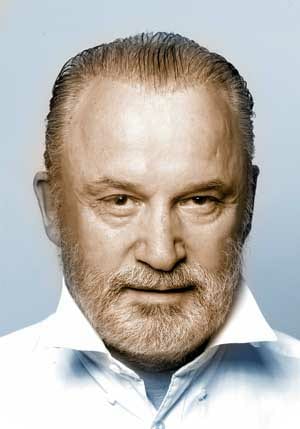


sdfsdfsd
Giorgio Moroder


There's some great songs on those soundtracks.
It was a lot of traffic. And for the soundtracks there were 14 artists, not just one. There were many different opportunities. There was a band called Berlin. Then Giorgio was magnanimous enough to allow me to co-produce a couple of songs on Berlin's record. And that sort of brought me to the attention of a lot of people. Again, being around that camp at that time gave me many, many opportunities. Keith Forsey was part of that crew.

A great producer as well.
A great talent. My neighbor actually.

Really? He's cool. I love his work with Billy Idol.
One of the greatest. That helped get him into that environment and then, of course, Harold Faltermeyer a lot of us owe our beginnings and record productions to the association with that particular, that moment in time was a very hot moment in time. That was my entrée. From there, I made some records. People started to trust me a little bit. My first real hit which I think put me in play was a song with Eddie Money. It was bigger in America than it was outside. Some of those records back then did better in American than they did outside of America.

I must tell you, I'm an absolute devoted Eddie Money fan.
Oh, wow. Wonderful.

I think he's a marvelous…
At the time, as you know, there was more kind of corporate American stuff that was not so well loved outside of America.

Yeah, that Can't Hold Back album did pretty well here in Australia.
Australia's always been a little bit more connected to us in that respect I believe. That record was my first real big record. It was a number 1 rock track here, Top 5 hit in Billboard, it was a platinum plus record. It made people say, “Wow, he can produce records.” So that was a turning point in my career. And then doing Cheap Trick's Lap of Luxury and doing “The Flame”. Nothing like a second hit. One, they always think maybe you got lucky, but two sort of sets it in stone. The combination of those 2 records was the real beginning of the wonderful time I had.

Absolutely. To speak of those briefly, the first interview I did when I started this website was Eddie Money.
This is your website, Melodicrock.com?

Yeah, that's me.
I know it's you, but I didn't… okay, you're the person. You and Serafino, the two of you, are carrying the torch for melodic rock.

Trying to.
Not all by yourselves but you're certainly at the front of the charge.

Thank you! It's great to talk to someone who has greatly influenced my record buying. The first interview I did was Eddie Money and I think I'm still recovering. He's such a colorful character.
He's a wonderful guy.

I remember one thing he said about the album was he knew he needed to make the best record of his career to have a continuing career after that point and I think he did. Everyone kind of holds that up as a landmark record…
I think Eddie Money is one of those guys, first of all, he's very talented. You can't hit a homerun every time up to bat, but he has a knack a lot of times in his career he's come up with those important records when he needed them and I think that was one of those times and I'm proud to have been part of it, particularly proud that I was part of the duet with him and Ronnie Spector because she's such a legendary, iconic part of American musical history. It was just the cherry on the cake, you know.

Whose idea was that to bring her in?
It happened very organically, the song didn't come from us. It was a time where, Eddie was so used to writing his own songs even the idea of recording other people's songs made no sense to him, and understandably. We happened upon this song and I really liked it so I brought it to him and we went and did a demo of it and I think the original demo just had the original singer sing “just like Ronnie sang, be my little baby.” Eddie didn't want to sing it because he felt silly singing it, so there was a girl hanging around the studio so we had her sing what became Ronnie's part and it just became screamingly obvious at that point that she should sing it. We made the offer and thankfully she said yes.

I've talked with another producer who has worked with Eddie and I know he's a colorful character, keeps people on their toes.
He's colorful, no question.


Eddie Money


Do you have any stories that you could share?
The funny thing about Eddie, it's so easy to talk about people's antics but the world should know that he's one of the greatest guys you'd ever want to know. Aside from his colorfulness, and he is colorful, when I called him for this Avalon project he was very quick to say, “Sure I'd love to do it and I've got a song for you.” He was there in spades. It was a labor of love. It wasn't an opportunity to make money, nothing like that. He showed a real sense of friendship that warmed my heart, I must say. That's my favorite thing to say about him right now. I love Eddie. I think he's got one of the best voices I've ever heard, he's one of the most believable signers I ever worked with. Sometimes he's say things I didn't understand and I'd still believe him. He's got that way of making you feel that he's really telling you the truth. I think the best singers have a way of… believability is a common theme in my favorite singers.

Yeah, exactly. You connect with him emotionally, don't you?
You absolutely do. He transcends music and all kinds of stuff. He's absolutely emotional.

I think the track that “I Put My Life in Your Hands” is classic Eddie Money.
Absolutely. He's had that title for a long time and then when I finally heard it written it brought a smile to my face that the timing was so great for me. A big fan of Eddie Money. I can't tell you how happy I am that he said yes.

We should talk about the record. I'm going to talk about some of the other projects you've worked on.
Yeah, I'll talk your ear off and you can cut out whatever you like.

We'll talk Avalon first. It's been a while in the making hasn't it? I remember Frontiers announcing that you'd make an album for them a couple of years back.
You know what it was, I'll tell you the absolute truth always, I was working with Philip Bardowell and you know him obviously…

Yep, a great singer.
I was happy enough that he came to sing 2 songs that we wrote for the record. I'm sorry that I missed him last night because he just played nearby and I couldn't get there.

Oh that would've been a good show.
Yeah I just live around the corner. Philip and I were working together doing a cover band for fun because over the years I kind of stopped playing and I missed playing so him and I and Joey Carbone made a cover band to play up at B. B. King's, just a sort of local venue here in Universal City.

Yes.
At the time he was making a record for Serafino so I think he's got a lot to do with mentioning my name to Serafino. We never really worked together but certainly he knew who I was and vice versa because we had so many things and artists in common. It was through Phillip that Serafino reached out to me and said, “Hey, what do you think about making a record?” and I said, “Sure, I'd love to. I never did it before and I'm not getting any younger so it might be a good time.” I don't know how long it took. It seems like we finished it earlier in 2006. But it was in the planning stage fore a while it took a while to get the songs right. We did the bulk of the recordings last fall. I think I did the bulk of the recordings in Oct/Nov/Dec. and finished in January 2006. Some of the songs were older songs, about 4 of them, the rest were all new songs and that process probably started in the spring of '05. It didn't take a super long time but we definitely put the energy into it and the thinking about it and the preparation.

The album's got a classic vibe to it.
That's great news.

I kind of pondered the question of whether the songs were demos from way back.
Some of them quite frankly were and I'll tell you which ones. The one Joseph Williams sang (“Oh Samantha”) which I wrote for my daughter. It's something I wrote for her about 15 years ago but the only demo that ever existed was her sitting in my lap and me singing into a ghetto blaster, a little cassette recorder. I had a version of that and I had that and that was it. I never thought about recording it, I just wrote it for her so that was one of the songs. In fact it was Joey Carbone that reminded me that I had written it. I sat with him and we went through my entire collection of CDs and cassettes and compiled everything to come up with 20-30 songs. If I had just done some good bookkeeping of what I had done it would be appropriate. And then there were a few other songs like “Blue Collar” came “Is He Better Than Me” came, “Oh Samantha”, I think there's only 1 other. Oh, yeah, Eric Martin “I Don't Want To Want You”. Those 4 songs came from a collaboration between me and someone named Davitt Sigerson and someone named Henry Small and the 3 of us had written those songs for a band called Prism.


xx
(l to r) Joseph Williams & Eric Martin


Exactly what I was going to ask you about. Why are the Prism songs on there?
Those songs came from Prism from an album that I was very proud of. A group of songs that were written at a time that I thought was one of the most creative things I've ever been involved with. Henry and I and Davitt got together for oh I don't know how long, got together and wrote those songs then went into the studio and made that record and it was never really successful. It just sort of went away and that always bothered me a little bit. When I was going to make a record that was going to be based in… it seemed logical to look there. Those songs made sense to Serafino, they made sense to me. I was really happy to get the opportunity to re-do them. I've always wanted to be involved with those songs again. They were a lot of fun and Davitt's a bright guy, he was a Rhode's Scholar, he went to Oxford. He was the CEO of Polydor Records, a very clever gentleman. Henry Small was in Prism and A Small Wonder before that. I met him in the '70s so those were the only songs that existed prior to this record.

Great.
And then I went to Eddie Money and… “Nightmare” is the other song that came from Prism… and I said, “Eddie, would you like to sing this song?” and he said, “Sure, I'd love to and I've got a song for you,” and he gave me “I Put My Life in Your Hands” and then I wanted Giorgio Moroder and Keith Forsey involved. I went to Giorgio and Keith was the bonus because he had happened to write the lyrics to that song so I knew that song and I went to Giorgio and asked him if he had any songs that would be appropriate for my record and he gave me that song “Blue Monday” so I was very happy to have him involved. He'd give me the track and then I'd take it and put some guitars on it. Those are the songs that existed prior to the record. Everything else, brand new.

Fantastic.
I wrote them with the singers. I would create a track at home with sequencing software and then I'd email the MP3 to a singer and then Danny Vaughn would say yay or nay and Eric Martin would say yay or nay and that was the process.

You really have picked some gems because alongside Eddie Money who is a longtime favorite since the '80s, Danny Vaughn and Eric Martin are 2 others that I just buy everything from regardless.
Yeah, love it. And I didn't just pick singers that were great but again I've had the good fortune to work with some great singers and every one of these are the best, but usually there's another component to the relationship. Like in the case with Eddie Money, it's the first time that I'd ever made a hit record, you know what I mean? That's like your first… I was a virgin before that in terms of making a hit record. And Eric Martin, I produced that last incarnation of Mr. Big with Richie Kotzen. I produced Eric Martin as a solo artist and I produced tracks for Eric for movies like Iron Eagle. Me, Eric, and Neal Schon played together in what used to be the Bay Area Music Awards in '86 so that's a longtime relationship. Joe Lynn Turner I met on the road in the late '70s before either one of us were well known so that always had that… you know, old relationships. The Prism songs came from a real special place in my life and the relationship with Giorgio and Keith were integral to my higher career as a musician and a record producer, so it was all those types of things. Danny Vaughn was… first I'll go with Hugo, Hugo did Open Skyz and then Valentine first which became Open Skyz and I had a label through RCA and that was the one band signed to that label that I released so that was a milestone in my career.


xx
(l to r) Hugo & Danny Vaughn


I have that record here too.
And Danny Vaughn I just always had a connection to. We made a record together in the later days of that kind of music and it didn't fare as well but Tyketto was one of those bands that really sort of undaunted by any type of taste or style in music, they just transcended all of that and just kept the faith and made lots of great music for a long time. I always had a lot of respect for him.

Amazing songwriter; I love his stuff.
And Joseph Williams who about 2 years ago him and I and Joey Carbone, I keep mentioning Joey because we go back so long, the 3 of us went to New York to the Tribeca Film Festival, the thing that Robert De Niro is in charge of and another friend of ours did a movie that debuted their and Carbone and Joseph Williams had been involved with the music for it so the 3 of us formed a band and played there at the Tribeca Film Festival. It was another one of those things. And Philip Bardowell was part of my reconnection with playing guitar as an adult lately and he was integral to me making this record in the first place. So there were lots of those kinds of threads between myself and the relationship between myself and the singers on the record, you know what I mean?

Yeah. It's great getting such a detailed background behind the album.
That's really what it was meant…that's all true.

It brings it together.
It wasn't like, let's see who I can get to sing <laughs>. If they had said no it would've become that but thankfully we didn't have to go there. Everybody said yes, everybody made time. Joe Lynn Tuner was very busy. He definitely made time for me and he put in a lot of sessions. A lot of people went to a lot of extra work to make themselves available really made it kind of special.

Fantastic. I want to ask you about some of these albums, but I'm going to ask first, will you make another album then?
I don't know. I'm very proud of this. If you ask anyone about anything to do with any kind of sequel they're never going to tell you. And I genuinely don't know. I don't have an answer that would be honest or accurate. The real honest answer is I really don't know. If it makes sense to make it again, to make another version of it, then yeah, of course I would. And if it doesn't make sense, of course I wouldn't.

You'll just wait and see.
Yep, I'll just wait and see. If the demand is there and there's more motivation to do it or if there's another way or another part of the story that has to be told, you know what I mean?

Yeah.
For the right reasons, I'd love to.

Absolutely. Well you've just mentioned a couple of albums so I'm going to ask you about them.
Sure.

The Tyketto record, is -- amongst stuff I cover on this site -- is universally regarded as an absolute classic.
People love that band, which is great because that's a great record. A lot of the records I made at that time a lot of the artists had a leg up because they had already been successful at one time in their careers and some don't always get all of the love and attention for all of the reasons and for whatever reason I think that's a better record… I don't think it got the due that it was entitled, frankly.

It should've sold 5 million.
I don't remember what year it came out, there's a time when it started to get to the end of the genre's first life.

In '91 it came out.
If it came out in '91 it's a lot clearer as to why. Nirvana had probably already come out and the record company was already wearing their flannel shirts.

<laughs> Curse that band.
There were a couple of records I made at that point and whether they were any good or not, it didn't quite work out. <laughs>

I curse the day Nirvana came onto the scene.
I can listen to “Smells Like Teen Spirit” now, but I couldn't for 5 years.

I bet.
I'm okay now.

That record put a lot of people out of business.
Then again it put a lot of people into business. As you get older you just got to move with it.

Tyketto is an amazing record, it still sounds great today.
Yeah, yeah, it's a good record, we worked hard, John Kalodner was the… the very famous John Kalodner who also probably… the thread through melodic rock has his handprint and footprint is all over it. He had a lot to do with that record, him and Mary Gormley both. That was a fun record to make, actually.


Great stuff. Probably my 2nd favorite Mr. Big album of all time is one most people have never heard, Actual Size.
I know. That's okay. We did about 150,000 units in Japan. That's okay. It's harder and harder. There's a time when Mr. Big could do 800,000 units in Japan. This is nothing to do with them, Paul Gilbert or Richie Kotzen or any of them; it's just the climate these days. We did okay. And we made a good record. I co-wrote a couple of the songs. “Shine” was one of the songs I like the most. I co-wrote it with Richie Kotzen.

I'm a huge fan of “Wake Up”. I love…
Yeah I think I co-wrote that one too. They're both predominantly Richie Kotzen songs but I just kind of stuck my 2 cents in a bit.

That was the 2nd record with Kotzen but it had less of a Kotzen feel and more of a Mr. Big feel.
I think that was because I was involved and I wasn't involved on the one prior. I was in a real lucky position because Richie Kotzen is one of my better friends and he's my neighbor also.


Richie Kotzen


Really?
I live on a pretty musical street.

He's another great artist. I'm going to have to visit that street <laughs>
Yeah, it's great. And we've got more, we've got 30 Seconds to Mars… believe me; it's incredible who we have on this street. Richie and I go back quite a way to his first record with Poison.

Yep.
And then a couple of solo records. I've been really involved in his career and then I knew Eric Martin as well. I had an equal understanding of both components that were very important components in that record. Perhaps maybe I got it.

I think you did because the record before, the sound just didn't quite suit the band but this one sounded like a million bucks.
I don't know that record terribly well. Maybe a lot of it was Richie trying to find his way in the band.

Sure.
I'm not sure. I don't know it as well.

Actual Size sounded like a sequel to Lean Into It, it was just wonderful.
We had a good time. We made it over at Richie's house. It was fun.

Did the Billy Sheehan/Eric Martin tensions come into play?
No, I don't think it impacted on the record, at least it didn't… it certainly didn't impact negatively. You know, sometimes tension…

Oh, yeah, absolutely. Sometimes it's good.
As long as you can keep it going, some of the best records are made that way. No I think everybody was very professional on that record. Everybody was very creative. Sometimes I think that my bedside manner can help in tense situations. It wouldn't be the first record I made under tense situations.

That's a question I've got here for you, I'll come back to that one.
It wasn't a terribly uncomfortable record by any means. It was quite creative.

Again, when I listen to that record I just think there's so much left in that band. I wish they'd give it another shot.
I have prior to and since then a pretty good relationship with all of those guys. So a lot of it was my relationship with Pat Torpey and my relationship with Billy Sheehan and Richie Kotzen. That served me well, I think.

Such amazing players. All of them.
Oh, God. Kotzen blows my mind sometimes.

He's amazing.
And he did when he was 22.

The Cheap Trick record put them on a new plateau didn't it?
For the moment <laughs>. Yes, absolutely. I like to think that, not every time I step into the studio with someone, but a lot of times I step into the studio with someone and as a result of our collaboration something very positive happens to their career, whether for the first time or the second time. That was one of those cases for sure. They didn't embrace that album too much, but I did.

Yeah, I don't know why.
Because they didn't write… it was sort of a double-edged sword for them. Their biggest hit… I think most people would still look at “I Want You To Want Me” as the definitive Cheap Trick song and Live at Budokan is the definitive Cheap Trick album and that's wonderful, and it is perhaps, but we made a record at a moment in both of our careers where we made a record that we needed to make and get some national market appeal to the band but I think they always had a problem with the fact that that wasn't their song.

Fair enough.
To me a C chord is a C chord no matter who wrote it.

Yeah. Fair enough.
But I'm not the artist. Sometimes that's a very difficult position to be in. And I respect that perspective of the artist but sometimes you have to look at the greater good and in that case I think the greater good was making a record that… Cheap Trick is one of the greatest American bands of all time.

Oh, I love 'em.
Too often they kind of go under the radar and where they need to be. Sometimes you need to do some extraordinary thing to make that unfair thing work itself out.

Talking of precious, the Bad English album is another all-time classic as far as people are concerned.
That's a good record, I think.

That is an amazing record.
We worked hard on that one.

It sounds like it. You put a lot of time into that one didn't you?
Yes, and it was hard work. When you produce a band, and to some extent it was the same with Mr. Big's Actual Size record and maybe a little bit with Poison with Richie Kotzen, but never as much as this… usually when you produce a band… every band to me has always been a sort of society… it's a little five-some and usually the internal politics have been worked out – this person is the spokesman, this one does this – and they have a way of coming to decisions. It's a functional unit, you know what I mean?

Yeah.
So when you produce them, you become part of this functional unit and become part of the club as it were for that period of time. With Bad English, there was no unit. None of that was worked out. It was on the job training. The Bad English record started with me agreeing to produce a John Waite solo record.

Right.
Or maybe not, but early on, John Waite was the only one there. And me. And that's when we said we were going to make a record. Then it was like, “You know what would be cool is if it was a band,” and then it was like, “okay, cool.” And then the going assumption was John would find some musicians that he was passionate about working with or whatever. That never happened. Shortly thereafter he connected with Jonathan Cain, I believe came on first and then perhaps Ricky Phillips came on shortly thereafter. And then Neal Schon said he'd be part of it but he wasn't sure if he really wanted to join yet. We hadn't started recording by any means. But just to show you how early in the project I was involved. I got in early so as we made that record I went through the growing pains and the band went through growing pains of becoming a band. It's sort of like growing up on TV as it were. So they were becoming that band. Even though some of them had those previous relationships, 3 of them having been in The Babys, and Jon and Neal being in Journey together. It was very difficult working out the sociological aspects of that relationship because they're all very strong guys, very talented, came from… it's almost like they were all in situations where they had a degree of autonomy and now they were… having to sort of compromise, not compromise artistically by any means, compromise wasn't the best word, a better word is, finding a way to work together in that particular environment. It was a challenging record. Everyone was on their toes the entire time.

Right.
Straight up. There's was no kicking back. There wasn't a lot of feet up. It was heads up ball, as we like to say.

I think that really came through on the 2nd record, wich I know you didn't produce..but some of the tension came through in the music. Even apart from the debut…
I think the record we made, I mean, I sometimes felt like, and this is no insult to anybody because I love all of those guys, I felt sometimes like I was sort of serving as an ambassador. Sometimes I was doing a lot of diplomacy. A diplomat is a better word. I was doing a lot of diplomacy a lot of the time.


Yep.
But that's okay too because there's so much talent in the room. Neal Schon would play those solos on the track. He'd say, “I don't want to think about the solos later, I want to do them now,” and then boom there would be the solo and then he'd do the rhythm guitar after. So there was some moments in that world there that was pretty great. These guys were good. <laughs>

There's a real energy in that record.
It was good. There were fights, but not like mean spirited fights, just good healthy debates most of the time. Everybody had a different perspective or point of view. It never really got out of control or out of hand. They're all pretty intelligent guys. It wasn't like a crazy record where guys were nuts on drugs or anything. It wasn't like that kind of record. It was a lot of guys that really wanted it to be right, really wanted it to be great. At times there may have been a difference of opinion, but that's the worst that it got to my recollection. I think we got a good record. I think we got one of the better records I worked on.

Absolutely,
Yeah, I think it was good.

Have there been any records where it's been just a complete, to be blunt, a real cluster-fuck, you know what I mean?
I like to think a lot of that is the responsibility of the producer, quite frankly. So I like to think that not too many come to mind frankly. Some are harder than others, some are easier. Very often the harder ones are the most successful. Frankly. So it's hard to get mad at that. Sometimes the easier ones are…

What do you think were some of the hardest ones for you to make?
I think the Bad English record was a challenging record to make, that first Eddie Money was a challenging record to make, Lap of Luxury was a challenging record to make, Heart's Brigade was a challenging record to make and I think they were the biggest records in my career.

Right. I was going to ask you about Brigade
It wasn't difficult and hard like, “Oh my God I can't stand the studio,” I don't mean that my any means. Each one for different reasons.

Heart. Why was that a challenging record?
Because they were on a path that they sort of created with Ron Nevison and they made 2 very, very successful records, so it was challenging for me to make one to live up to that, you know what I mean? They had so much success, and sometimes success can get in the way. If you take away the hunger… one of the challenges of making that record is it took a long time. We worked on it off and on for about 8 months if memory serves.

Yeah, that's a long time.
There were some breaks, but there was lots of pre-production. A lot of that was because of the time it took to make that record.

That's a long time.
For the first time in my career I started to understand what movie guys go through, trying to keep their perspective for years. By the end of that album I was like, “Wow,” after 8 months, it was a little tougher to keep my… the perspective was something that I was fighting to keep. But then, something you have to know, is that making that record, Ann Wilson would come to the studio at 5:00, open her mouth and there was nothing quite like it. <laughs> Like maybe, once a week, maybe not sing a word right. Flawless performances to the point where trying to figure out which vocal to pick was a very difficult thing to do because they were all so good.

That's a nice position to be in.
I know but sometimes it's even more challenging <laughs>

Yeah.
Sometimes it's like, okay, now what? She was a pretty impressive human being.

Wow. She's an amazing singer.
She would just open her mouth and I'm like, “Oh my God, listen to that.” It would take you aback sometimes. I think a lot of the singers I've worked with do that to me. John Waite. For different reasons at different times, each one of them made me stand up and say oh my goodness.

He's one of my top 5 vocalists as well.
He could sell you the phone book.

I love his voice.
Very believable.

I think the best album that White Lion ever released was the one you produced for them.
Again, that was when the flannel shirts were already out.

Exactly. Criminally undersold, that album.
And you can't get mad at anything post 1990. The tide had already changed. Even the Poison record I made, there were times where we felt that we were going to be the ones that showed that bands that came out in the '80s were still viable in the public's eyes. That was one of the biggest disappointments. There were a couple of songs on there that I could have probably maybe showed a more mature Poison and a growth with Richie Kotzen involved. So again, some of those records like Poison's Native Tongue, good, bad, or indifferent, or Tyketto or White Lion's record that I made, again, the dye was already cast.

Well I think Native Tongue is actually my favorite Poison album too.
It's a good record. There were moments on that record that were like, yeah, I think are pretty great.

It wasn't bubble gum was it? It was a real mature record.
Well they had grown up and gotten a couple of years older. C. C. Deville is one of my favorite pop songwriters but he wasn't in the band and, you know, C.C. has that fantastic personality, an incredible sense of humor. Richie is a way more introspective type of human being so all of a sudden the style of writing was more serious. That chair was occupied by a serious, not in a better sense, but you know what I mean – a more somber personality, so it showed that and yeah there were some moments there, like I thought “Stand” might transcend the fact that it's no longer fashionable to like bands that you liked last year. But again, it was a Gold record in America so I'm very proud of that.

Absolutely.
And “Stand” has been on a lot of platinum and multi-platinum collections since then too. I've definitely done worse.

Here's a thought for you. Something I wanted to ask you. Out of all of those bands, Poison is still on the road, Eric Martin is still playing, Danny Vaughn is still playing, Cheap Trick is still on the road.
Everybody's playing.

Eddie Money, John Waite, they're all working but how many of these grunge bands are still going? Why are people, the media, not giving this music the credit that it deserves for the longevity that it's had.
I don't know. I know that the Grunge shelf-life was kinda short, I thought. It sort of gave away to alternative music which has had a longer life. I don't know the answer. Gen X… every generation thinks that the one that preceded them were a bunch of old-fashioned people when they come along. Every generation has their own things that define them. Gen X was a very unhappy time. Although this wouldn't be the first time, there were a lot of deaths in that genre. It was a very anti movement. It wasn't based on something it was more against Ticketmasters and against this and that. It was anti-flash pop, anti-larger than life. It was more of an antichrist than a Christ. I think sometimes when you stamp out that which you set out to stamp out, you're done, your mission is accomplished. And I think there's a lot of that in that kind of music. More than there was… you know what I mean? Is that weird to you? I think before that it was a purer time. I don't know. I think that's one of the reasons why… I don't know. I think every generation, especially the kids now, they have so many things to compete with. The new musicians have so much to compete with the young kids because they have the cell phones and their Play Stations and their internet. I think the people that grew up on the music of the 60s, 70s, and 80s, that music occupied more of the center stage of their childhood, so maybe it's more precious to them.

Well it did for me completely so I relate to that.
Maybe the kids that you would think would ordinarily be at a grunge show, maybe Michael Jordan meant more to them. Or maybe we think that grunge meant a lot to them but maybe they were going to see Run DMC instead. I don't think we've lost a lot of potential… what a lot of people don't realize is that we've lost a lot of potential rock fans not to grunge, we lost it to hip-hop, frankly. That's when rock started to less occupy center stage of the culture.

And like you said, there's so many cross platforms for entertainment.
There really is.

DVDs, PlayStation.
Hip-hop really. Everything has a shelf-life and a cyclical life span but hip-hop really filled a lot of the needs that rock used to for the young guys. You can't discount that impact.

One positive, I get a lot of feedback from the bands and they're saying that there's a lot of young people coming to the shows.
Oh, God yes.

Just to witness what a real, true entertainment show is. Some of these newer bands don't know how to perform or entertain or whatever.
A lot of the newer bands, I don't like to insult anything because I think there's a lot of wonderfully talented musicians out there today that are very talented, future musicians coming every day, and I generally mean it, I'm not just saying it to say it, but I think nowadays video sort of gets you to the world quick. Everything's quicker and easier. Back in the day, before you got a record deal, well it's happening again, but there's a lot or road work that went on. A lot of time of wood-shedding and growing the band before it came to the attention of the media and mainstream labels. And I think that over time that was a shorter period of time.

Yep.
So they didn't get a chance to do that night after night after night on the stage to learn what worked and what didn't work so by the time they got out on the national or international stage they weren't quite as seasoned. So that might have been part of it. But I think that's changing now too because the new rock bands in America especially are existing before labels, they're existing with independent labels so they are very much doing that again, getting out there and getting their chops up and getting out there to the people and hopefully sell some records.

Does any band in this genre stand out to you as having the potential to be a top 10, top 40, top 20 force again?
It's a funny world we live in. Bob Dylan, I think, has the #2 record in America.

Yeah. <Laughs>
I'm 54. I bought “Like a Rolling Stone” when I was like 15 so absolutely. Some of the people sure, absolutely. Bob Seger I think is the top 5 also.

Yeah, that's great to see.
If you make the right record on the right day anything's possible.

Yep.
I really genuinely believe that. I don't think mediocrity is going to take you very far – ever. But I think sure. I think some bands may have a harder time reconnecting with their fan base. Poison did that, I worked with Poison and they're touring rather successfully every summer.

Yes.
And I was there. I did some songs with them for a greatest hits record early in that new reinvigorated Poison with C.C. back in the band, selling lots and lots of tickets and they've definitely reconnected with their fans.

Yes.
They're bringing them out in quite large numbers.

Yep. And I personally think that Journey have as good a shot as anyone.
Bon Jovi still sells lots of records.

Exactly. So why couldn't Journey or someone else like that do the same?
You know, if the right record or the right day and then somehow convincing the right gatekeeper that this is a record worth wrapping his company around…

Yeah.
But it almost doesn't matter anymore. Because it's almost like, you know, whether you're number 1, 2, 3 or 4, that's not really as relevant as making great music and finding a way to survive as a group and to continue to play those songs on the road and in Journey's case especially, going on the road and playing old songs and making new songs. I think that is success.

Yeah.
You know what I mean? We tend sometimes to… it's not sports. It's not like at then end of the day there has to be one winner and one loser. That's not the way it is. If you find a way to stay viable and make your music and get people to come see it and hear it and buy it, download it, whatever. That's success.

So you're basically saying that if they're out on the road, touring, playing to people, then more power to them.
Absolutely. Listen, any pitcher is going to throw harder when he's 19 than when he's 50 but what's the difference? A career is a body of work, not just a moment. Unfortunately that's the sad truth of what can be prevalent in the music industry these days is lots of artists, and sometimes I use the work artist loosely, whose careers really are just a moment. That's what you really want to avoid, that's, to me, not success.

Yes.
Creating a body of work, yeah. It's a rare thing, a wonderful thing. I'm proud of anybody that does that. I'm proud to have been associated with a lot of people like that.

Yeah, record labels these days seem to be less on championing careers and more for the instant, aren't they?
Well particularly in America, I don't know what it's like outside of America, cause I just got involved with a brand new independent record company called Your Music America, YMA, and I have some partners and some investors and we're starting up a new label and that's about to get rolling.

Great.
The thing is that the bigger companies have stockholders involved, the way they operate and they sort of have to go for those big splashes. And to get those big slashes they have to go after and nurture certain types of recording artists. I think because of that a lot of different types of artists tend to get ignored. The next crop of bands and songwriters and so therefore the great news is that a lot of independent record companies are mushrooming up in America and a lot of great music is starting at that level.
And that's where a lot of music is coming from. It's good. It's kind of sorting itself out where the big labels are able to focus on the kinds of records that they need to make with TV components and big stars and big stories but then because you have a band with a guitar player-singer a keyboard player-singer that is growing and developing there's quite a few new independent record companies that are creating a nurturing environment for that and I'm proud to say that I'm involved with one.

Well that is a very positive synopsis; I'm pleased to hear that.
Yeah, I'm proud to say that. It's where I see the present and the future sort of… rock is a funny word, but rock. Rock music in America.

Fantastic. Well anything I can do to help along the way as far as getting the word out to the masses.
Well yeah I'm sure if you could just mention that I'm very proud of the fact that we're starting this new company Your Music America, YMA, and again it's going to be primarily young developing artists but those are the ones that need a place to be creative.

Absolutely. They need somebody to help them develop.
Someone to help them because the bigger companies more or less say, “Look guys, we'd love to help you,” it's not that they don't want to help, it's not economically feasible until they get to a certain level. So we're there to pick up the slack. And it's happening. A lot of the new rock bands that are selling a million records, either got their start or quite frankly more than their start are more than happy being with independent record companies. I think that could be a very and already positive thing for rock.

Yep. Sounds great. Anything you'd like to add, Richie?
Did we say enough about Avalon? I bent your ear about my entire career and life because I know, you know, melodic rock and the style of music and I had a web site and a legion of fans I want to make sure that I cover a lot of base but a lot of stuff, you know, not the primary reason, but the primary reason for the timing of this interview is the Avalon project.

Absolutely. And I think we covered everything quite nicely.
Yeah, it's something that's very special to me, very close to my heart. Most of the stuff that I've done that people would know about through your web site and Serafino's company and lots of other things out there, pretty much is me producing other artists and at the time I produced a lot of those records, those bands contained very talented musicians so I was pretty much, my role was my role. This record, I got a chance to play guitar, I played bass on everything, the keyboards, so it was a very good time for me as a musician.

There's some fantastic guitar work on there.
Well, thank you. I think I played every note.

Wow.
On the guitar. I played a lot. I didn't play drums on anything, thank God for the listeners. And I didn't sing much either. But I played a lot of everything else, I played all of the guitars on it. And again, I am a musician, I started as a musician, a lot of my success and notoriety came from having been a producer but this album is kind of special to me because at my core Richie Zito is a musician, good, bad, or indifferent, and it's at the center of my soul. And I'm kind of proud of that. There's the producer part of me that's also very exhibited here by me getting up and… the good news is, I get the best of both worlds, but thankfully I didn't sing on the record. I got to produce the performances where applicable whether or not I get credit, but I got to produce and I got to be a musician too. So it really satisfied me very, very much.

Yep.
I'm cool. If you're happy, if you've got enough, I'm good.

I'm more than happy, Richie. I really appreciate your time and everything you've told me.
My pleasure. And if I've said anything insulting, please don't print it. <laughs>

No, I don't think you did. I think you well and truly played a diplomatic role…
Well, I'm a fan of everybody that worked on my record. Don't forget, every time somebody asked me to produce them, I always had the opportunity to say no. Every time you saw my name on a record, I said yes. And I said yes because 99% of the time, and the other 1% of the time the other people weren't really yet well known, I was already a fan of them. So if you called and said, “Hey do you want to do Joe Cocker?” it's like, “I'll be there in less than 5 minutes.” I was very, very fortunate and I'm a fan of everybody I've had the opportunity to work with. It's not all diplomatic, it's true.

That's great. It shows through in your enthusiasm for the record and everything you've had to say.
It's been a fun life so far, you know.

Yeah.
And those of us who've been in it, they'll say the same.

Fantastic.
All right, my friend. I look forward to reading it.

I appreciate your time.
Yeah I appreciate your time. I appreciate what you've done for melodic rock.

Thank you, Richie. And likewise. And thank you for some great records.
All right, my friend.

Keep in touch.
All the best.


Wed
08
Feb

John Waite (2006)

Artist: 
Categories: 
Interviews
John Waite: A complex journey...


This is my fourth John Waite feature interview in the course of running this site. This is my least favourite of all. The first three interviews featured a more enthusiastic JW - and were I think more enlighenting and insightful.
This time around I just felt like there was no passion in John's demeanor. He gives a little insight here and perhaps I just caught him on a bad day, but the JW I remember is the more animated character I talked to in the past.


Previous John Waite Interviews: 1 - 1997 / 2 - 1999 / 3 - 2001


Great to finally talk to you again. It's been a long time.
Yeah, it's been a while.

It has been a long while. You're back in the States after Europe?
Yeah, I got back last week. We already played some gigs so we're just working a lot now. Just banging out the work as much as we can.

Yeah you're concentrating on live work at the moment. You are an in demand performer aren't you?
Yeah. It's something I'm really comfortable with. I just prefer to play live than be home and it gets me out of the house.

<Laughs> That's great. Look, it's been a long time since we've talked. I don't know if you recall but the last time I sort of had any interaction with you, was via a tird party…I had a Jesse Harms track lined up for a site compilation CD, but with your vocal on it. I was told not to use the track or under any circumstances.
Well, I don't think it's a good song, right.

No, look, I think it's a great song. Just about any song with your voice on it is going to be a good song, isn't it?
Umm, yeah, all that period of stuff either got released or it's just not that good, you know?

That's interesting that you should say that because there's a lot of stuff that hasn't been released, isn't there? There was a deal in place at one time with MTM Music for an album of unreleased material. That fell through, so is it now, basically your desire to leave it all unreleased?
Well, I usually put out what I write, but back in that period of Bad English there's a gigantic amount of demos because we couldn't decide on anything so we just kept writing. There's a big backlog of songs from that era because of that. There's not been other periods of my working on songs that… lots of stuff that I don't use.

Are you still aware of the fan demand for more material even though it may not happen?
I don't know really. When we play live it's generally packed and I'm trying my best to take it seriously. I've spent some time here with records that have been on smaller labels or… I've been in the wrong place at the right time and vise versa. It kind of puts you into a place where maybe you don't see things as other people see them.

Yep.
You get beaten over the head with a baseball bat a couple of times you become wary of throwing down but I'm very keenly aware that the gigs we play is packed and it's been very good for me to see that. I'm very keen to get in the studio and make a record.

Ok. Let's talk about what you're just about to release, the Downtown - Journey of A Heart release… What do I call it, a compilation… an album?
It's not a greatest hits and it's not a new album, it's like something in the middle.

You know how much I love your stuff, mate. I need to hear your perspective on this album because I'm not really sure I get it.
Well we tried to put something in the stores so fans could pick up on things that are on Temple Bar and The Hard Way and we have a duet with Alison (Krauss) which was like, knock me out, I was so in love with her, it was just great. It's a great song. It was like an abstract view of the last few years out there for people that might not be aware of the other stuff and a few greatest hits thrown in there to liven it up.
It's like trying to connect a lot of different dots on one record. It's a dangerous place to be but it was either that or not put something out and just go on the road and I really wanted to make sure that there was something for the fans this summer.

Okay.
In the meantime I'm working on new material that has a whole different attitude. This is a one-off. This is like a very strange place to be.

Yeah, okay. I actually said to the Frontiers guys, “I think I know what your game is here. I think you've signed John to get him on board and you're going to hit him over the head with what you want him to record next.”
Do you have something in mind, obviously?

Well I do what I want really. I really like their idea of selling my music and I try to keep my finger on the pulse of what's happening between me and the audience. I'm not really into the past. The past is beautiful and it's mine but I always try to move forward.

Interesting comment from you there. It's exactly what I was thinking, you pretty much do… out of all the artists I cover, and I do so with a passion… You really do just do what you want, don't you?
I don't know any other way of doing it. It's like singing off-key. It's wrong. There's only one way of doing it. You can see all different sorts of bands doing it for different reasons and they're all valid. I just work through my own life the way I do. I enjoy the hell out of my life and I try to describe it in music.


Do you have a lot of people pulling you into different directions?
No.

Then I'd better not… <laughs>
Yeah, I don't think I'm a pushover. I don't think people can really tell me what to do. I really mean it. That's the bottom line. It's important to me. There's nothing more important in my life. It's either my way and I'm happy with it or I'm totally miserable.

I've obviously got everything you've ever recorded and then a little bit more. So this album to me is, I've got pretty much everything on it, so I was looking for the 2 new tracks here and sure enough my favorite track on the album is “St. Patrick's Day” … easily.
Oddly enough, that was written with Glen.

I knew it! I haven't got the writing credits, John, but I just knew it.
Glen Burtnik, yeah.

You know how much I love Glen…
Everybody loves Glen.

He's an absolute bloody legend but you know what, I said to you in our last interview, the best two songs you've ever written, or at least for me, in the past few years are with Glen, and sure enough, there's another one.
Well all three of them are on one record so you can't really beat that. I was flying to New Jersey to meet him to spend a couple of days working on stuff and there was a picture on the front of the New York Times of the St. Patrick's Day Parade and I just arrived on his doorstep saying, “St. Patrick's Day”. And about 8 hours later we had the rough draft of it. It's the only song that I've ever cut twice. There's 2 versions of it.

Oh, is that right? Where's the other version tucked away?
Underneath the other one. It's a bit of a “Strawberry Fields”, there's both versions actually get mixed together towards the end so it's kind of a strange song.

That's interesting. It's got a great vibe. It reminds me of… it's got a Temple Bar kind of vibe.
Yeah, well it was in New York. I wrote that in New York and I recorded it in New York City -- that was completely at home at the time. I did record some of Temple Bar at Right Tracks so. It was an odd sort of feeling of déjà vu, really.

Yeah. Any other songs with Glen tucked away?
No. We wrote four songs, three of them are brilliant and one is just a pile. We always joke about the one that we never recorded because it is so bad.

It couldn't possibly be.
No, believe me. It was bad. But the other three are so great. That's just the way it is.

They're three of my favorite songs from you and as you said, they're all on this record which is great for those that don't know the others are “Downtown” and “New York City Girl”.
John, there's a lot of players – I haven't got the writing credits – but I've got the musician credits, there's a lot of people on this record.

Well, there's a lot of tracks on it. There's a lot of different bands. I'm playing bass on it. I play bass on “Missing You”, “Isn't it Time”, and “St. Patrick's Day”. Anybody that stood around and could play joined it. It was kind of like a free for all, really.

Did you record the album in one string of sessions?
No, this went on for 6 months. It's in Nashville, New York City and everywhere else. It's been a very complex record really.

I'll get to the “Missing You” duet in a minute, but aside from that track with the obvious country influence there, there is a lot of slide guitar. There's a lot of country influence on some other tracks here.
There's been country all over my stuff since the “Missing You” album No Brakes. “Restless Heart” was a country song and I've always loved country. I wrote “Restless Heart” for The Babys.

Did you really?
Yeah, I decided to wait for the No Brakes album to record it. It didn't fit on Ignition but it fit on No Brakes. Left to my own devices I would probably play a lot more of that kind of music. I mean “Masterpiece of Loneliness” is probably the vantage of that kind of music. It's what I'd prefer to be. I'm not really wild about synthesizers.

And you shouldn't be. You've got a great organic sound which is… “St. Patrick's Day” is a testament to that. I was just wondering whether you're still… if in the last few records Figure in a Landscape and The Hard Way this have been a more pronounced country sound, I was just wondering if that's the direction you're going to head in?
Well it's probably a bit more of acoustic guitar. It all started with Temple Bar being in New York City and being written in my apartment. I couldn't use an amplifier so I used the acoustic. But I prefer the acoustic sound. I've spent my whole life rocking kind of thing and I think there's a whole bunch of other stuff going on. It isn't that my heart isn't in rock and roll; I'm a rock and roll singer with acoustic roots, but then so again is Robert Plant.
People want to compartmentalize you so badly that they won't let you do anything that's un-self-conscious but I mean I don't really look at music as being one thing or the other. It's either good or it's bad. There's plenty of country music that's absolutely terrible.

Absolutely <laughs> There's plenty of rock and roll that is too.
Yeah.


So you've got the 12 tracks; why these 12 tracks?
I've never stopped to really work it out. I have no idea. It was hard to record The Baby's stuff because the originals were kind of strong. But they did have that big echoey kind of sound and it was great to pull them back into a tighter thing. Just the songs that we play live that people would know. We play all of these songs live so that was the basic reason for putting these on the same record.

Okay. And “Highway 61” your second tribute to sort of Bob Dylan?
Well, I just always liked Dylan's stuff. I mean when you are just looking to jam a song in the studio, everything you've done is like a jewel. It's just an approach. It's an experiment. The original is just an amazing thing and we would just get ourselves around a bit in New York.

There's a raw sense of authenticity on your vocal in there.
Well, thank you.

You truly believe the song, don't you?
Well, I always believe what I'm singing.

That's what I love about you, John. There's always that air of passion in your vocals and I think that's what your fans like about you in general.
I give it my best shot.

Stepping back a little bit from Downtown. Just on the Journey of a Heart subtitle. These songs are a very personal set of songs aren't they?
Well, yeah. It was trying to be a retrospective. It's almost like the song “Downtown”. It's like walking downtown in New York and thinking about the past. The songs themselves are just elements of the walk. On a lot of levels it works because of it.

Is it easier to re-record the newer songs or the ones you haven't touched in 15-20 years?
Good question. No, the older ones I was more adamant about doing because I've lived with them a long time and you keep hearing the mistakes. It was amazing how ragged some of the earlier songs sounded and how the edits on the originals were rough. Some out of tune stuff and how it was just a wall of sound sometimes. And yet some of the songs were cut as a 3 piece band and we just went straight to tape. It's pretty hard but it was interesting to go back and look at it with fresh eyes and see how insane some of the earlier stuff was.

Obviously it had an impact on you listening to these songs.
Well, I play them every night so I think they just have a life of their own. It was just interesting to go back and recreate them. It was kind of weird. It was a pretty strange thing to re-sing something you sang 30 years ago.

Yes. You're a little bit older and wiser.
Yeah.

The new record label Frontiers. They've been chasing you for a while I gather?
I've been looking the other way. I've been very aware of them being a force in Europe. I haven't really got a reason to look for a label in Europe so we've been concentrating so much on America. But I'm very happy to be with them, they seem like they're very sincere and hard working and they have a high standard. I mean they're pretty good guys.

Yep. Definitely. Agreed on all points. Is there a U.S. label for this album?
No.

Just Europe?
Yep.

No release on your No Brakes label?
No I want to do something bigger. The greatest thing about No Brakes was that it was mine and I could just run around America. It was great. But if I'm going to put something out I want to move a lot of records into the stores so it's always there. It's hard to keep things stocked when you've got a small label.

Let's talk about that. You've got the Figure in a Landscape record out. The Gold Circle label went under which was incredibly bad luck timing or whatever. What was your thinking about trying to get the Hard Way record out?
I really wanted to tour. I possess those tapes and I remixed and remastered and I did some new songs and I did it over. I mean, Figure in a Landscape was a raw record. Some of it was really good and some of it I think missed the target. It's the first record I've made in a long time that I thought was patchy. So I was able to take it back and rework it and add the songs that were missing on the first version.

Interesting. I have a similar comment in my review for that album. I think I told you that. That's the last time that we did an interview, I think, the Figure in a Landscape record.
Yeah. I added a couple of acoustic songs which is something that I really wanted to get out there too. And, uh, just completely do it my way.

I love Temple Bar and I love When You Were Mine, and Figure wasn't as strong standing next to them was it?
No, it was kind of a weird one.

So what do you do next, John?
Hit the road. I've got 6 days off and I go back on the road again. We just got back from Holland. We did a gig the night before last in America. We're just really playing, playing hard and hopefully we're coming to a town near you. We're trying to play a world tour this year and get to Japan. We're going back to Europe. I play Rotterdam in about two months. We'll turn it into a European tour attached to that.

Great.
Everything's going at once. I hope the Alison duet is a hit because I've got such a high opinion of her.

Sorry, I missed that. Let's jump to that quickly. Why Alison? She does have a phenomenal voice obviously.
Well, she's my favorite country singer. I was laying on my back about 3 months ago listening to her new album and wondering how she does that. A month later I got a chance to talk to her and we went into the studio and cut “Missing You”. It was like a lot of things aligned for that to happen. She's a tremendous person; I really like her. She's just so what she seems to be and she's so gifted. There's only a few people that I could really go up to the mic and sing with. I just think so much of her. She's great.

Was that her choice of cut or yours?
We asked her if she'd like to do “Missing You” and we got a phone call back within the hour and it was like, “Yes.”

Great. It's nice to have that vote of confidence.
I feel the same way about her stuff. It's just one of those great moments that you can't manufacture; it just happened and it's there and it's beautiful.

Any plans to do anything with that song in America?
Well hopefully. When we get a release date. Get an album deal or something for it. I mean that would obviously be the choice single but we'll see. We're playing it all by ear at the moment.

Okay. Talking about all things being redone, etc, it's very nice to see Ignition remastered in the UK. Do you have finished copies of that in your hands yet?
Yeah, they sent me it. I did it with Howard Johnson. He's an old friend of mine. He wanted to do the interview so I just did it. It's one of those things you don't make any money on it or publishing or anything. If anyone asks for it, it's around.

It's a great, great record still today. A wonderful record. Do you have good memories of that time?
Yes, it was my first year in New York. It's very nostalgic for me. It really reminds me of that period of getting to know the city.

There's a great energy on that album.
Yeah. It was at Power Station and Bob Clearmountain and Frankie La Rocka and all those great guys that played on the record.

Fantastic. Last year you said you were writing obviously so the plan is at some point to do an all new studio album?
Yep.

It's been a while hasn't it? Figure in a Landscape, what was that?
Well, yeah, but I mean if I could get Columbia Records to say, “Let's make a record,” I could just step into that world but I'm just trying to play as many dates as I can and get out the material that I can to people but without a major label it's a bit of a struggle.

Do you think that Frontiers might be a driving force behind helping you? I know they'd love a new studio album, I'm sure. Is the deal with Frontiers a one-off?
Yeah, it's just for the record but I'm sure everyone's very happy about it.

Yep. So they might offer you a deal for a solo album at some point?
Oh, that's how it's done in Europe, is it? I don't know how people do that sort of thing.

I think they'd …or anyone would love to see another album from you in due course. What style do you see yourself…
I don't know. I don't have a blueprint. You see so many bands that sound like they sounded 30 years ago playing the same songs they played 30 years ago desperately trying to make money out of it selling T-shirts and stuff. I find that kind of disgusting. Whatever that is, I want to do the opposite of it.
I kind of know what not to do by looking at that.

Yep. That's fair enough. I'm just wondering if “St. Patrick's Day” is sort of an indication of where you're going?
Oh, I see. That's just me and Frank Filipetti sat down and we had the New York band there and it sort of became that. And it was very difficult to add new songs to this record because some of them have a certain sound whether they produced it or not. It was very difficult, very delicate. And “St. Patrick's Day” sort of fit somewhere between like “Head First” and “Downtown”. It had some sort of sonic relation. So it was kind of… it was hard to get, but it was worth the struggle.

Yeah, I understand. I think it fits in beautifully with the record. I'd have to say, it's my favorite track on there because it's obviously one I haven't heard before and it's great to hear new stuff from you.
Yeah, thank you.

So we'll hope to here more soon!
Well, it will be more. It's just the case of the summer is just on us and we're playing everywhere we can and this thing is going to come out, so we're looking forward to playing and that's really it. I want to just get out there and make a live record maybe and capture some of this.

I heard that might be the plan – a live album next. And there was one other record I saw at least mentioned probably last year, and that's Greatest Hits Plus Two. Maybe that was Capital that was going to put that out?
Oh, I don't know. I really don't know.

It was a best of with maybe two new tracks.
There's no new tracks.

That's pretty much what you've done here anyway, isn't it?
Well I guess. I don't know. Those people never cease to amaze me.

<Laughs> Always somebody clamoring for more, John.
Yeah.

So next up is a live album and then some time later on a new studio album to look for at least.
Yeah.

And right now we've got Downtown to play and enjoy.
Well God bless you and thank you very much.

Thanks, John. Anything you'd like to add, mate?
No. Buy the record. It's good. I'll see you on the road, you know?

Fantastic.
God Bless and nice talking to you again.

Thank you for your time.
Thank you, bye-bye.


c. 2006 MelodicRock.com / Interview By Andrew McNeice


Pages